
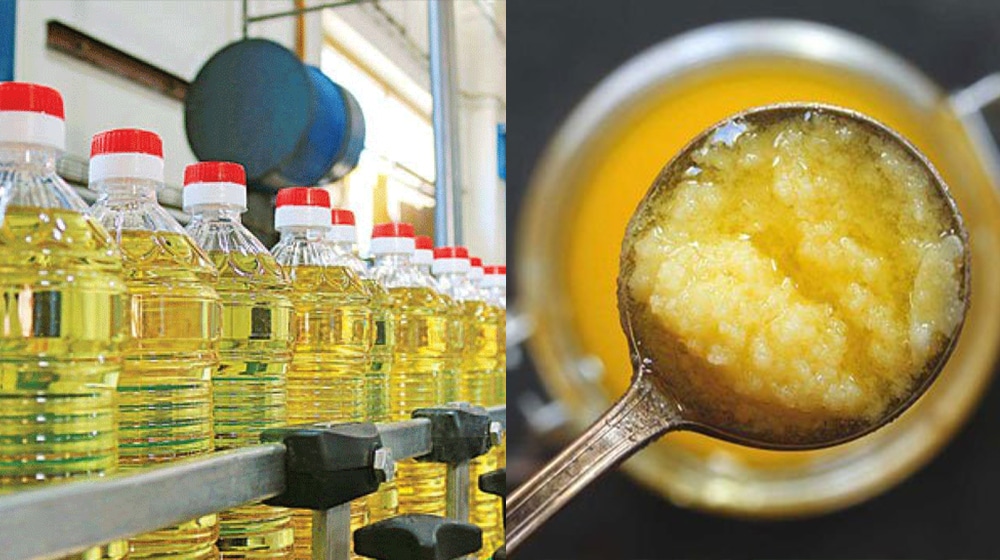
The recent surge in cooking oil prices across Pakistan represents a significant challenge to national economic stability and household precision. Consequently, grocery merchants have reported a calibrated increase in the retail costs of essential fats, marking a persistent inflationary trend. While petroleum prices fluctuate, the baseline cost of first-grade ghee and oil has moved from Rs. 560 to Rs. 590 per kilogram. This structural adjustment of Rs. 30 per unit signals a tightening grip on the average consumer’s purchasing power.
Structural Breakdown of Cooking Oil Prices Hike
Market data reveals that second-grade commodities are experiencing even more aggressive price shifts. Specifically, second-grade cooking oil prices climbed by Rs. 35 per liter, reaching a new baseline of Rs. 545. Similarly, second-grade ghee moved from Rs. 510 to Rs. 535 per kilogram. These increments are not merely random spikes but reflect broader systemic pressures within the supply chain and wholesale distribution networks.
- First-Grade Ghee/Oil: Increased by Rs. 30 per kg (New Price: Rs. 590).
- Second-Grade Oil: Increased by Rs. 35 per liter (New Price: Rs. 545).
- Second-Grade Ghee: Increased by Rs. 25 per kg (New Price: Rs. 535).
The Translation
In technical terms, the price movement illustrates a “decoupling” effect where essential commodities do not always mirror the downward trends of fuel costs. Although petroleum prices occasionally stabilize, the operational overhead for processing and transporting cooking oil remains high. Furthermore, global market volatility in edible oil seeds acts as a catalyst for these domestic price revisions. Consequently, the local market must calibrate prices to maintain supply chain viability despite the financial strain on the end-user.
The Socio-Economic Impact
This development directly impacts the “disposable income” of the typical Pakistani household. Since ghee and oil are non-discretionary items, families must reallocate funds from education or healthcare to cover basic nutritional needs. For urban professionals and rural workers alike, this Rs. 25-35 jump per unit represents a cumulative monthly deficit. Effectively, this surge erodes the financial baseline of the middle class and places lower-income segments at a strategic disadvantage.
The Forward Path
I categorize this development as a Stabilization Move for the industry, but a setback for national progress. While these price adjustments may protect the margins of wholesalers and manufacturers, they do not reflect an innovative solution to inflation. To achieve a true “Momentum Shift,” Pakistan must prioritize indigenous oil-seed production to reduce reliance on expensive imports. Until then, we remain in a defensive posture, managing scarcity rather than driving efficiency.








