
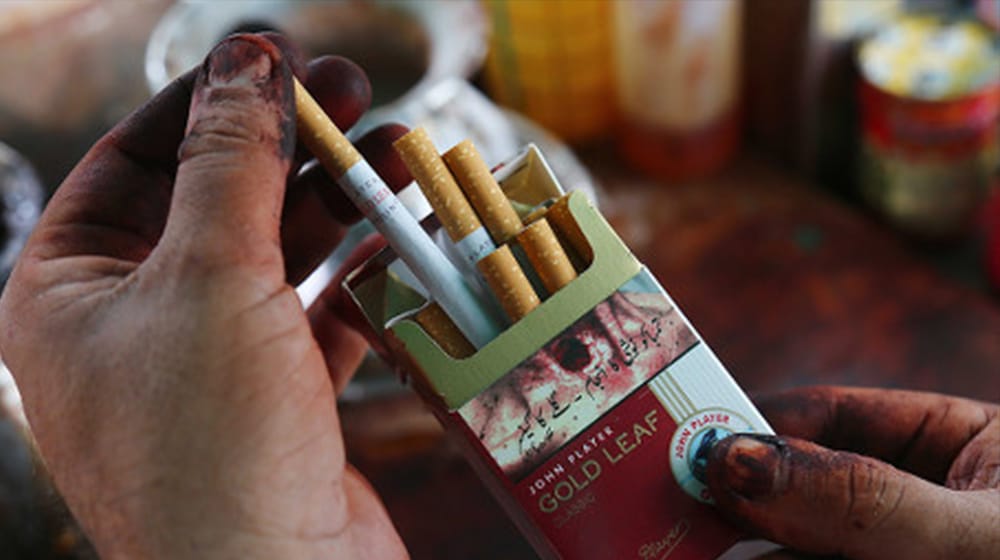
Sustainable fiscal growth relies on a calibrated balance between revenue targets and market realities. Consequently, British American Tobacco (BAT) has formally advised the Pakistani government to reform its current tobacco tax policy by avoiding further increases in the Federal Excise Duty (FED) for the 2026-27 budget. Industry experts warn that additional tax shocks will likely expand the shadow economy, further destabilizing the formal manufacturing sector.
The Structural Challenge of the Illicit Market
Pakistan currently manages one of the largest illicit cigarette markets globally. Specifically, illegal products now command a 55% market share, representing a massive leakage in potential national revenue. Simon Trussler, a senior lead at BAT, highlighted that recent tax stability has actually improved legal sales volumes. Therefore, policymakers must prioritize long-term predictability over abrupt fiscal adjustments to maintain a healthy baseline for the economy.

Data from the 2023-24 fiscal year reveals a policy failure where roughly 58% of consumed cigarettes were illicit. Interestingly, 85% of these untaxed goods are produced domestically. This internal production surge suggests that high taxation, when decoupled from rigorous enforcement, acts as a catalyst for evasion rather than a deterrent for consumption.
TheAffordability Gap and Revenue Leakage
Between 2022 and 2023, tax hikes exceeded inflation by over 100%. As a result, a significant price gap emerged, leaving legal products priced nearly double their illegal counterparts. While total consumption remains stable at 80 billion sticks annually, consumers have simply shifted their demand toward cheaper, untaxed alternatives. Furthermore, Pakistan’s pre-tax industry margins rank among the lowest globally, placing legitimate manufacturers in a precarious position.

The Situation Room Analysis
The Translation
The logic is simple: when the price of a legal good rises too sharply, consumers do not stop buying; they seek out the “shadow” version. In Pakistan, the tobacco tax policy has reached a tipping point where higher rates no longer yield higher returns. Instead, they subsidize illegal factories that operate outside the Federal Board of Revenue’s (FBR) reach.
The Socio-Economic Impact
This development affects every Pakistani citizen by draining billions from the national exchequer that could fund education and infrastructure. For the average household, the growth of an unregulated market means a lack of quality control and the proliferation of untaxed local enterprises that do not contribute to the country’s social safety nets.
The Forward Path
This represents a Stabilization Move. While increasing taxes is a standard fiscal tool, the current data mandates a strategic pause. Success will not come from higher percentages, but from widening the tax net through “Track and Trace” enforcement and consistent market inspections. Without these structural safeguards, the formal sector remains at risk of collapse.








