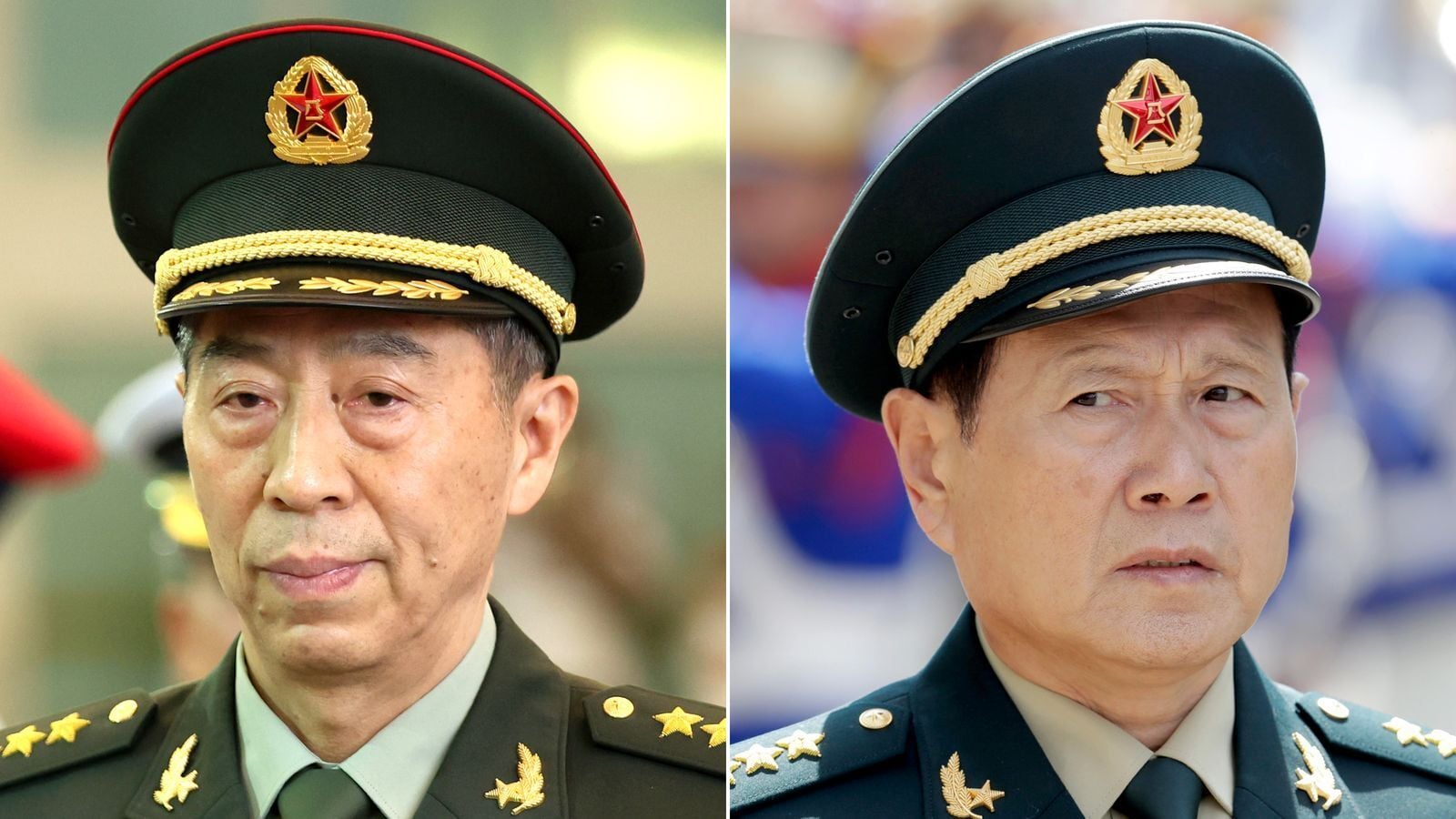
Systemic stability in a global superpower requires calibrated accountability at the highest echelons of leadership. Consequently, the Chinese government recently sentenced two prominent Chinese defense ministers, Wei Fenghe and Li Shangfu, to death with a two-year reprieve. This strategic move highlights the intensified military corruption crackdown that President Xi Jinping initiated in 2012 to ensure structural integrity within the People’s Liberation Army (PLA).
Expanding the Scope of the Military Corruption Crackdown
The purge of high-ranking officials underscores a precision-driven approach to national security. In 2023, the campaign successfully expanded into the elite Rocket Force. This specific branch manages China’s nuclear and conventional missile systems, making its operational purity a baseline for national defense. Furthermore, the investigation widened this year to include Zhang Youxia, a top general and Politburo member. These actions demonstrate that no individual exists above the architectural requirements of the state.
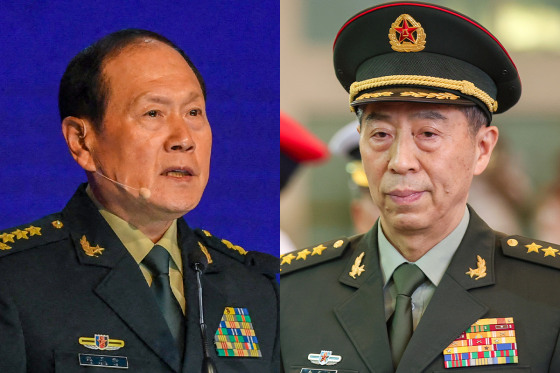
Investigators discovered that Li Shangfu accepted massive bribes and actively bribed others to secure personnel benefits. Similarly, the 2023 inquiry into Wei Fenghe revealed he accepted significant valuables and improper benefits. Consequently, the state news agency Xinhua described these actions as extremely serious in nature, causing tremendous harm to the military’s reputation.
The Translation: Understanding the Reprieve
Under Chinese legal frameworks, a death sentence with a two-year reprieve functions as a high-stakes probationary period. If the offender commits no additional crimes during these 24 months, the judiciary typically reduces the sentence to life imprisonment. However, this commutation specifically excludes the possibility of parole. Effectively, these Chinese defense ministers will remain incarcerated for life without any further opportunities for sentence reduction.

The Socio-Economic Impact: Regional Stability and Pakistan
For the average Pakistani citizen, shifts in Chinese military governance serve as a catalyst for regional economic predictability. China is Pakistan’s primary strategic partner; therefore, a more disciplined and transparent Chinese military ensures smoother execution of cross-border initiatives like CPEC. When Chinese defense ministers face accountability, it reinforces a governance model that prioritizes institutional stability over personal gain. This institutional discipline directly influences the security environment where Pakistani professionals and trade families operate daily.
The Forward Path: A Momentum Shift
This development represents a clear Momentum Shift in regional governance. By removing high-level corruption within the nuclear and conventional missile branches, China is signaling a transition toward a high-precision, merit-based military infrastructure. This move serves as an expert precedent for neighboring nations seeking to modernize their own administrative systems through rigorous accountability measures.