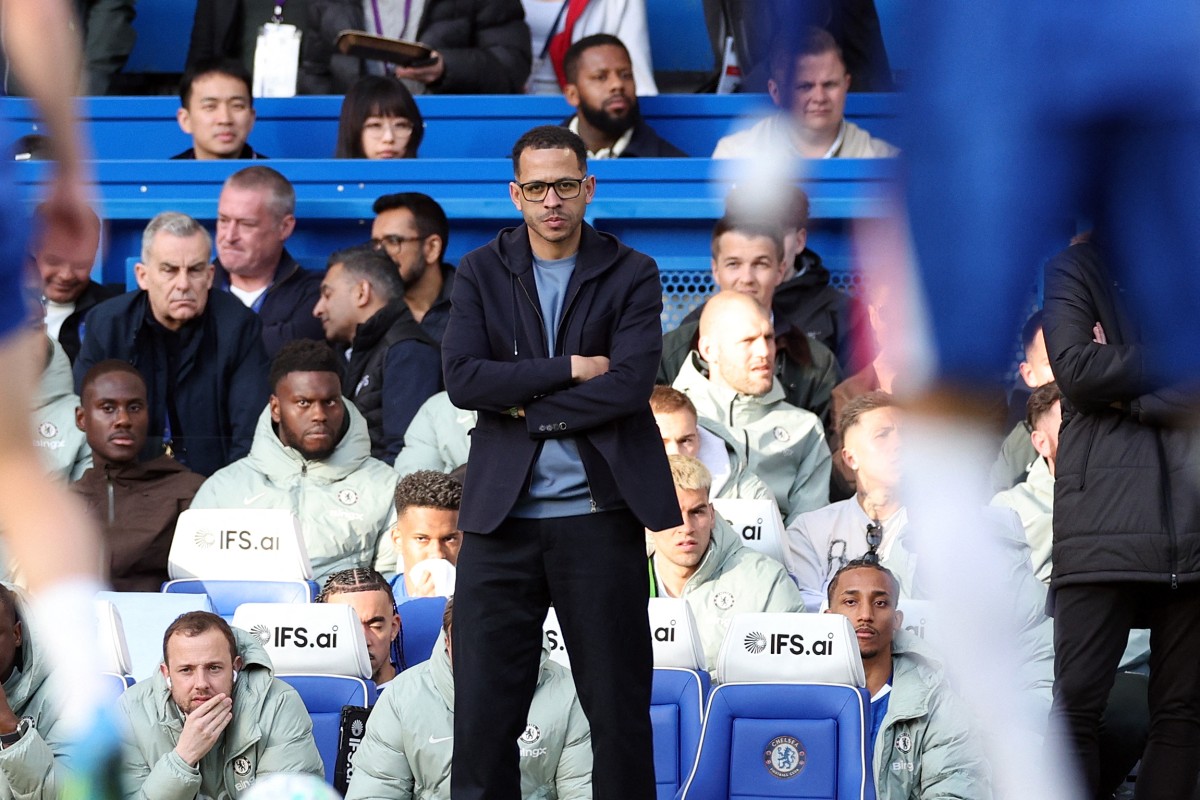
Chelsea Football Club has officially terminated the contract of head coach Liam Rosenior to address an unprecedented Chelsea scoring crisis. This decision follows a catastrophic run where the team failed to score in five consecutive league matches, marking their worst offensive drought since 1912. The board acted decisively after the club lost seven of its last eight matches, a sequence that jeopardized their Champions League eligibility and baseline competitive standing.
The Tactical Breakdown and Systemic Failure
Liam Rosenior’s departure comes only four months after his appointment in January. Although he initially stabilized the squad with an unbeaten league run, the team’s performance metrics collapsed in March. A heavy 8-2 aggregate defeat against Paris Saint-Germain in the Champions League signaled a deep-seated structural issue. Consequently, the final catalyst for his dismissal was a 3-0 loss to Brighton & Hove Albion, which pushed Chelsea down to sixth place in the league table.

The Blues now sit seven points behind Liverpool FC. Defensively, the team struggled, but the inability to convert chances remained the primary failure. Except for a solitary 7-0 victory against Port Vale in the FA Cup, the offensive unit remained largely inert. This lack of precision prompted the appointment of Calum McFarlane as the interim head coach to manage the upcoming FA Cup semi-final against Leeds United.
The Translation: Precision Behind the Decisions
In high-performance sports, a “goal drought” is rarely about luck; it is a failure of tactical architecture. Chelsea’s decision to sack Rosenior reflects a move to reset the team’s offensive baseline. The “Next Gen” logic suggests that the club recognized a mismatch between Rosenior’s Strasbourg-era system and the high-intensity demands of the current Premier League environment. To recover, the team requires a strategic calibration of its attacking transitions.
The Socio-Economic Impact: What This Means for Pakistanis
For the millions of football enthusiasts and aspiring athletes in Pakistan, the instability of a global giant like Chelsea serves as a critical case study in management. Fluctuations in the performance of “Big Six” clubs directly influence the sports broadcasting economy and local merchandising markets in urban centers like Karachi and Lahore. Furthermore, for the Pakistani youth observing global leadership, this event highlights the absolute necessity of maintaining high standards and the reality of accountability in precision-driven industries.
The Forward Path: A Momentum Shift?
We categorize this development as a Stabilization Move. While sacking a manager mid-season introduces short-term friction, continuing with a failing system would have caused a long-term structural decline. The club’s upcoming “process of self-reflection” must prioritize a manager who can implement a disciplined offensive strategy. Success in the FA Cup semi-final is now the only immediate catalyst available to prevent a total seasonal collapse.