

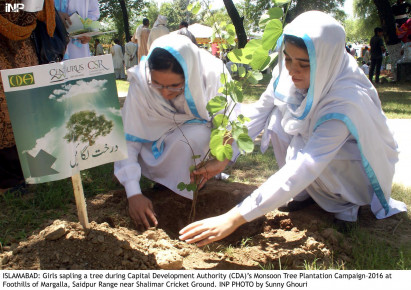
The Capital Development Authority (CDA) has officially calibrated its environmental strategy by launching the Islamabad Plantation Drive. This mission-critical initiative aims to restore ecological equilibrium through the deployment of over 200,000 indigenous trees. CDA Chairman Sohail Ashraf and Environment Member Abdullah Khurram Niazi initiated the campaign at Shakarparian on Tuesday. Consequently, the city expects a significant surge in its forest density over the coming months.
The Structural Blueprint of the 2024 Campaign
The technical parameters of this drive are precise and ambitious. CDA officials have established a baseline target of 210,725 trees for urban zones and the Margalla Hills National Park. Furthermore, the authority will utilize 250,000 seed balls and 1.4 million seeds to catalyze natural regeneration in rugged terrains. This multi-layered approach ensures that the Islamabad Plantation Drive addresses both immediate aesthetic goals and long-term biological resilience.
Strategic Partnerships and Species Diversity
The CDA is collaborating with nine corporate partners under Corporate Social Responsibility (CSR) frameworks. These entities have already donated 57,250 plants to bolster the project. To maximize survival rates, the team has selected a calibrated list of indigenous species, including:
- Chir Pine and Amaltas: Essential for local biodiversity.
- Jacaranda and Kachnar: Adding aesthetic value and cooling effects.
- Sukh Chain and Willow: High-efficiency carbon sequestration units.
- Fruit-bearing trees: Including Apricot and Date Palm to support local wildlife.
The Situation Room Analysis
The Translation (Clear Context)
This initiative represents a pivot from reactive maintenance to proactive system engineering. By utilizing seed balls and indigenous species, the CDA is not just “planting trees”; it is reconstructing a self-sustaining ecosystem. The use of native plants is strategic because these species require less water and possess higher resistance to local pests, ensuring a higher ROI on environmental capital.
The Socio-Economic Impact
For the average Pakistani citizen, this drive acts as a catalyst for urban cooling. As global temperatures rise, increasing the green cover in Islamabad directly reduces the “urban heat island” effect. Consequently, this leads to lower energy consumption for cooling in households and improved air quality, which reduces respiratory health costs for urban families.
The Forward Path (Opinion)
We classify this development as a Momentum Shift. While the CDA previously faced criticism for tree removal during infrastructure projects, this large-scale restoration effort signals a structural change in priorities. If the survival rate of these 210,000 saplings is strictly monitored, this drive will serve as a baseline model for other Pakistani cities to follow.








