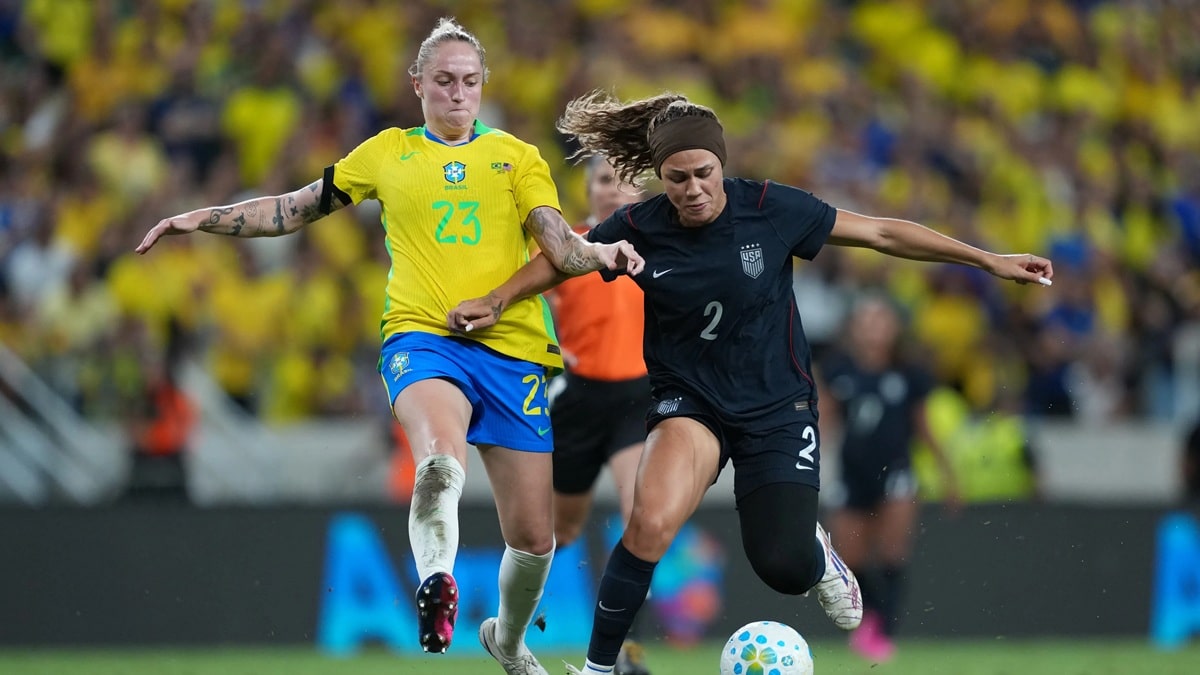
The recent women’s football friendly in Fortaleza devolved into structural chaos as officials issued eight red cards during Brazil’s 1-0 loss to the United States. While the United States secured victory through a Sophia Wilson goal in the 63rd minute, the match is now defined by a systemic collapse of disciplinary control. Consequently, this event serves as a critical case study in the intersection of high-stakes performance and emotional regulation on the pitch.
The Mechanics of a Disciplinary Breakdown
Precision execution favored the Americans, who recorded six shots on target compared to zero for the Brazilian side. Furthermore, the match intensity calibrated upward in the second half, leading to the ejection of Brazil’s head coach, Arthur Elias, and three assistant coaches. This sideline volatility signaled a loss of tactical composure that soon infected the field of play.

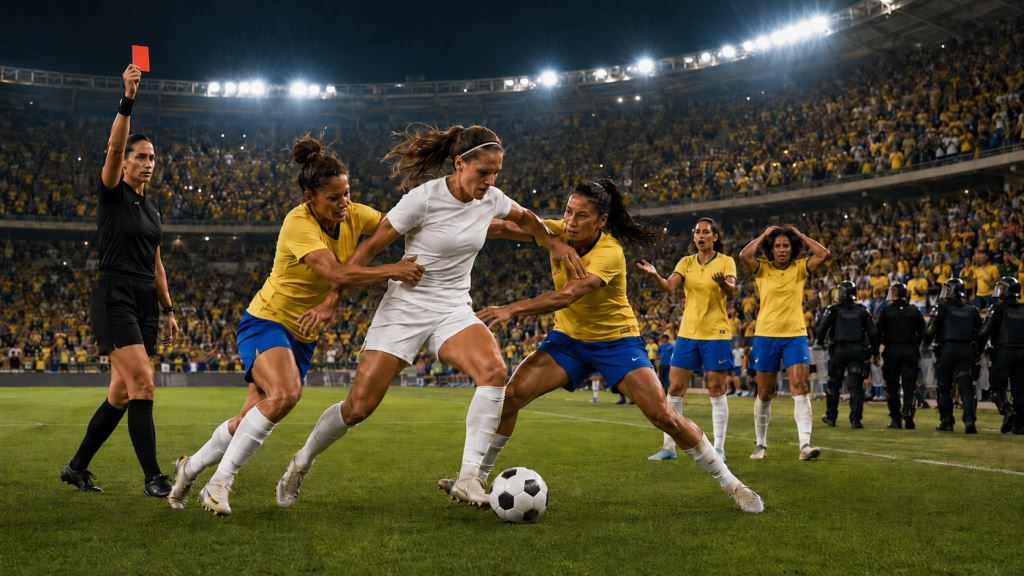
During stoppage time, the structural integrity of the match vanished entirely. The following disciplinary actions were recorded:
- Bia Zaneratto: Received a second yellow card for physical escalation with Emily Sonnett.
- Tarciane: Earned a straight red card for a high-impact elbow targeting Sophia Wilson.
- Kerolin and Ludmila: Sent off post-match for dissent against the officiating crew.
The Translation: Analyzing the Chaos
In professional sports, a “friendly” serves as a calibrated environment to test systems and roster depth. However, when the competitive baseline is discarded in favor of aggressive dissent, the match loses its experimental value. The eight red cards represent a failure of the coaching staff to maintain a strategic environment, essentially turning a professional women’s football friendly into a volatile liability.
The Socio-Economic Impact: Lessons for Pakistan
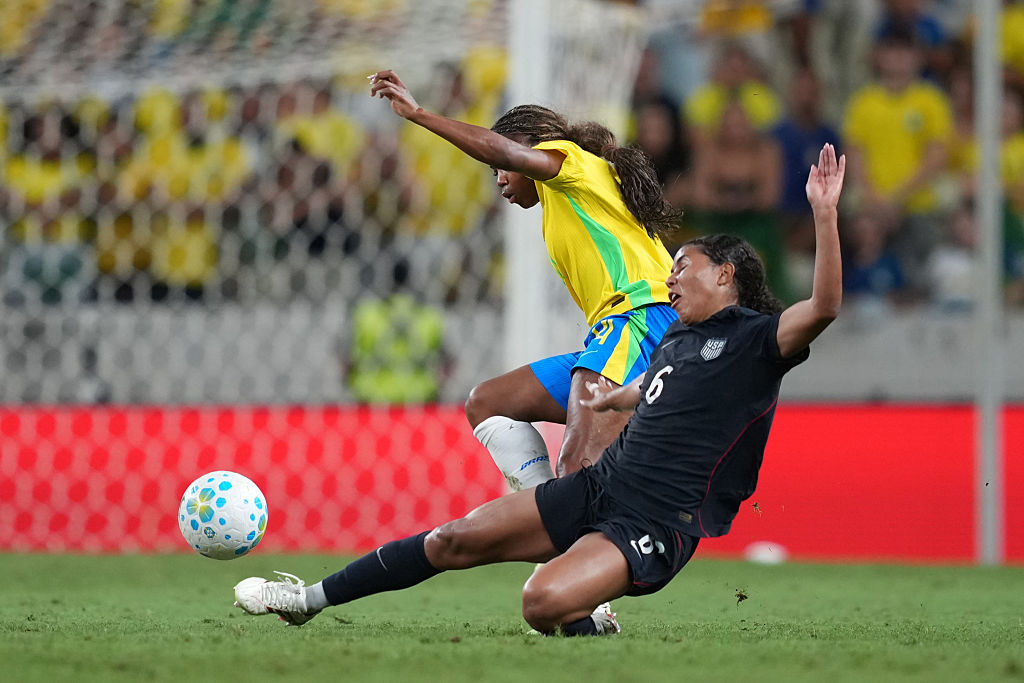
As Pakistan seeks to expand its own footprint in professional women’s sports, this incident offers a vital lesson in brand management. For a rising sport, systemic discipline is a currency. International investors and viewers prioritize leagues that demonstrate rigorous professional standards. When matches devolve into chaos, it devalues the “product” of the sport, potentially impacting sponsorships and viewership for students and aspiring athletes in urban centers like Lahore and Karachi who look to these global icons as blueprints for success.
The Forward Path: A Stabilization Move
This development represents a Stabilization Move. While the chaos was detrimental, the strict application of red cards reinforces the necessity of professional boundaries before the upcoming World Cup. Moving forward, teams must integrate psychological resilience training alongside tactical drills. Maintaining composure under pressure is not just a sports requirement; it is a baseline for any high-functioning system in a globalized society.