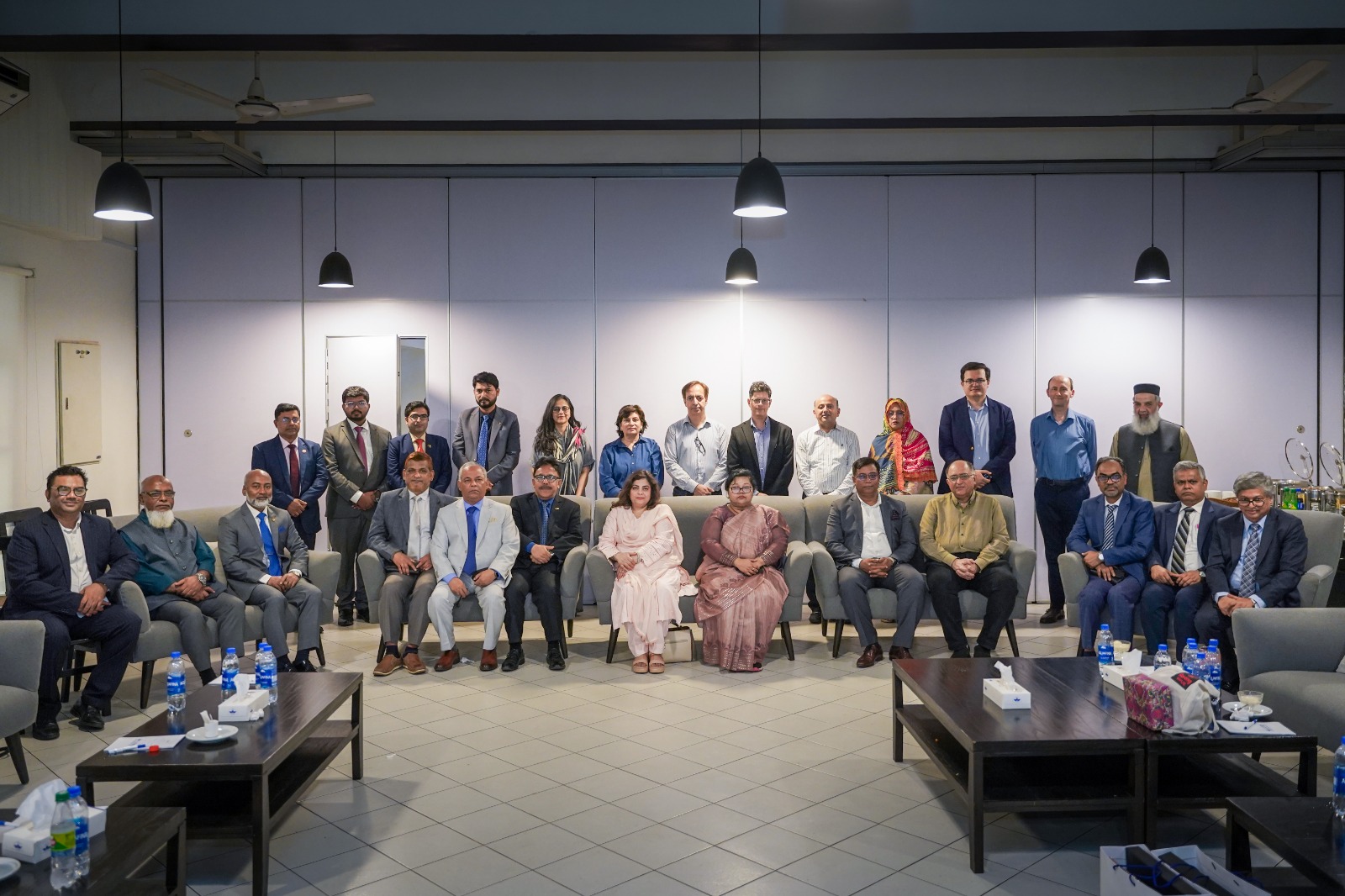
Establishing a calibrated framework for intellectual mobility is essential for regional stability and progress. Recently, a high-level delegation of academic leaders from Bangladesh arrived at LUMS to strengthen regional academic linkages, aiming to catalyze innovation through shared knowledge systems. Facilitated by the Higher Education Commission (HEC) Pakistan and led by Prof. Dr. Mamun Ahmed of UGC Bangladesh, this engagement marks a structural shift in South Asian educational diplomacy.
The delegation included Vice Chancellors from prominent public and private institutions, alongside senior officials from the University Grants Commission (UGC) Bangladesh. Consequently, this high-density gathering focused on practical mechanisms for research collaboration and faculty mobility. By prioritizing academic integration, both nations aim to optimize their human capital and baseline institutional efficiency.
Strategic Foundations for Regional Excellence
LUMS continues to expand its footprint within the Bangladeshi educational landscape. Specifically, the university has participated in HEC Expos across Dhaka, Barishal, Rajshahi, Sylhet, and Chittagong. These previous engagements served as a precursor to the current strategic dialogue. Furthermore, the existing MoU with North South University and ongoing ties with the University of Chittagong provide a solid foundation for this expanded partnership.

During the summit, LUMS Vice Chancellor Dr. Ali Cheema and Provost Dr. Tariq Jadoon analyzed methods to synchronize academic standards. The participants explored joint initiatives in executive education, legal frameworks, and multidimensional research. This precision-based approach ensures that both systems learn from their distinct national contexts while leveraging shared historical commonalities.
The Situation Room: A “Next Gen” Analysis
The Translation (Clear Context)
Beyond the diplomatic formalities, this visit represents the construction of a “Knowledge Corridor.” Rather than operating in silos, these universities are creating a protocol for credit transfers and collaborative inquiry. This means a student in Lahore could potentially benefit from research data generated in Dhaka, creating a unified intellectual market that transcends geographical boundaries.
The Socio-Economic Impact
For the average Pakistani student or professional, these regional academic linkages translate into tangible opportunities. Access to a broader network of mentors and peer researchers increases the competitive baseline of our graduates. Moreover, regional collaboration attracts international funding, which directly improves the laboratory infrastructure and digital resources available in local urban and rural educational hubs.
The Forward Path (Opinion)
This development constitutes a significant Momentum Shift. Moving from isolated bilateral agreements to a structured regional dialogue indicates a maturing educational ecosystem. If these institutions successfully implement the proposed faculty exchanges, we will see a rapid acceleration in regional problem-solving capabilities, particularly in sectors like technology and social policy.

Prof. Dr. Mamun Ahmed expressed gratitude for the hospitality while emphasizing that isolation leads to stagnation. He asserted that deeper collaboration between Bangladesh and Pakistan is a strategic necessity for academic excellence. By integrating institutional capacity, both nations can provide their students with the precision tools required for global competition.