

The Balochistan Education Department recently executed calibrated Balochistan teacher suspensions affecting 32 staff members following disruptive protests during the provincial budget session. This strategic move aims to restore systemic efficiency within the regional academic infrastructure. Authorities cited the Balochistan Employees Efficiency and Discipline Act (2011) as the baseline for these disciplinary actions. Consequently, the government prioritizes institutional stability over political disruptions to safeguard the educational future of the province.
The Structural Details of the Disciplinary Action
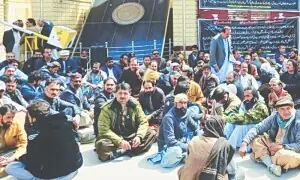
The department suspended 26 employees for their active involvement in the Balochistan Grand Alliance (BGA) protest movement. Specifically, police arrested these individuals during the budget session for obstructing official proceedings. Additionally, the administration suspended six more teachers in the Pishin district. These educators allegedly forced school closures and halted learning activities. Currently, district education officers are monitoring attendance strictly to prevent further unauthorized absences.
Impacted Districts and Regional Governance
The suspensions span multiple administrative zones, indicating the widespread nature of the disruption. The affected staff represent the following districts:
- Quetta: The provincial capital and epicenter of political activity.
- Pishin: Site of specific school closure allegations.
- Zhob, Loralai, and Jhal Magsi: Key rural educational hubs.
- Kachhi: Regional administrative center.
The Situation Room Analysis
The Translation (Clear Context)
While the surface narrative involves labor strikes, the structural reality reflects a struggle for institutional control. The Balochistan Education Department is asserting its authority to prevent political movements from weaponizing the public school system. By invoking the 2011 Efficiency and Discipline Act, the state signals that academic continuity remains a non-negotiable baseline for all civil servants.
The Socio-Economic Impact
This development directly affects students across Quetta, Jhal Magsi, and Zhob. When educators prioritize protests over classrooms, the primary victims are the youth in marginalized districts. Conversely, mass suspensions may lead to immediate staffing shortages in already under-resourced schools. Pakistani households now face a calibrated risk between academic consistency and the ripple effects of labor unrest on the local workforce.
The “Forward Path” (Opinion)
These Balochistan teacher suspensions represent a Stabilization Move. While discipline is essential for system efficiency, long-term progress requires a structural dialogue between the government and educators. Without addressing the underlying grievances of the Balochistan Grand Alliance, these measures merely offer a temporary catalyst for order rather than a permanent solution for national advancement.








