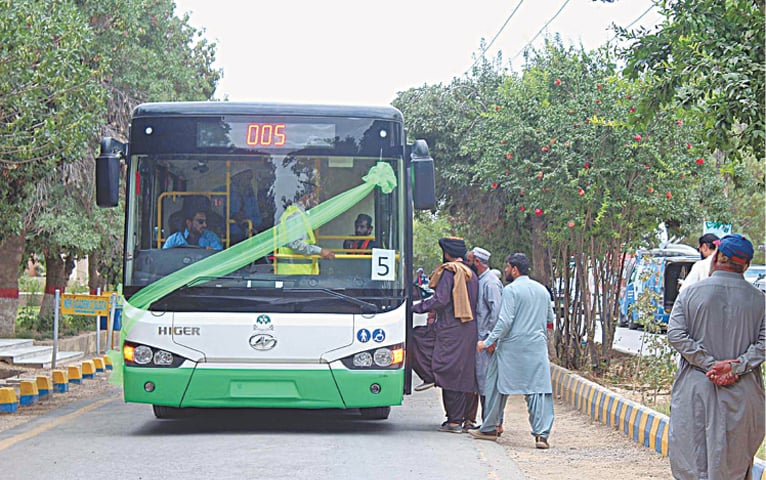
The Balochistan government recently deployed the Quetta Green Line bus service, a strategic transport initiative designed to bridge the gap between urban centers and specialized healthcare. Under the directives of Chief Minister Mir Sarfraz Bugti, this system provides a reliable, calibrated link to the Sheikh Mohammed Bin Zayed Al Nahyan Institute of Cardiology. Consequently, this development marks a shift toward architectural efficiency in provincial public service delivery.
Optimizing the Quetta Green Line Network
The provincial transport department now operates a fleet that maintains a rigorous schedule from 7:00 a.m. to 11:00 p.m. daily. To minimize transit friction, buses depart every 45 minutes, ensuring that patients and attendants reach their medical appointments without the burden of long wait times. Specifically, the network integrates several high-density residential and educational zones.
Strategic Route Mapping for Public Welfare
The service follows a precision-calibrated path through the city’s most critical nodes. Key stops included in this circuit are:
- BA Mall and FC Hospital
- Nawan Killi and Zarghoonabad
- Haji Manan and Labour Colony
- Abdul Khaliq Chowk and Christian Colony
- Highway Mart, Maleezai, and Nasran
- NUST and the Sheikh Mohammed Bin Zayed Al Nahyan Institute
The Translation: Contextualizing the Infrastructure
The launch of the Quetta Green Line represents more than a logistical upgrade; it is a structural realignment of city mobility. By connecting remote hubs like Nawan Killi directly to a specialized cardiology institute, the government is effectively reducing the cost of accessibility. This move indicates a move toward data-driven urban planning where transport routes serve as vital lifelines for healthcare infrastructure.
The Socio-Economic Impact
This initiative directly stabilizes the household economy for thousands of Quetta residents. By providing an affordable alternative to expensive private transport, the government is alleviating the financial pressure on families facing medical emergencies. Furthermore, for the students at NUST and the workforce in the Labour Colony, this reliable grid acts as a catalyst for increased productivity and safer commutes. Ultimately, it strengthens the social fabric by ensuring that high-quality cardiac care is no longer a privilege of those with private vehicles.
The Forward Path: Strategic Assessment
We categorize this development as a Momentum Shift. While Balochistan has historically faced infrastructure deficits, prioritizing a healthcare-centric transport route demonstrates precision in policy execution. This strategy transitions Quetta from a fragmented transport model to a cohesive, system-oriented network. Moving forward, the expansion of this baseline to other medical facilities will be essential for sustained regional progress.