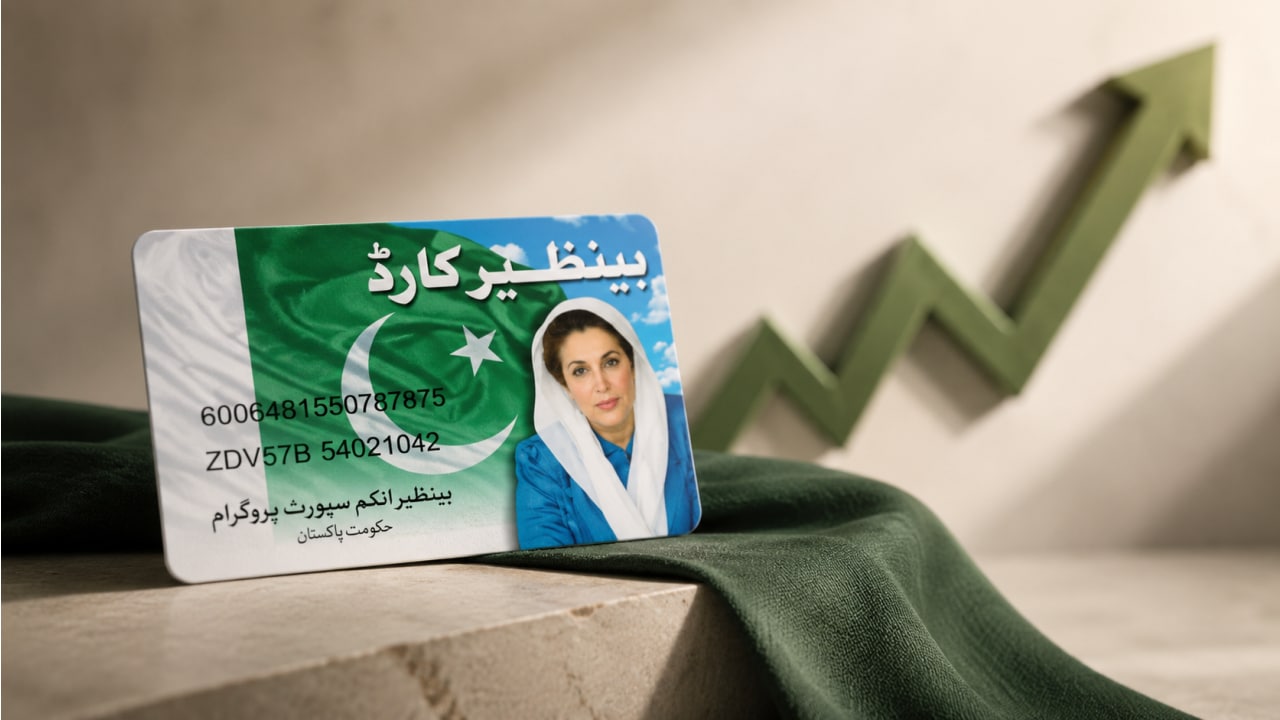
The integrity of Pakistan’s social safety net requires a precise calibration of data and oversight. The latest BISP audit report for the fiscal year 2025 has identified a significant structural exposure exceeding Rs. 25 billion. This financial discrepancy stems from weak internal controls and systemic data deficiencies across 600,000 beneficiary records. Consequently, the program now faces renewed scrutiny regarding its capacity to filter ineligible recipients effectively.
Analyzing the BISP Audit Report: Identifying Systemic Leakage
The Auditor General’s findings highlight a critical deviation from the 2019 federal cabinet mandate. Specifically, the program disbursed Rs. 515.7 million to 12,078 government employees, pensioners, and their spouses. These individuals received funds despite a clear legal prohibition against civil servants accessing these resources. Furthermore, the audit detected 1,719 beneficiaries who own high-value vehicles, representing a direct violation of the poverty threshold protocols.
Data validation failures extend into the educational sector as well. For instance, 165 schools received duplicate stipends through the Benazir Taleemi Wazaif programme. This overlap with Pakistan Bait-ul-Mal funding resulted in a misallocation of Rs. 17.7 million. Additionally, 278 government employees were incorrectly enrolled as higher secondary students to claim educational stipends. These baseline errors suggest a fundamental disconnect in inter-departmental data sharing.
Structural Defects in Beneficiary Profiling
Precision in beneficiary profiling remains the most significant challenge for the program. The audit identified nearly 600,000 records missing spouse CNIC data, a vacuum representing Rs. 25.46 billion in disbursements. Moreover, thousands of cases involved a single spouse CNIC linked to multiple beneficiaries. These anomalies indicate that the current verification mechanisms lack the necessary technological rigor to prevent strategic exploitation of the system.
The Translation
In “Next Gen” terms, the BISP audit report reveals that our social safety net’s software and logic gates are malfunctioning. “Data deficiencies” effectively mean the system cannot distinguish between a high-ranking official and a citizen in need. The “weak internal controls” represent a failure in the algorithm designed to protect national capital. Essentially, the digital infrastructure currently lacks the “firewalls” needed to prevent unauthorized access to public funds.
The Socio-Economic Impact
This structural leakage directly diminishes the quality of life for the most vulnerable Pakistani citizens. Every rupee diverted to an ineligible government employee is a resource stolen from a child’s nutrition or a widow’s healthcare. For the urban professional, this signifies an inefficient use of tax revenue, which stalls national economic stabilization. In rural areas, duplicate stipends and misallocated funds create a trust deficit between the state and the populace, slowing the catalyst for grassroots development.
The Forward Path
This development represents a Momentum Shift toward necessary transparency. While the findings are concerning, the Departmental Accounts Committee’s directive to recover funds and synchronize data with NADRA is a calibrated move toward system efficiency. To achieve true progress, Pakistan must transition from manual inspections to an AI-driven, automated verification baseline. Establishing structural integrity in our welfare programs is the only way to ensure they serve as a genuine engine for national advancement.