

Global technology architect Apple is currently diversifying its Apple chip production by initiating small-scale testing with Intel. While TSMC remains the primary foundry for high-end silicon, this calibrated move signifies a structural pivot toward manufacturing resilience. Specifically, Apple is evaluating Intel’s 18A P process for lower-end and legacy silicon designs.
Calibrating Domestic Supply: Apple Chip Production and Intel’s 18A
Analyst Ming-Chi Kuo reports that the collaborative testing phase targets chips for the iPhone, iPad, and Mac ecosystems. Intel will manufacture these components within the United States, providing a strategic domestic baseline for Apple’s hardware. Currently, Intel’s 18A P process serves as a direct technical comparator to the TSMC nodes used in the A18 Pro silicon.
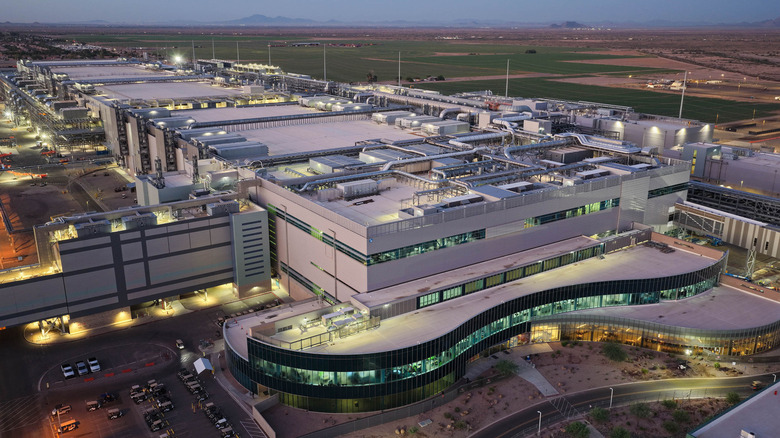
Kuo estimates that Intel’s order mix consists of approximately 80% iPhone-related hardware. Furthermore, this diversification ensures that Apple is not solely dependent on a single geographic region for its critical internal components. Consequently, this multi-vendor approach enhances the precision of Apple’s global logistics network.
The Strategic Transition Timeline
The roadmap for this partnership follows a disciplined scaling phase. Small-scale testing will continue throughout the current fiscal year to ensure structural integrity. Moreover, experts expect production volumes to ramp up significantly between 2027 and 2028. Following this peak, capacity may stabilize or decline by 2029 as Apple evaluates even more advanced process nodes from Intel.
Maintaining the TSMC Baseline
Despite these advancements with Intel, TSMC maintains its status as the primary catalyst for Apple’s flagship silicon. TSMC currently manages approximately 90% of all Apple chip production requirements. This dominant role ensures that the most sophisticated 3nm and 2nm designs remain within the established TSMC ecosystem for the foreseeable future.
The Translation (Clear Context)
Intel’s 18A node represents a sophisticated fabrication process designed to rival the world’s most advanced foundries. By outsourcing “legacy” or lower-tier chips to Intel first, Apple creates a strategic redundancy. If Intel successfully meets Apple’s precision standards, the tech giant secures a reliable secondary source for high-volume manufacturing on Western soil, reducing geopolitical risk.
The Socio-Economic Impact
For Pakistani students, professionals, and households, this diversification acts as a catalyst for market stabilization. Supply chain bottlenecks often lead to hardware shortages and inflated retail prices in emerging markets. By diversifying Apple chip production, Apple ensures a more consistent global supply of iPads and iPhones, which are essential tools for Pakistan’s growing digital workforce.
The Forward Path (Opinion)
This development represents a definitive Momentum Shift. Apple is systematically dismantling the single-foundry dependency that has characterized the last decade of silicon history. While Intel currently handles secondary tiers, the structural roadmap points toward a competitive duopoly between Intel and TSMC. This competition will inevitably accelerate system efficiency and drive down the baseline cost of high-performance computing.








