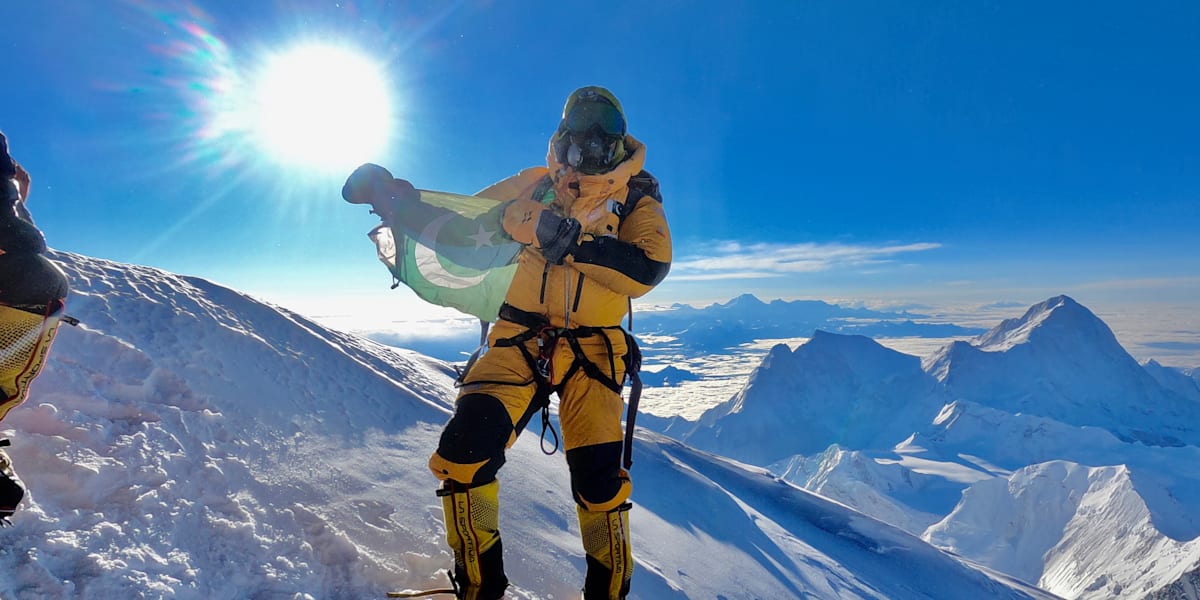
Pakistani mountaineer Salman Atique has successfully calibrated his ascent to the peak of Mount Everest, becoming the 14th citizen from Pakistan to conquer the world’s highest summit. On Thursday, at precisely 11:49 a.m., Atique raised the national flag at the 8,848-metre apex, establishing a new baseline for high-altitude excellence within our national sports framework. As the only climber from Pakistan among nearly 500 international permit holders this season, his achievement represents a significant strategic milestone for the country’s mountaineering community.
Technical Analysis: Navigating the Everest Congestion
The technical landscape of Everest climbing shifted significantly this year due to geopolitical and environmental factors. Consequently, the closure of the Tibetan route by Chinese authorities forced a record number of climbers onto Nepal’s southern slope. Specifically, Salman Atique navigated a high-density environment where a record 274 climbers summited in a single day, surpassing previous historical benchmarks. While dangerous ice conditions delayed the spring season, Atique maintained a precise climbing trajectory to utilize a narrow weather window effectively.

The Situation Room: The Translation
Behind the headline, the logic of this ascent is rooted in rigorous preparation and environmental adaptation. Last year, Atique summited Mount Manaslu, which provided the necessary physiological baseline for Everest’s “death zone.” The high volume of climbers this year intensified the risk of low-oxygen delays. Therefore, Atique’s ability to reach the summit amidst structural overcrowding underscores a high level of tactical discipline and physical endurance.
The Socio-Economic Impact
Elite mountaineering serves as a catalyst for Pakistan’s global soft power and technical sports sector. For the average Pakistani professional or student, this feat demonstrates that structural barriers in global arenas are surmountable through precision and disciplined execution. Furthermore, Salman’s success highlights the potential for developing Pakistan’s own high-altitude tourism infrastructure. By institutionalizing these successes, Pakistan can transform its northern regions into a regulated, high-value hub for international expeditions, directly impacting local rural economies.
The Forward Path: Opinion
We categorize this development as a Momentum Shift. While the individual triumph of a Pakistani mountaineer on Everest is a point of pride, the data reveals a gap in national athletic representation. Standing as the sole representative among 494 permits suggests that Pakistan’s mountaineering support systems require a structural upgrade. To maintain this momentum, the focus must shift from celebrating individual bravery to establishing a calibrated national framework that provides safety, funding, and global visibility for our elite climbers.