

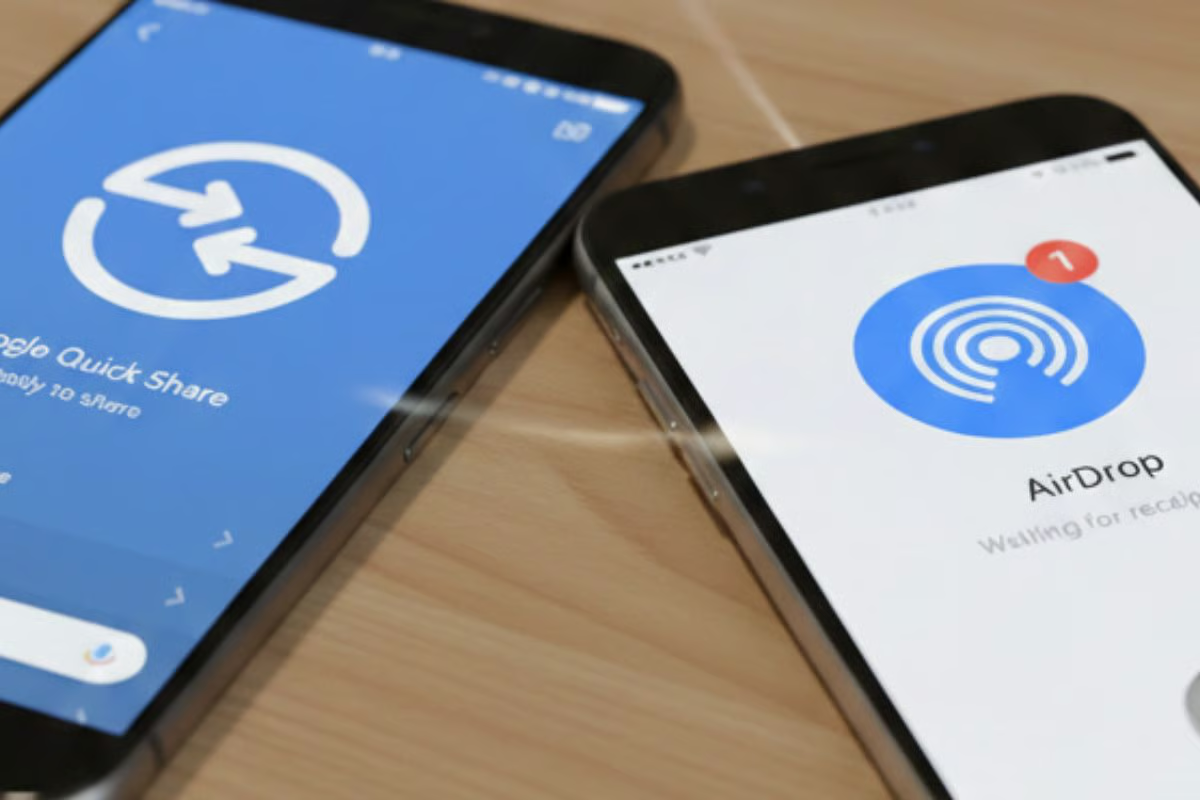
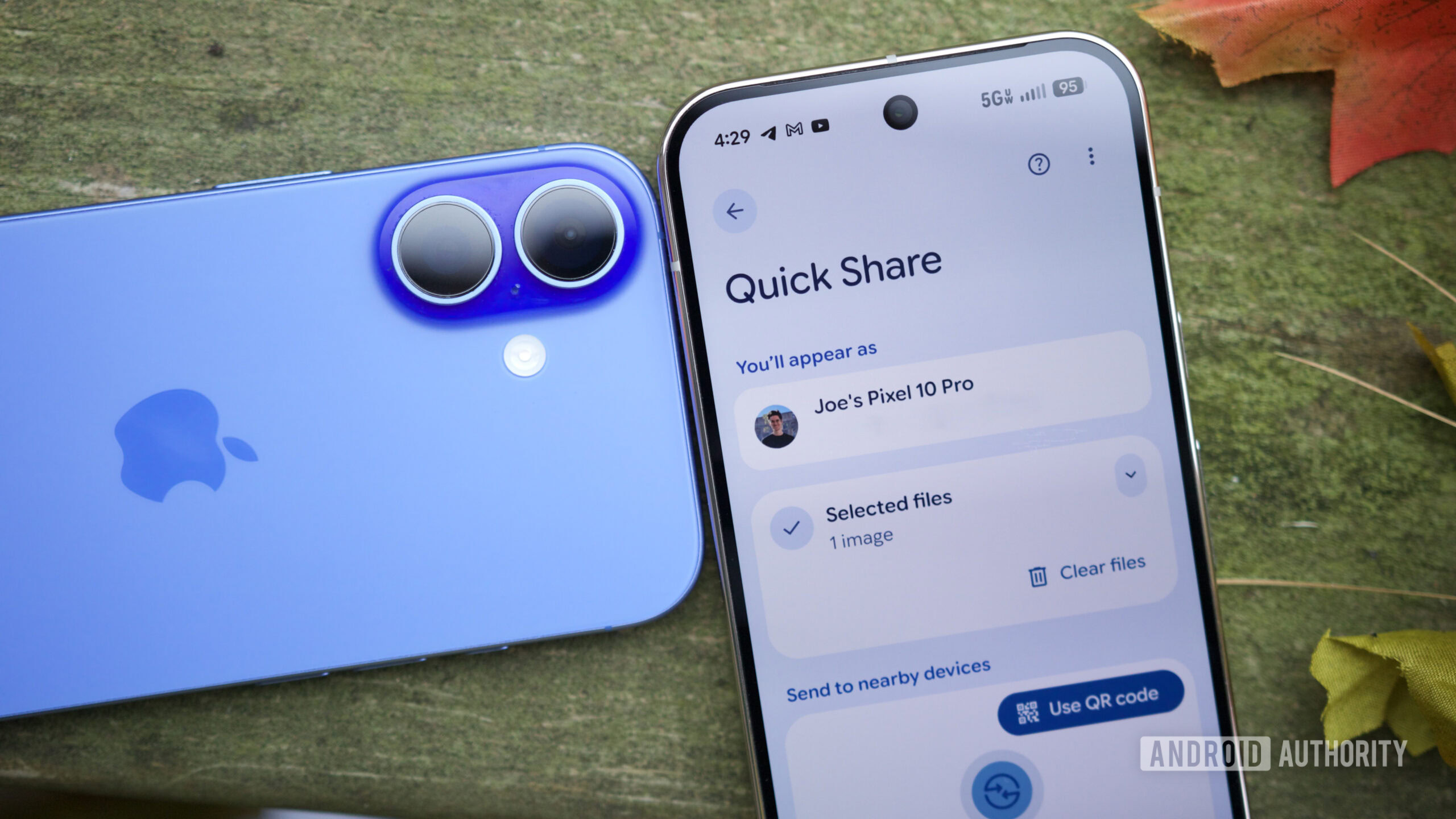
Systemic fragmentation between mobile operating systems has long acted as a bottleneck for digital collaboration. Consequently, Google is rolling out a precision-engineered Quick Share update that enables Android users to transmit files to iPhones, iPads, and Macs using encrypted QR codes. This strategic deployment offers a robust fallback for devices that lack native AirDrop-style compatibility, effectively bridging the communication gap between competing ecosystems.
Optimizing the Quick Share Update Mechanism
The operational logic of this feature is calibrated for simplicity and security. Specifically, Android users initiate the process by selecting their desired files within the Quick Share interface and generating a unique QR code. The recipient—using an iPhone or iPad—simply scans this code with their camera application. Subsequently, the system generates a private, secure download link that opens in the default web browser.
Furthermore, Google ensures that all shared data remains protected via end-to-end encryption. These files are temporarily cached on Google’s secure servers rather than consuming the sender’s personal Google Drive storage. This structural choice ensures that high-speed transfers do not penalize the user’s personal cloud quotas.
Structural Limits and Capacity
- Data Volume: Users can transmit up to 10GB of data every 24 hours.
- Batch Processing: The system supports up to 1,000 files in a single session.
- Distribution: Files can be disseminated to as many as 20 Apple receivers simultaneously.
- Persistence: The generated download links remain active for exactly 24 hours before expiration.
The Translation (Clear Context)
Previously, moving a large video from an Android phone to an iPhone required clunky third-party apps or slow cloud uploads. This Quick Share update simplifies that protocol. By using a QR code, Google bypasses the need for complex hardware-level handshakes between different manufacturers. Think of it as a secure, temporary digital bridge that exists only for the duration of your transfer.
The Socio-Economic Impact
In Pakistan’s diverse mobile market, where families and professional teams often use a mix of Android and iOS devices, this development is a catalyst for productivity. Students and freelancers can now exchange high-resolution project files without platform-based friction. This efficiency baseline is critical for a digital economy that relies on rapid information exchange and cross-platform hardware flexibility.
The Forward Path (Opinion)
This development represents a significant Momentum Shift. While it functions as a fallback, it signals Google’s intent to dismantle the “walled garden” approach to file sharing. We view this as a move toward a more interoperable digital future where hardware brand no longer dictates the speed of innovation.








