Humanity’s capacity for structural innovation is a fundamental baseline of our shared history. Recently, archaeologists meticulously unearthed a 2,200-year-old ancient circular temple in Tell el-Farama, Egypt, dedicated to the deity Pelusius. This architectural marvel features sophisticated water infrastructure once connected to the Nile Delta, signaling a strategic mastery of hydraulic engineering in the second century B.C.
Strategic Engineering of the Ancient Circular Temple
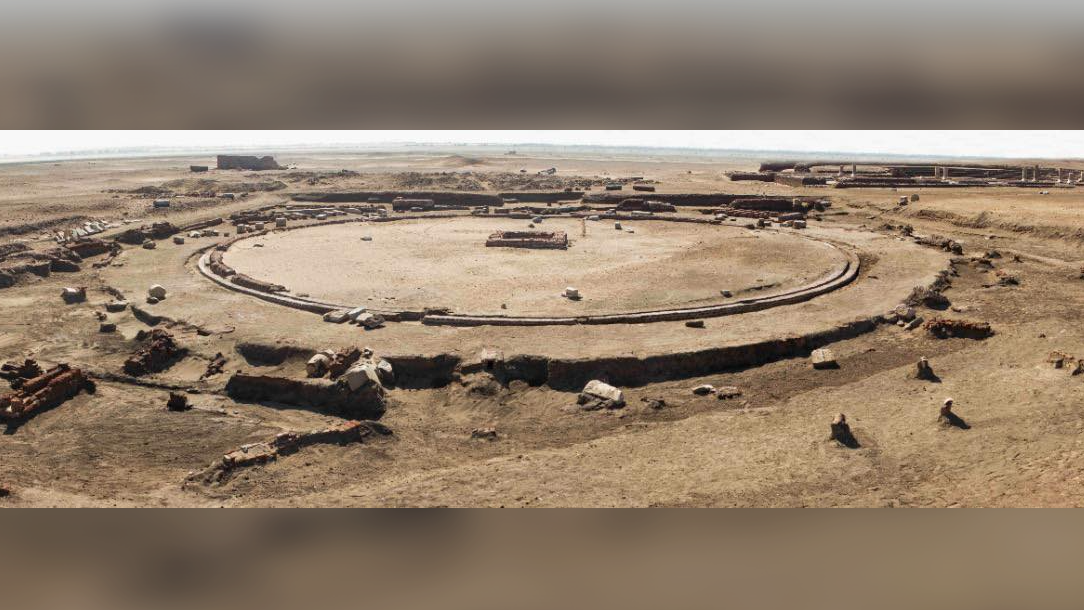
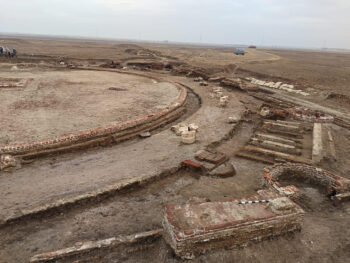
The discovery at Tell el-Farama, located in the ancient city of Pelusium, challenges previous architectural interpretations. Experts initially uncovered a red-brick circular segment in 2019, which they categorized as a local senate house. However, a complete excavation revealed a massive sanctuary complex centered around a circular basin measuring 115 feet in diameter. Consequently, researchers revised their analysis, identifying the site as a rare religious structure dedicated to sacred water rituals.

Complex Infrastructure and Sacred Hydraulics
Pelusium served as a critical port city and fortress during the pharaonic and Roman eras. The temple’s design reflects this strategic importance through its integrated water channels and reservoirs. Furthermore, the presence of Nile silt inside the basin confirms a physical and symbolic link between the deity Pelusius—whose name derives from the Greek word for “silt”—and the river’s life-giving flow. Key features of the site include:
- Circular Basin: A 35-meter diameter reservoir designed for ritual purification.
- Central Pedestal: A square platform likely used to support a monumental statue of the god.
- Hydraulic Connectivity: Calibrated channels that linked the temple directly to a branch of the Nile.
The Translation (Clear Context)
In archeological terms, finding a circular temple is rare because most Egyptian religious sites follow a linear, rectangular axis. This deviation suggests a specific cultural synthesis during the Ptolemaic period. The “Translation” here is simple: this was not just a place of prayer, but a highly engineered customs and ritual hub. It utilized the Nile’s natural silt as a spiritual catalyst, reinforcing the god’s role in the city’s economic and agricultural survival.
The Socio-Economic Impact
For the modern citizen, this discovery underscores the importance of strategic positioning. Pelusium was a busy customs station and fortress because of its location. Today, understanding how ancient civilizations managed their water resources and trade routes provides a historical baseline for modern urban planning in Pakistan. This discovery potentially boosts regional tourism and reinforces the value of preserving archaeological heritage as a driver for national pride and economic diversification.
The Forward Path (Opinion)
This development represents a Momentum Shift in our understanding of Mediterranean archaeology. It proves that even in the second century B.C., engineers achieved a level of precision that integrated environmental elements directly into structural designs. This discovery should serve as a catalyst for increased investment in deep-site excavations, as the Nile Delta clearly holds further secrets regarding ancient system efficiency.