
The Structural Baseline of Aviation Friction
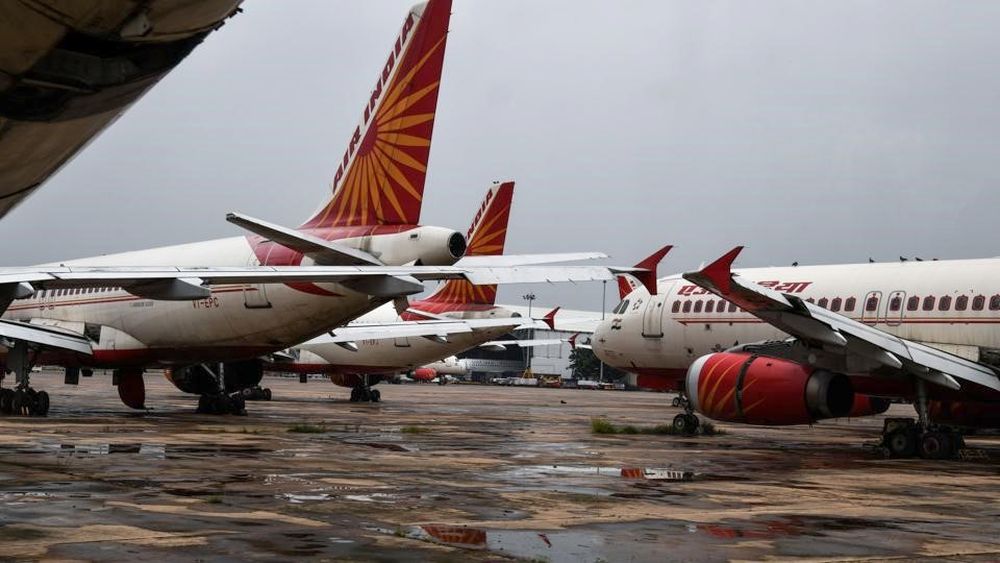
Global aviation dynamics are currently navigating a high-friction environment where geopolitical boundaries dictate financial equilibrium. Consequently, Tata Group-owned Air India has reported a staggering Air India record loss of $2.8 billion for the 2025–26 financial year. This deficit highlights the immense difficulty of executing a systemic turnaround during periods of intense regional volatility.
Singapore Airlines (SIA), which maintains a strategic 25 percent stake in the carrier, disclosed these figures in its latest annual report. Specifically, the loss equates to 3.56 billion Singapore dollars. This represents the most significant financial decline since the Tata Group assumed control in 2022. Furthermore, it marks one of the deepest deficits recorded by any major Asian airline in the post-pandemic era.
Structural Catalysts Behind the Air India Record Loss
Several operational headwinds have converged to squeeze the airline’s margins. Most notably, the Pakistan airspace closure for Indian carriers has forced aircraft to adopt longer, less efficient routes. Similarly, tensions in the Middle East have disrupted standard flight paths, significantly increasing fuel consumption and labor costs.
The financial pressure is compounded by external economic factors. High jet fuel prices and a dominant US dollar have specifically impacted long-haul profitability. In response, Air India has calibrated its network by:
- Temporarily reducing or suspending unprofitable international services.
- Recalibrating capacity on high-cost routes until at least August 2026.
- Prioritizing network stability to reduce passenger disruptions.
The Translation: Decoding Structural Deficits
In aviation engineering terms, an airline is only as efficient as its shortest route. When Pakistan airspace closure occurs, it forces a “detour” strategy. Effectively, this adds hours to flight times and tons to fuel requirements. This is not merely a logistical delay; it is a structural tax on every seat sold. The “Translation” here is simple: geopolitical friction creates a precision-loss in profitability that even the best management cannot easily bypass.
The Socio-Economic Impact: Regional Connectivity and Consumer Costs
For the average Pakistani and regional citizen, these developments signal a shift in travel economics. As carriers face billion-dollar deficits, they inevitably pass these costs to the consumer through higher ticket prices. Moreover, reduced flight frequencies limit the mobility of students and professionals. National progress relies on efficient connectivity; therefore, sustained airspace closures act as a catalyst for broader regional economic cooling.
The Forward Path: Strategic Momentum vs. Stabilization
In our expert view, this development represents a Stabilization Move rather than a momentum shift. While the losses are record-breaking, they coincide with a massive aircraft renewal and merger phase. Tata Group is essentially “rebuilding the engine while the plane is flying.” If Air India can withstand these geopolitical shocks, the long-term efficiency gains from their new fleet will eventually offset the current Air India record loss. Precision in route planning and diplomatic stability remain the only permanent solutions.








