

Precision diagnostics represent the structural baseline of modern healthcare efficiency. A pioneering AI cancer detection system called REDMOD is now capable of identifying pancreatic ductal adenocarcinoma—the deadliest form of the disease—significantly earlier than traditional medical protocols. By analyzing subtle tissue textures invisible to the human eye, this calibrated model provides a strategic window for life-saving intervention.
Overcoming Early Detection Barriers
Pancreatic cancer remains a primary clinical challenge due to its asymptomatic early stages. Consequently, most patients receive a diagnosis only when the disease has reached an advanced phase. To solve this, researchers engineered the Radiomics-based Early Detection Model (REDMOD). This system strategically targets AI cancer detection by evaluating “radiomics,” or high-dimensional data patterns within standard CT scans.
Calibration and Performance Benchmarks
The research team tested the model using 219 abdominal CT scans from patients who were initially cleared but later developed cancer. Strategically, REDMOD identified early malignant signals an average of 475 days before a clinical diagnosis occurred. Moreover, the model demonstrated a 73% sensitivity rate, nearly doubling the 39% accuracy achieved by human radiologists in the same dataset.
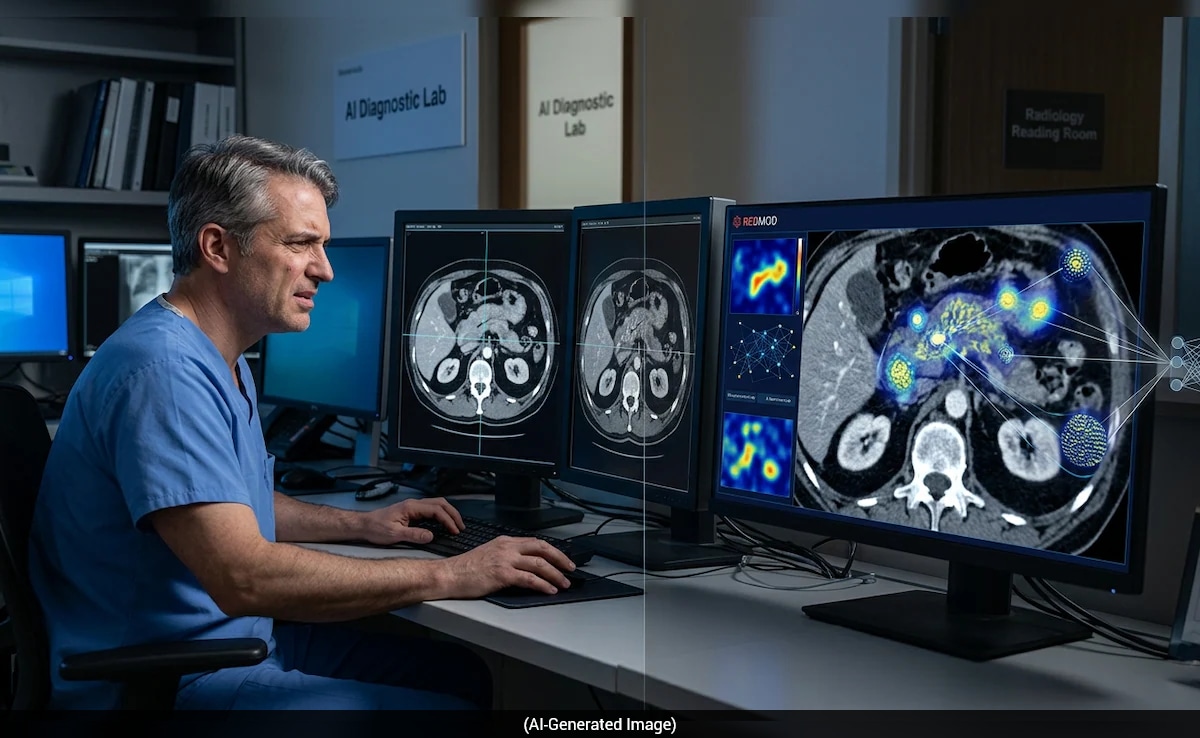
Furthermore, for scans taken more than two years before diagnosis, REDMOD maintained a 68% accuracy level. In contrast, expert radiologists correctly identified only 23% of those same cases. The system utilizes automated pancreatic segmentation, which removes human error by precisely isolating the organ from surrounding tissues.

The Translation: Contextualizing REDMOD
In technical terms, REDMOD transforms static images into quantifiable data. While a radiologist looks for visible tumors, this AI cancer detection tool scans for “textural biomarkers”—microscopic changes in how tissue reflects X-rays. By automating the segmentation process, the system ensures that the analysis is consistent, repeatable, and free from the fatigue-related oversights that can affect human clinicians.
Socio-Economic Impact for Pakistan
The integration of such technology could fundamentally alter the healthcare economy in Pakistan. Currently, late-stage cancer treatment places an immense financial burden on households and the national health infrastructure. Early detection through AI would reduce the need for aggressive, high-cost palliative care and increase the productivity of the workforce by improving survival rates. For the average citizen, this means a shift from “reactive” crisis management to “proactive” preventive medicine.
The Forward Path: Strategic Opinion
This development represents a significant Momentum Shift in precision oncology. While clinical implementation requires broader testing across diverse ethnic populations, the performance baseline of REDMOD is undeniably superior to current standards. As we move toward a STEM-driven future, adopting these diagnostic catalysts will be essential for modernizing the national healthcare framework.








