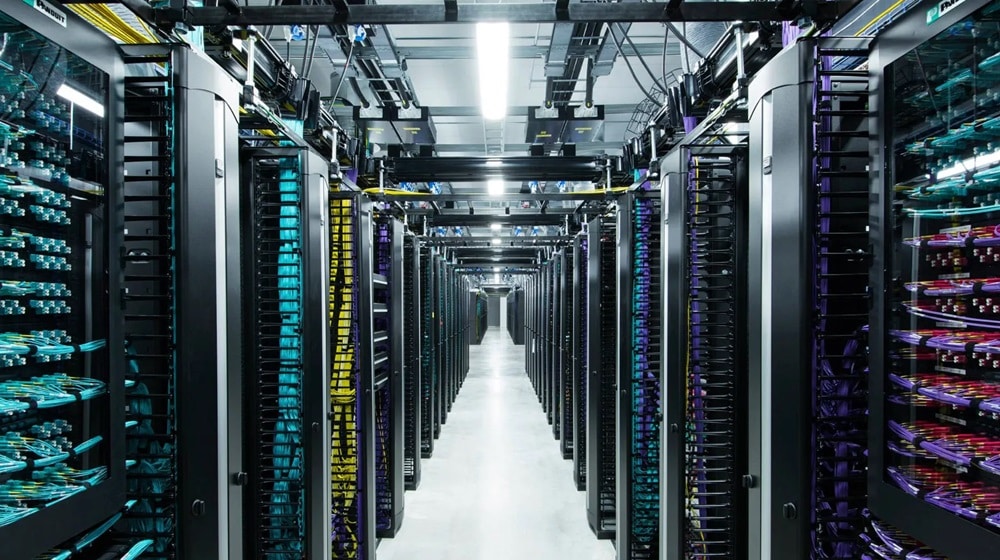
The Auditor General of Pakistan (AGP) recently identified significant financial irregularities totaling Rs. 885 million within the SCO Data Center project. This development highlights a critical breakdown in procedural oversight regarding the Ministry of Information Technology and Telecommunication’s infrastructure expansion. Consequently, the audit has raised concerns over unauthorized scope changes and alleged overpayments that deviate from the originally calibrated project baseline.
The Structural Calibration of the SCO Data Center
In May 2020, the Departmental Development Working Party (DDWP) approved the “Establishment of SCO Data Center for Providing Cloud Based Services in AJ&K and GB” with an initial estimate of Rs. 770 million. By May 2024, the ministry increased the project cost to Rs. 885 million through fund reappropriation. However, auditors discovered that the ministry failed to obtain a revised PC-I approval despite these substantial shifts in expenditure and operational scope.

Mechanical and Digital Discrepancies
Precision is vital in high-tier infrastructure, yet the audit found civil works exceeded allocations by Rs. 40.71 million. Furthermore, the physical procurement deviated sharply from the approved plan. Instead of the two mandated video walls, the team installed only one. In contrast, they procured 14 air conditioning units despite the original approval for a single unit, adding Rs. 43.59 million in costs. Similarly, the upgrade to two 500 KVA generators instead of one 150 KVA unit added another Rs. 19.67 million to the budget.
The Translation: Deciphering the Procedural Gaps
To translate these technical findings into “Next Gen” clarity, the core issue is not just the spending, but the lack of regulatory alignment. When a government entity changes the “Scope of Work” without a revised PC-I, it bypasses the system’s checks and balances. For example, while the physical server count dropped from 30 to 15, the ministry reportedly purchased software licenses for 30 servers. This mismatch resulted in an overpayment of Rs. 12.65 million, alongside Rs. 58.27 million in professional service overages. The ministry argues that dual-socket CPUs justified the licenses, but the AGP maintains that the contract did not permit this configuration.

The Socio-Economic Impact: Connectivity and Trust
How does this procedural divergence affect the average Pakistani citizen? For students and professionals in AJ&K and Gilgit-Baltistan, the SCO Data Center is the catalyst for reliable cloud services. Every rupee lost to irregularity is a rupee diverted from enhancing the speed and reach of regional internet. Irregularities in procurement can delay system stabilization, leaving rural households with sub-optimal digital access. Moreover, these financial gaps strain the national treasury, potentially leading to higher taxes or reduced funding for future STEM initiatives.

The Forward Path: A Momentum Shift or Stabilization?
From an architectural standpoint, this situation represents a Stabilization Move. While the ministry’s defense focuses on operational necessity—arguing that higher capacity cooling and power were essential—the lack of formal approval creates a governance deficit. The Departmental Accounts Committee has now ordered the ministry to regularize expenditures and recover overpayments. For Pakistan to achieve true momentum in the digital age, we must pair technical ambition with administrative precision. National advancement relies on the rigid adherence to fiscal protocols to ensure every catalyst for growth is fully optimized.