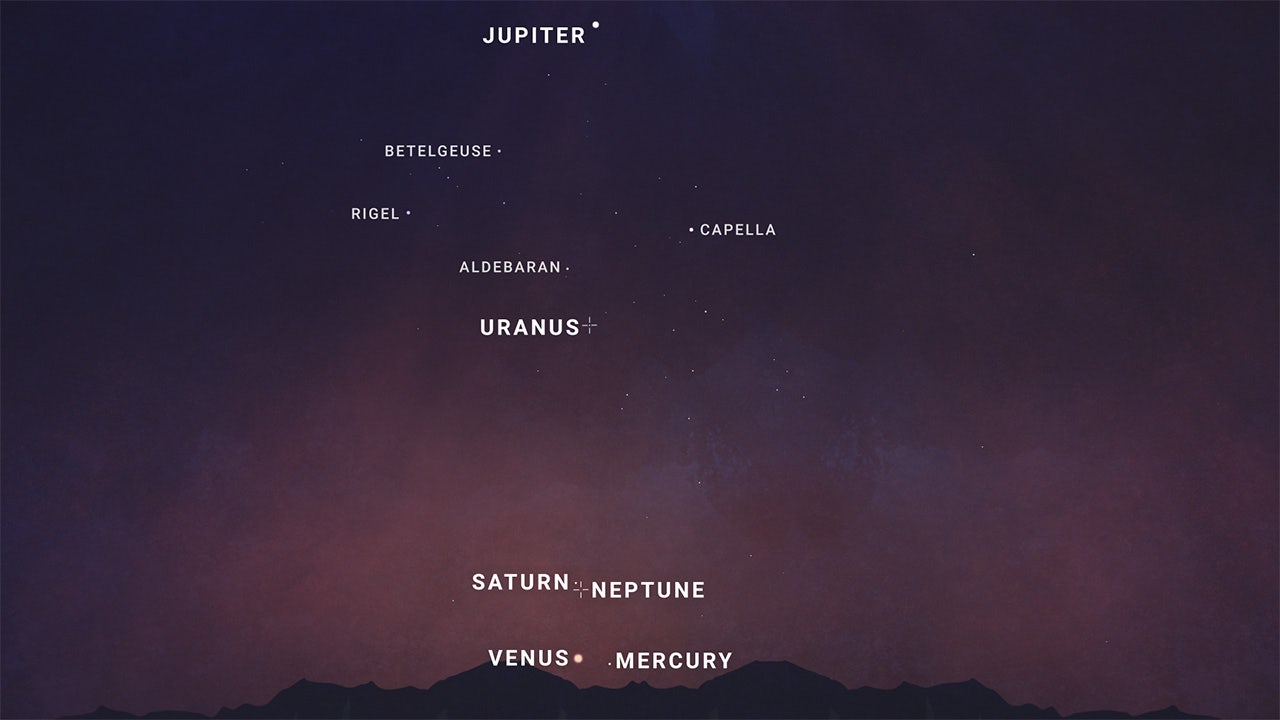
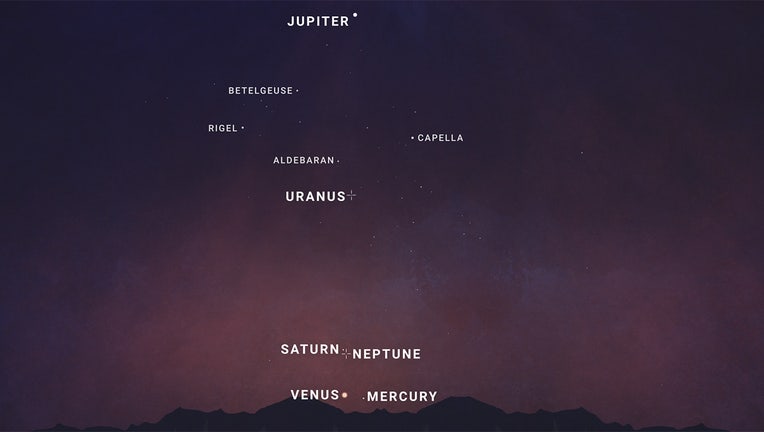
A precision celestial event is imminent as astronomers confirm six planets align in a rare “planet parade” visible this week. This significant astronomical occurrence, observable shortly after sunset on February 28, offers stargazers across Pakistan an unparalleled opportunity to witness Mercury, Venus, Jupiter, Saturn, Uranus, and Neptune appearing together. Consequently, this phenomenon provides a crucial moment for fostering scientific curiosity and advancing public engagement with astrophysics.
Strategic Observation: When and How to Witness the Alignment
Observational data indicates the optimal viewing window begins approximately 30 minutes post-sunset, extending for about one hour. For citizens across Pakistan, securing an unobstructed view of the western horizon is paramount. Furthermore, while Mercury, Venus, Jupiter, and Saturn will be discernable to the naked eye, the fainter Uranus and Neptune necessitate optical augmentation, such as binoculars or a telescope, for clear visibility.
:max_bytes(150000):strip_icc()/ms-planetary-alignment-getty-8befa8b604904a3bbeb52c8723a61b73.jpg)
The Translation: Deconstructing the “Planet Parade” Phenomenon
This “planet parade” represents an optical effect, not a direct, linear arrangement of celestial bodies in physical space. Structurally, planets orbit the sun along the ecliptic plane at varying velocities. Therefore, from Earth’s calibrated perspective, their differing orbital positions occasionally create the visual illusion of clustering together. This temporary configuration dissolves as each planet continues its unique trajectory.
Socio-Economic Impact: Cultivating STEM via Six-Planet Alignment
While a six-planet alignment may not directly alter daily economic metrics, its socio-economic impact in Pakistan is profound. Firstly, such events act as a catalyst for educational engagement, inspiring students to pursue STEM fields. Furthermore, it elevates national interest in astronomy and space sciences, which can lead to increased investment in research infrastructure and educational programs. For urban and rural households, it offers an accessible, shared experience that can spark scientific dialogue and critical thinking, thereby strengthening Pakistan’s intellectual capital for future innovation.
Understanding the Alignment: Rarity and Visibility Modulators
Planetary alignments, especially those involving six or more bodies, are statistically uncommon. NASA data confirms that while smaller groupings occur more frequently, a sextuple alignment is a rare observational baseline. However, atmospheric conditions and lunar phases are critical modulators of visibility. A waxing gibbous moon, exceeding 90% illumination, will be present, potentially obscuring the dimmer planets like Uranus and Neptune. Observers should thus prioritize clear skies and minimal light pollution.
:max_bytes(150000):strip_icc()/GettyImages-1442580306-93cc3f899d6a452da29880c71a10f7fa.jpg)
The “Forward Path”: A Momentum Shift for Scientific Literacy
This rare celestial event, where six planets align, represents a clear Momentum Shift for scientific literacy and public engagement in Pakistan. It provides a tangible, awe-inspiring demonstration of astrophysical principles, transcending mere theoretical concepts. Leveraging this moment, educational institutions and public platforms can catalyze a deeper national appreciation for science, structurally preparing the next generation for innovation and leadership in STEM fields. This is an opportunity to calibrate our collective gaze towards the cosmos and inspire a future of scientific discovery.