
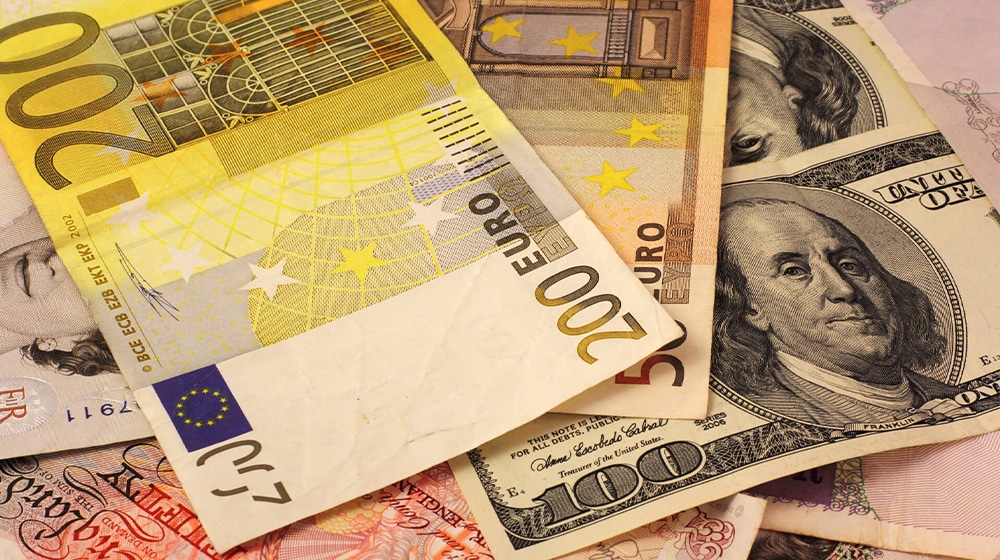
Pakistani Rupee Strength: A Calibrated Advancement in Currency Performance
Pakistan’s economic framework demonstrates a significant calibration as the Pakistani Rupee strength against the US Dollar marks its 105th consecutive day of gains. This sustained upward trajectory, closing at 279.55 after a one-paisa increment, signals a strategic stabilization effort within the national currency market. Furthermore, this consistent performance against the greenback establishes a new baseline for financial resilience, directly impacting the nation’s import-export balance and overall economic sentiment. Conversely, while the Rupee showed positive momentum against the USD, it experienced declines against other major international currencies, underscoring the dynamic nature of global financial interactions.
The Translation: Deconstructing Currency Dynamics for National Advancement
This consistent appreciation of the Pakistani Rupee against the US Dollar is not merely a statistical anomaly; it represents a fundamental shift in currency valuation. Historically, a stronger local currency reduces the cost of imported goods, from essential commodities like fuel and food to industrial raw materials. Consequently, businesses experience lower operational costs, which can translate into more stable consumer prices. While the Rupee lost ground against currencies such as the Euro and British Pound, these are specific market corrections. Specifically, the Rupee gained one paisa against both the UAE Dirham (AED) and the Saudi Riyal (SAR), currencies critical for remittances and trade with key Middle Eastern partners.

The Socio-Economic Impact: How Precision Currency Movements Affect Daily Life
The daily life of a Pakistani citizen is directly influenced by the Rupee’s performance. For households, a stronger Rupee means reduced inflation, making daily necessities more affordable. Students pursuing education abroad may face higher living costs, yet a stable domestic currency builds confidence in the national economy. Professionals in export-oriented sectors, however, might experience a marginal decrease in competitiveness due to higher relative prices for their goods. Ultimately, this sustained Pakistani Rupee strength against the US Dollar can lead to a more predictable economic environment, fostering both local and international investment. This predictability is a structural benefit for urban and rural populations.
Structural Data: Rupee’s Performance Across Global Currencies
An in-depth analysis of the Rupee’s interactions with various global currencies reveals a complex, yet precise, market calibration. Against the British Pound (GBP), the Rupee depreciated by Rs. 1.67, and by Rs. 1.72 against the Euro (EUR). Conversely, it exhibited gains of one paisa against the UAE Dirham (AED) and the Saudi Riyal (SAR), reflecting strategic stability in regional trade. Furthermore, the Rupee experienced declines of 87 paisas against the Australian Dollar (AUD) and 29 paisas against the Canadian Dollar (CAD). These granular movements highlight specific pressures and strengths within different currency corridors, providing a comprehensive view of Pakistan’s monetary position.
- USD: Gained 0.0113, closing at 279.5515
- EUR: Lost 1.7200, closing at 330.4439
- GBP: Lost 1.6761, closing at 377.9257
- AUD: Lost 0.8726, closing at 197.8945
- MYR: Lost 0.3104, closing at 71.9381
- CNY: Gained 0.0016, closing at 40.4640
- CAD: Lost 0.2980, closing at 204.5374
- AED: Gained 0.0124, closing at 76.1088
- SAR: Gained 0.0150, closing at 74.5222

The “Forward Path”: A Momentum Shift for Economic Resilience
This consistent strengthening of the Pakistani Rupee strength against the US Dollar undeniably represents a significant Momentum Shift. It indicates that structural adjustments and policy implementations are yielding tangible, positive outcomes in the currency market. This shift provides a robust foundation for enhanced economic predictability and could act as a catalyst for increased foreign direct investment. Such sustained performance suggests a strategic progression towards greater financial autonomy and systemic efficiency for Pakistan, moving beyond mere stabilization into a phase of calibrated growth and resilience.








