The strategic deployment of Pakistan’s national cricket team to Sri Lanka for the ICC Men’s T20 World Cup 2026 represents a calculated baseline for national advancement through global sports diplomacy. This critical mission, scheduled from February 7 to March 8, 2026, involves the precise execution of a tournament strategy and navigating complex international sports protocols. The team’s participation underscores Pakistan’s structured engagement in global athletic platforms, particularly within the framework of the Pakistan T20 World Cup initiative.
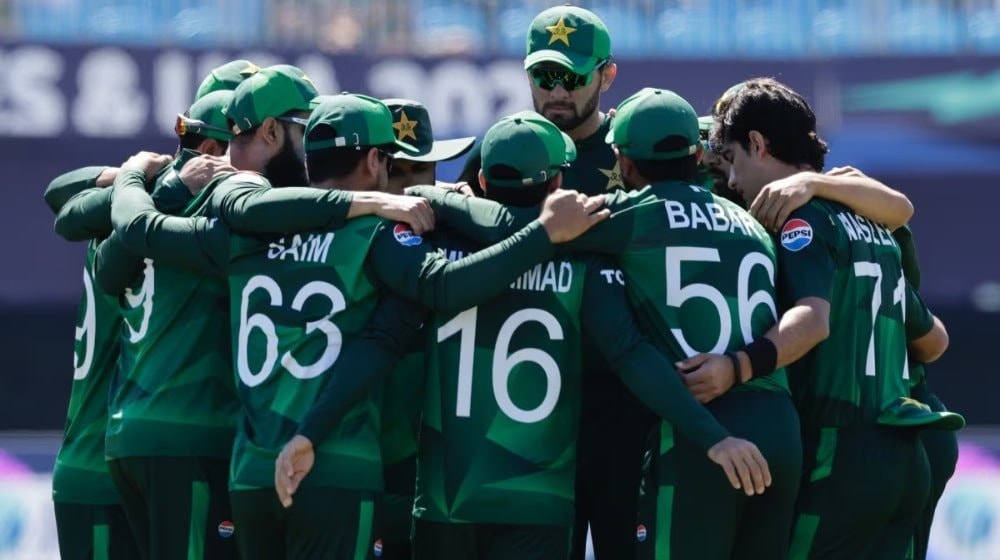
Pakistan’s national cricket team has strategically departed for Sri Lanka, initiating its campaign for the ICC Men’s T20 World Cup 2026, co-hosted by Sri Lanka and India. This 15-member squad, led by captain Salman Ali Agha, will primarily compete in Sri Lanka, adhering to the International Cricket Council’s “Fusion Formula” designed to ensure neutral venues for specific high-profile matchups. The structured approach to this Pakistan T20 World Cup deployment aims to optimize team performance and manage geopolitical sensitivities within the global cricket framework. Key fixtures include matches against the Netherlands and USA in Colombo, with the team’s participation in an originally scheduled match against India now strategically withdrawn.
Decoding the Pakistan T20 World Cup Strategy

Squad Composition and Strategic Venue Allocation
The 15-member squad, under the leadership of captain Salman Ali Agha, includes key players such as Babar Azam, Shaheen Shah Afridi, and Shadab Khan. This calibrated selection aims to maximize performance across diverse match conditions. Furthermore, the International Cricket Council’s “Fusion Formula” dictates that Pakistan will play all its matches exclusively in Sri Lanka. Consequently, this structural arrangement systematically prevents direct bilateral tours between Pakistan and India during ICC tournaments, ensuring neutral venues for both teams’ competitive engagements. This precise logistical planning streamlines tournament operations and mitigates external variables.
Tournament Schedule and Key Fixtures
Upon arrival, the team will undergo a two-day rest period, a strategic decision to facilitate optimal acclimatization. Subsequently, a critical warm-up match against Ireland is scheduled for February 4 at the Sinhalese Sports Club Ground in Colombo. This venue is also designated for Pakistan’s group-stage encounters: February 7 against the Netherlands cricket team and February 10 against the United States cricket team. Additionally, Pakistan will confront the Namibia cricket team on February 18. These initial fixtures are pivotal for establishing tournament momentum. The strategic scheduling ensures a progressive build-up to the knockout stages, with potential semi-finals and finals also slated for Colombo, underscoring a consistent operational framework.
The Strategic Withdrawal: Implications for the Pakistan T20 World Cup
A significant development involves the Government of Pakistan’s confirmation that the national team will participate in the ICC Men’s T20 World Cup 2026 but will not engage in the originally scheduled group-stage fixture against arch-rivals India on February 15. This decision, conveyed on Sunday, signifies a calibrated move to apply financial pressure on the International Cricket Council. Previously, Pakistan reconsidered its tournament participation after the ICC substituted Bangladesh with Scotland, following Bangladesh’s refusal to tour India.
Consequently, this strategic withdrawal reflects Pakistan’s assertive stance on international cricket diplomacy and its commitment to equitable tournament structures. This precise maneuver aims to recalibrate the baseline of stakeholder engagement within the ICC governance model.
Socio-Economic Resonance: Impact on Pakistani Citizens
The national cricket team’s participation in the Pakistan T20 World Cup catalyzes significant socio-economic effects across Pakistan. For students and young professionals, this event ignites national pride and provides aspirational models for excellence and discipline. Observing the team’s strategic performance cultivates an understanding of global competitive frameworks and the importance of calibrated decision-making. In urban centers, public screenings and community gatherings foster social cohesion, transforming competitive sport into a collective national experience. In rural areas, the team’s global presence serves as a powerful symbol of national capability and determination, inspiring future generations. Furthermore, the media coverage and associated digital engagement generate economic activity through advertising, merchandising, and tourism, however indirect. This structural impact transcends mere entertainment, reinforcing a collective national identity.
The Forward Path: Momentum Shift or Stabilization Move?
This development represents a Stabilization Move rather than a fundamental Momentum Shift. While the team’s departure signifies an adherence to international commitments, the strategic withdrawal from the India fixture indicates a deliberate recalibration of diplomatic leverage. Pakistan is meticulously positioning itself to advocate for more equitable structural arrangements within international cricket governance. The focus remains on optimizing existing frameworks through precise, targeted interventions for the Pakistan T20 World Cup. This disciplined approach seeks to ensure long-term systemic efficiency and fairness in global cricket.