

The Sindh Cabinet recently calibrated the provincial transport framework, implementing strict Sindh vehicle registration reforms to eliminate tax delinquency. Under the leadership of Chief Minister Murad Ali Shah, the government initiated a structural cleanup of the provincial database. Consequently, owners failing to meet fiscal obligations now face the permanent revocation of their vehicle credentials. This precision-based approach ensures that only tax-compliant machinery remains operational on public infrastructure.
Structural Mechanics of Sindh Vehicle Registration Policies
The updated baseline requires owners of damaged, scrap, or unserviceable vehicles to apply for deregistration by September 30, 2026. Furthermore, the cabinet has identified vehicles that have lacked tax declarations since July 2010 as “off-road.” If owners fail to settle outstanding dues within 30 days, the state will suspend their registration. After 60 days of continued nonpayment, the system will permanently cancel these registrations, effectively removing them from the provincial ledger.
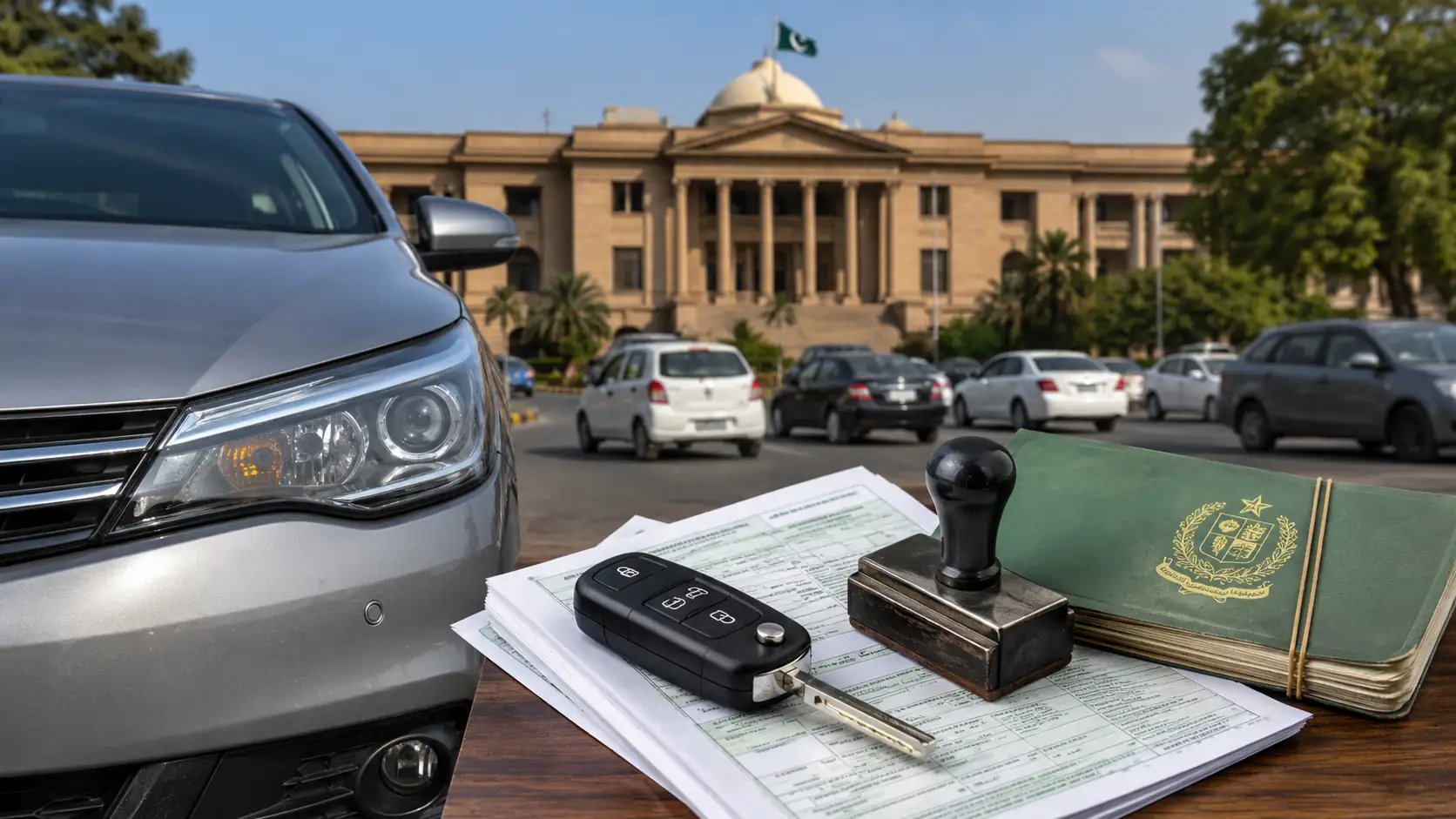
Strategic Incentives for Motor Dealers
To catalyze the automotive market, the cabinet approved a strategic holding period facility for licensed motor dealers. Specifically, dealers can now hold vehicles purchased for resale without registration for an initial six months. If necessary, they may obtain two additional three-month extensions, capping the total holding period at 12 months. During this window, dealers must pay a nominal reporting fee of Rs. 100 per vehicle while maintaining a valid dealership license.
The Situation Room: Strategic Analysis

The Translation (Clear Context)
The Sindh government is purging its digital ledger to improve administrative efficiency. By classifying non-compliant vehicles as “off-road,” the administration creates a precision-oriented baseline for revenue collection. This logic replaces outdated manual tracking with an automated system. It forces a transition from a passive tax environment to an active, regulated ecosystem supported by the SECP and the insurance industry.
The Socio-Economic Impact
This reform significantly benefits the average Pakistani citizen by streamlining vehicle ownership transfers. Previously, buyers often faced redundant costs. Now, third-party insurance coverage remains valid until its expiry date even after a vehicle changes hands. Consequently, this eliminates the need for duplicate insurance purchases. For urban professionals and families, this reduces the friction of secondary market transactions while increasing overall transparency in the transport sector.
The “Forward Path” (Opinion)
We classify this development as a Momentum Shift. The integration of the Central Depository Company into Sindh vehicle registration workflows marks a transition toward a fintech-enabled governance model. Rather than simple stabilization, this move installs a structural catalyst for future digital taxation. It signals that Sindh is ready to adopt global standards of precision in provincial administration.








