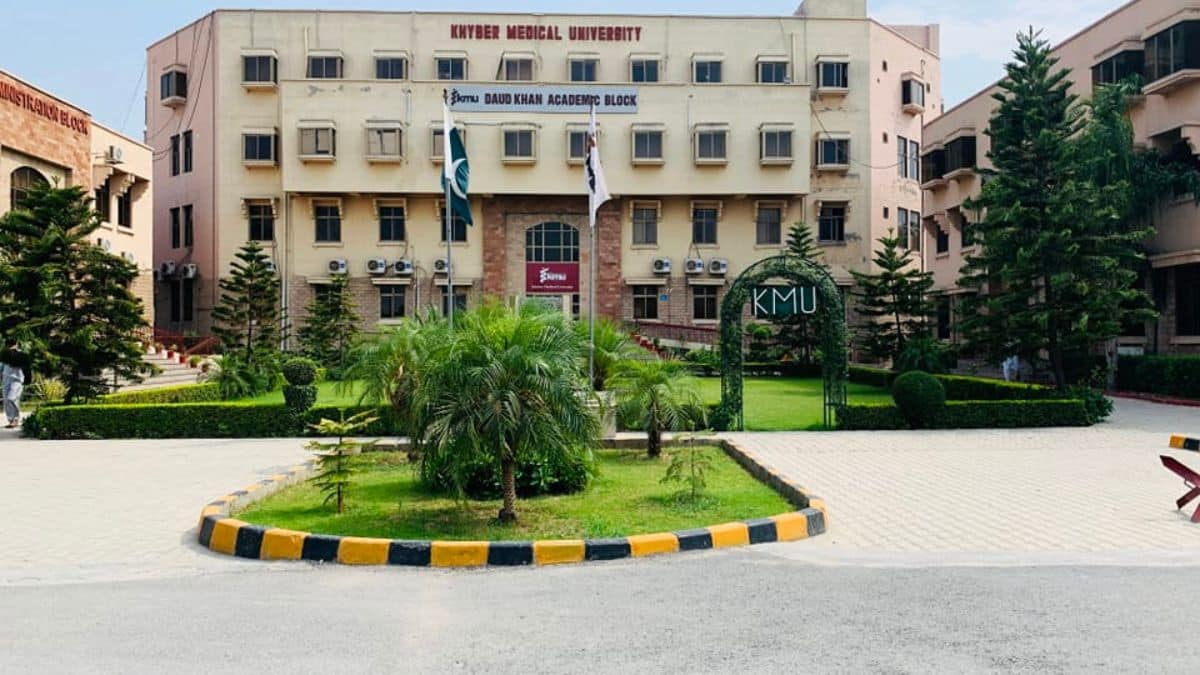
Khyber Medical University (KMU) recently executed a structural shift in academic assessment by conducting its first-ever KMU paperless admission test. This digital-first initiative calibrated the entrance process for over 18,000 candidates across Khyber Pakhtunkhwa and Islamabad. By providing instantaneous results and utilizing advanced biometric verification, the university has established a new baseline for transparency in Pakistan’s medical education sector.
The Digital Calibration: Scaling the KMU Paperless Admission Test
The KMU Centralised Admission Test 2026 served as a catalyst for modernization within the healthcare education framework. During the two-day testing window on July 25 and 26, the university deployed 23 air-conditioned computer centers to accommodate students pursuing degrees in Pharm-D, Physical Therapy, and Nursing. Furthermore, the administrative team ensured precision through rigorous identity checks and real-time CCTV surveillance across all examination halls.
- Total Candidates: 18,165 registered applicants.
- Infrastructure: 23 high-tech computer centers in KP and Islamabad.
- Instant Results: Computerized assessment systems delivered scores immediately upon completion.
- Security Protocols: Biometric verification and backup power systems guaranteed process integrity.
The Translation: Precision Over Paper
Moving away from traditional paper-based methods represents more than just a technological upgrade; it is a strategic move toward meritocracy. By eliminating manual grading, the KMU paperless admission test removes the possibility of human error or tampering. Consequently, the computerized assessment system provides a standardized benchmark for every student, regardless of their location. This structural precision ensures that only the most qualified candidates enter the healthcare workforce.
The Socio-Economic Impact: Efficiency for Households
This development significantly alters the daily life of Pakistani students and their families by removing the anxiety of result delays. Traditionally, students waited weeks for admission scores, which often delayed enrollment and financial planning. Now, the immediate availability of results allows families to make rapid, informed decisions regarding their educational investments. Additionally, the centralized nature of the test reduces the travel burden on rural students by providing local, tech-enabled testing hubs.
The Forward Path: A Catalyst for Educational Reform
In our professional analysis, this development represents a definitive Momentum Shift for the nation. While many institutions remain tethered to archaic logistics, KMU has demonstrated that Pakistan possesses the technical capacity to run large-scale digital examinations. This move acts as a catalyst, signaling to other provincial bodies that digital innovation is not just a luxury, but a necessity for maintaining academic integrity in a competitive global landscape.