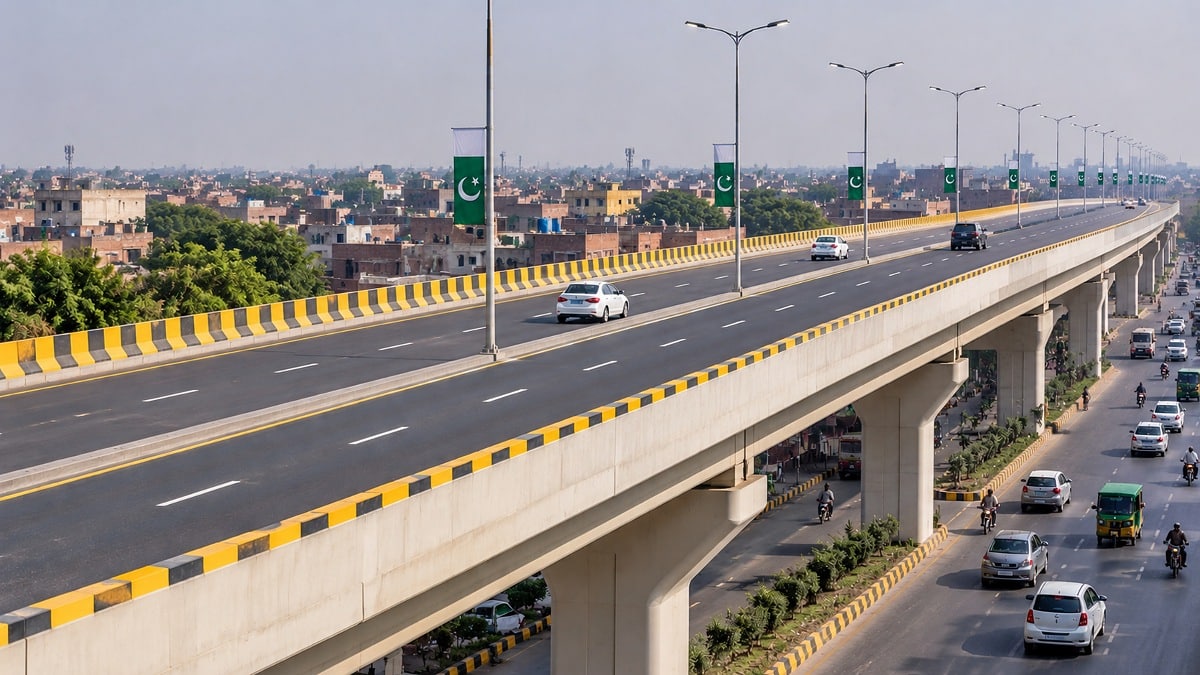
Rawalpindi is undergoing a strategic infrastructure recalibration as Commissioner Salman Ghani accelerates several Rawalpindi road projects toward a June 2027 completion deadline. This architectural overhaul targets the Qasim Market and Race Course Chowk junctions, serving a combined baseline of 432,000 vehicles daily. Furthermore, the administration is integrating clean water initiatives via a 1,400mm WASA pipeline to ensure structural stability for the city’s expanding population.
The Translation: Engineering Efficiency in Rawalpindi Road Projects
The “Qasim Market Development Project” and “Race Course Chowk Development Project” are not merely resurfacing efforts; they are calibrated interventions designed to resolve chronic traffic bottlenecks. By June 2027, these sites will handle nearly half a million vehicles daily, drastically improving the city’s flow. Simultaneously, WASA is laying a 1,400mm water supply pipeline on Syedpur Road. This project is currently 70% complete and will finalize by August 20, 2026, creating a more resilient urban utility network that provides reliable, clean drinking water.
The Socio-Economic Impact: Scaling Urban Infrastructure
These developments fundamentally alter the daily life of Pakistani citizens by enhancing the city’s baseline efficiency. The impact is structured across several key areas:
- Reduced Commute Times: 432,000 daily commuters will save significant hours, which consequently increases labor productivity and reduces fuel consumption.
- Health Security: The Syedpur Road pipeline ensures a reliable supply of clean drinking water, strategically reducing water-borne illnesses in urban households.
- Systemic Safety: New monsoon-calibrated safety protocols—including reflectors, lighting, and warning signs—protect professionals and students during hazardous weather.
The Forward Path: A Momentum Shift
This development represents a significant Momentum Shift for the region. By synchronizing road expansions with water infrastructure upgrades, Rawalpindi is moving away from reactive repairs toward proactive, strategic planning. The strict June 2027 timeline serves as a precision benchmark for governmental accountability and project management. Consequently, these precision-engineered projects will act as a catalyst for future economic zones, establishing Rawalpindi as a high-efficiency corridor in the national landscape.