
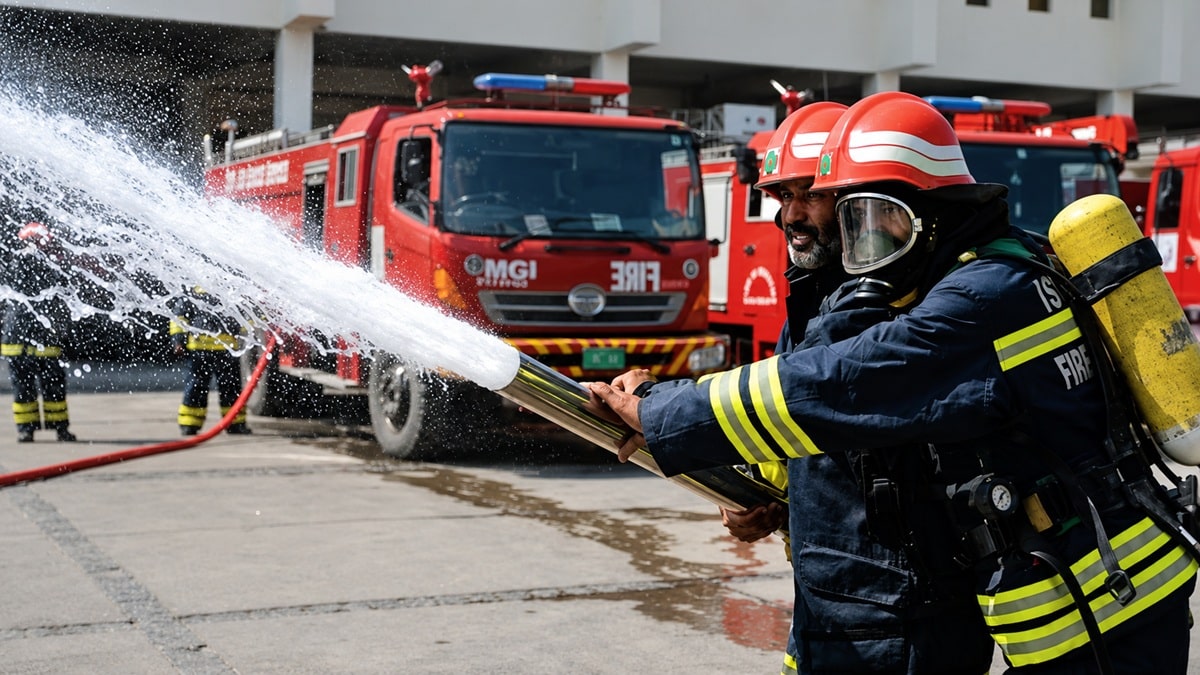
A resilient urban environment depends on a calibrated safety architecture. Consequently, the Karachi Metropolitan Corporation (KMC) is investing Rs. 100 million to overhaul the Karachi Emergency Response network. This strategic move targets fire stations and coastal rescue centers to minimize response times across high-density zones. Furthermore, the city government aims to align local protocols with international safety standards to protect human life more effectively.
Enhancing the Karachi Emergency Response Framework
The project, initiated by Karachi Mayor Barrister Murtaza Wahab, focuses on the structural rehabilitation and expansion of existing facilities. Specifically, the KMC plans to upgrade the Emergency Response Center at Hawksbay Beach. This location requires precision rescue operations due to the increased frequency of drowning incidents during holidays and coastal seasons. The upgraded facility will utilize modern communication and coordination systems to ensure the rapid deployment of lifesaving equipment.
Additionally, the KMC will establish a new fire station in Maripur. This facility serves a vital role for the surrounding industrial and commercial sectors. By placing resources closer to these economic hubs, the city reduces the baseline time required to contain industrial accidents and fires. Furthermore, the development program includes the rehabilitation of three critical sites:
- Rainbow Center Fire Station: Improving operational capacity in central districts.
- Lyari Fire Station: Strengthening response protocols in high-density residential areas.
- KMC Fire Headquarters: Modernizing the command and control center for city-wide coordination.

The Translation: Precision Safety Engineering
In technical terms, “modernizing infrastructure” goes beyond purchasing new vehicles. It involves integrating GPS-tracked coordination and high-speed communication arrays. These systems allow the Karachi Emergency Response teams to deploy resources with architectural precision. Consequently, the transition from reactive to proactive rescue operations reduces the margin of error during large-scale crises.
Socio-Economic Impact: Protecting the Urban Pulse
This development directly improves the daily lives of Karachi’s citizens by securing their physical and economic assets. For industrial workers in Maripur, the new station represents a structural safety net for their workplace. In contrast, families visiting coastal areas gain peace of mind through enhanced lifeguard presence and rapid medical intervention. Ultimately, a safer city attracts more investment and stabilizes the local economy by mitigating the costs associated with fire and disaster damage.
The Forward Path: A Momentum Shift
This initiative represents a significant Momentum Shift for the city. By prioritizing the Karachi Emergency Response infrastructure, the KMC is shifting from basic maintenance to proactive urban engineering. While these upgrades are a critical baseline, the long-term success of this framework will depend on continuous training and the integration of digital disaster-management tools. This investment signals a commitment to building a safer, more efficient megacity.








