
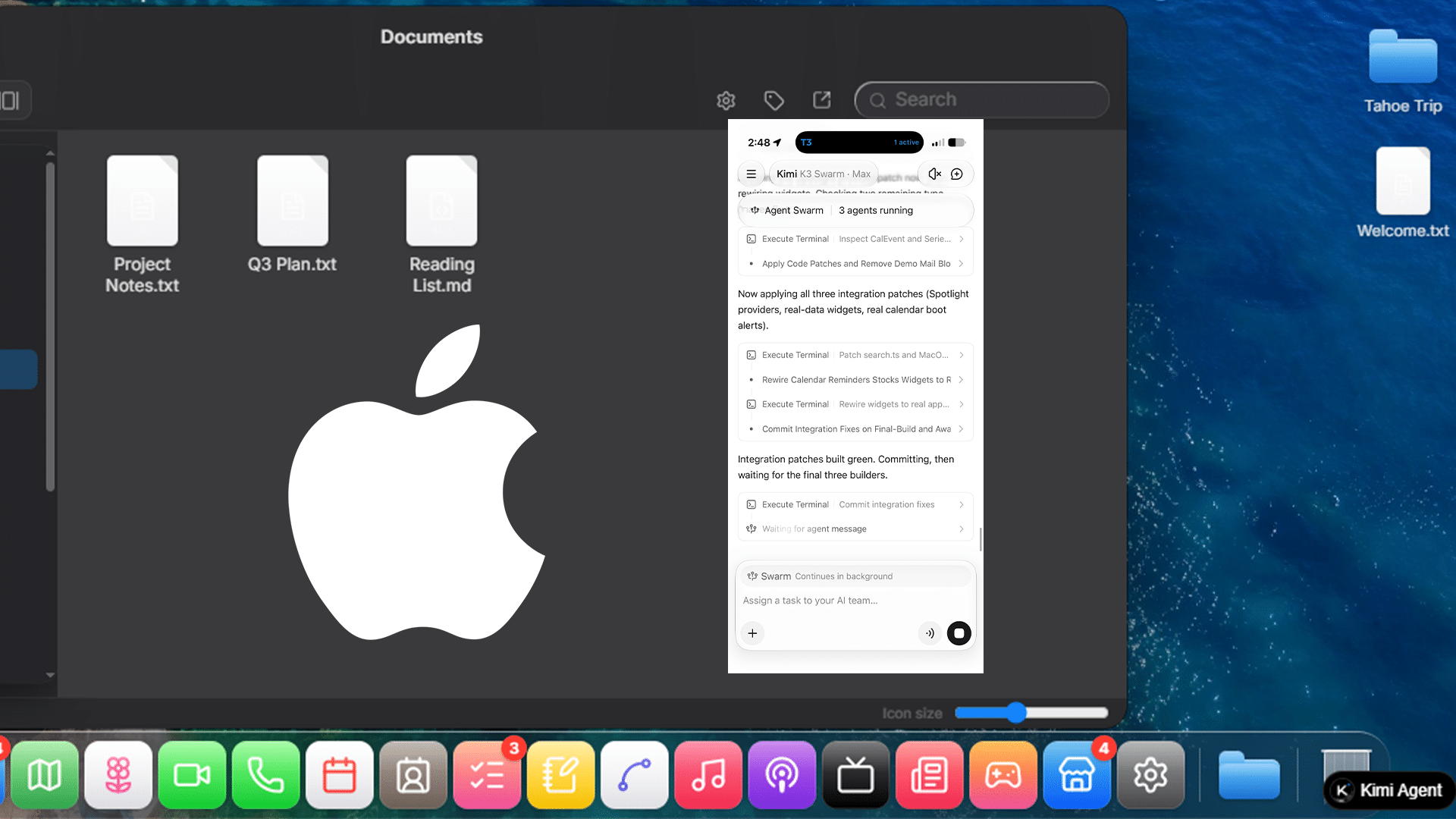
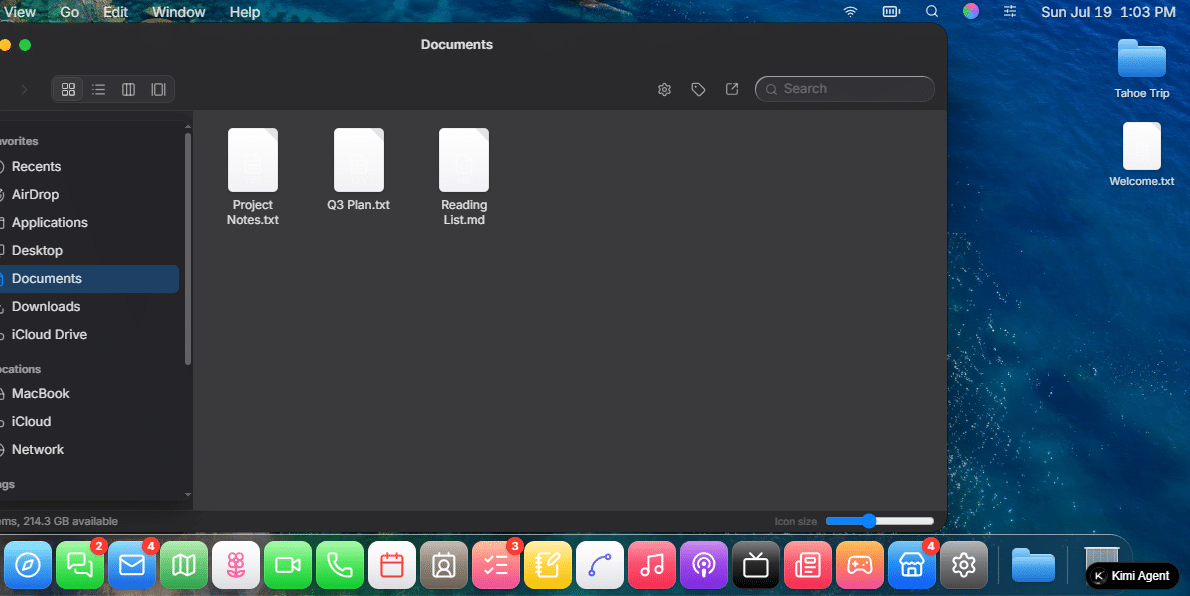
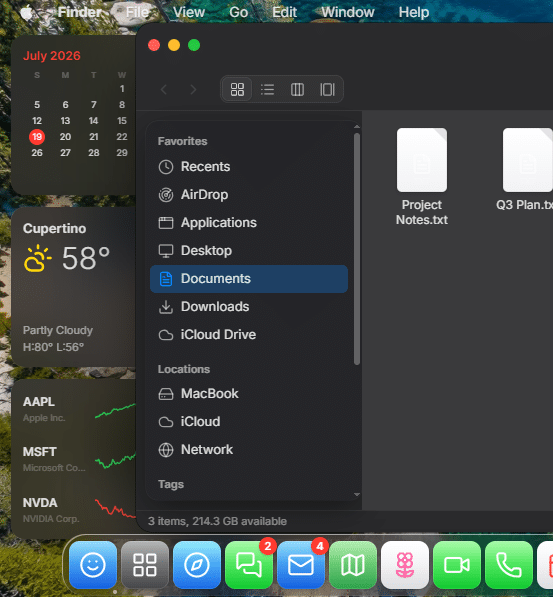
The release of the Kimi K3 AI model marks a strategic pivot in autonomous software engineering. Developed by the visionary startup Moonshot AI, this system recently demonstrated its calibrated precision by generating a functional macOS-style web application from a single, high-level instruction. Consequently, the boundary between architectural intent and digital execution is beginning to dissolve.
The Architectural Precision of Kimi K3
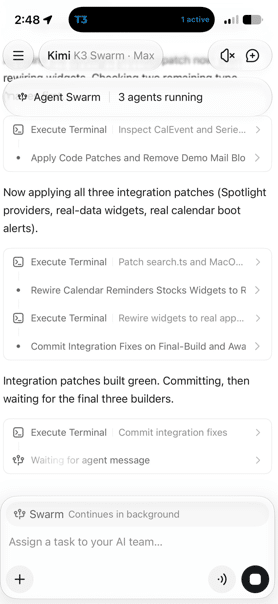
Constructing the workable interface required the Kimi K3 AI to utilize its “Agent Swarm” system. This structural framework allows multiple AI agents to collaborate simultaneously on distinct modules of a project. During the demonstration, the AI spent three hours and 20 minutes planning, debugging, and assembling the “Golden Gate” macOS 27 interface. Although the process consumed 60% of the user’s monthly credits, the result was a high-fidelity simulation featuring Apple’s new “Liquid Glass” visual effects.
Beyond Traditional Snippets: Full-Scale Assembly
While previous models focused on generating isolated code snippets, the Kimi K3 AI operates at a baseline of complete project assembly. It supports a context window of one million tokens, enabling it to maintain structural integrity over complex, long-running tasks. Furthermore, benchmarking data from Arena indicates that Kimi K3 dominates the Frontend Code Arena with a 76% win rate against global competitors.
The Translation: Contextualizing the Simulation
It is vital to distinguish between a visual simulation and a system-level kernel. This project is a web application designed to replicate the “look and feel” of macOS within a browser environment. It does not possess the underlying system software or kernel of Apple’s proprietary operating system. Instead, it serves as a powerful catalyst for understanding how AI can simulate complex user experiences without manual syntax entry.
The Socio-Economic Impact: What it Means for Pakistan
For the Pakistani workforce, the emergence of the Kimi K3 AI represents a democratization of technical capability. Students and budding entrepreneurs in urban and rural Pakistan can now bypass the steep learning curve of complex syntax to build functional prototypes. This shift reduces the capital requirement for software startups and empowers a new generation of STEM-driven professionals to focus on system logic rather than repetitive coding. Consequently, we expect a surge in local digital solutions tailored to household and professional needs.

The Forward Path: A Momentum Shift
We classify this development as a definitive Momentum Shift in the global AI landscape. The ability of the Kimi K3 AI to plan and execute multi-hour engineering tasks signals the end of the “AI as a helper” era and the beginning of the “AI as an architect” era. While the high computational cost remains a barrier, the structural efficiency gained through Agent Swarms will likely become the new baseline for global software development.









