
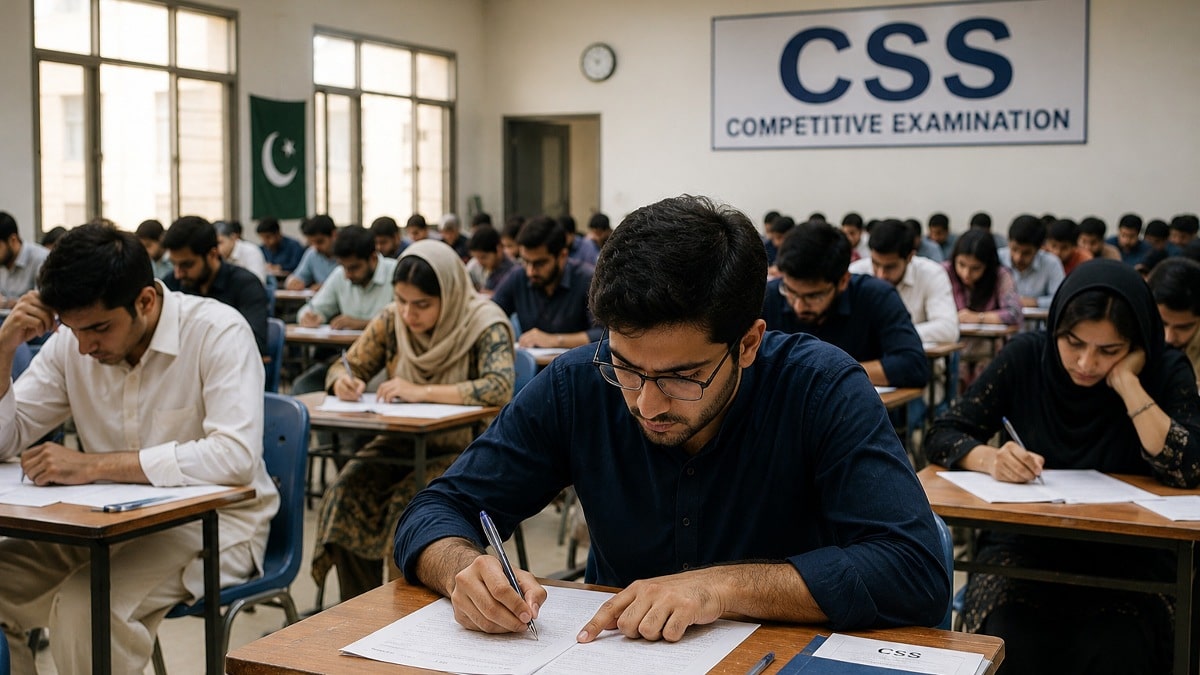
Calibrated data from the Federal Public Service Commission (FPSC) reveals a structural shift in national talent allocation, as CSS registrations in Pakistan plummeted by nearly 48% between 2022 and 2025. This significant decline marks a pivot in how the nation’s youth perceive the traditional catalyst for systemic change. While 35,059 candidates registered for the Central Superior Services (CSS) examination in 2022, that number contracted to just 18,139 by 2025.
The Quantifiable Decline in Federal Interest
The precision of the FPSC’s baseline data highlights a downward trajectory across all participation metrics. Beyond the initial registration drop, the actual number of candidates appearing for the examination declined from 20,262 to 12,792 during the same window. Consequently, the FPSC nominated fewer candidates for final positions, with figures falling from 239 in 2022 to 170 in 2025.
General Recruitment and Market Volatility
The trend extends beyond the elite civil service. General federal recruitment registrations peaked strategically at 436,757 in 2023 but suffered a 55% collapse by 2025, landing at 196,193. Despite this reduction in volume, the selection threshold remains exceptionally narrow. In 2025, the FPSC nominated only 0.94% of total registered CSS applicants, proving that while interest may be thinning, competition remains surgically intense.
The Situation Room Analysis
The Translation (Clear Context)
The logic behind these figures suggests a “Correction” in the recruitment market. Previously, the CSS was viewed as a universal default for graduates. However, the data implies that candidates are now performing a more rigorous cost-benefit analysis. A higher appearance rate (71% in 2025 vs. 45% in 2023) indicates that while fewer people register, those who do are more committed to the process, reducing “casual” or unprepared applications.
The Socio-Economic Impact
For the average Pakistani household, this shift signals a diversification of career aspirations. Students and professionals are likely pivoting toward the global remote economy, tech entrepreneurship, or international migration. While this reduces the burden on state recruitment systems, it simultaneously warns of a potential “brain drain” from the very administrative structures required to govern the nation’s future.
The Forward Path (Opinion)
This development represents a Momentum Shift. We are witnessing the end of the civil service’s monopoly on the Pakistani “Dream.” To maintain structural integrity, the government must modernize its value proposition. If the state fails to recalibrate the incentives of federal service, it risks losing its most innovative minds to more agile, private-sector alternatives.








