

The integrity of a city’s utility network acts as the baseline for public safety and urban functionality. Recently, a significant F-9 Park theft involving high-tension streetlight wires has plunged a major sector of Islamabad’s Fatima Jinnah Park into total darkness. Consequently, officials have estimated the structural damage and material loss at approximately Rs1 million, raising immediate alarms regarding the security of our public assets.
The Logistics of the F-9 Park Theft
Thieves systematically dismantled the electrical conduits within the park to extract valuable copper and aluminum for scrap resale. Sub-engineer Inayat Ullah Khan facilitated the formal legal response by filing a First Information Report (FIR) under Section 379 of the Pakistan Penal Code at the Margalla police station. Specifically, the security supervisor first identified the breach when multiple lighting sectors failed to activate during standard operational hours.

Police reports indicate that this is not an isolated event. Instead, the FIR mentions a pattern of recurring streetlight wire theft targeting the same geographic area. This pattern suggests a calibrated exploitation of existing security blind spots within the park’s expansive 750-acre perimeter.
The Translation (Clear Context)
In “Next Gen” terms, this incident is a classic example of infrastructure cannibalization. Criminals are not just stealing wire; they are liquidating public safety systems to generate quick cash in the unregulated scrap metal market. When a critical node like F-9 Park loses its illumination, the “system efficiency” of the entire urban center drops, as the space becomes a high-risk zone for further criminal activity.
The Socio-Economic Impact
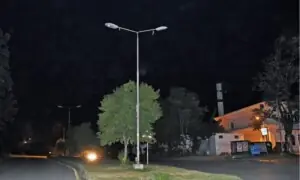
This security breach directly compromises the daily lives of Islamabad’s students, fitness enthusiasts, and families. For the average citizen, a park in darkness is a park that is inaccessible. Furthermore, the recurring financial burden of replacing these assets drains municipal budgets that should ideally fund technological upgrades or new community projects. Consequently, the taxpayer pays twice: once for the initial installation and again for the repair of avoidable vandalism.
The Forward Path (Opinion)
We categorize this development as a Stabilization Move that highlights a desperate need for a Momentum Shift. While registering an FIR is a necessary legal baseline, it does not prevent future occurrences. To truly protect our digital and physical frontier, Islamabad’s management must transition toward “Smart Park” technologies. Implementing vibration-sensitive sensors on conduits and integrating real-time drone surveillance would transform our reactive security posture into a proactive defense system.








