
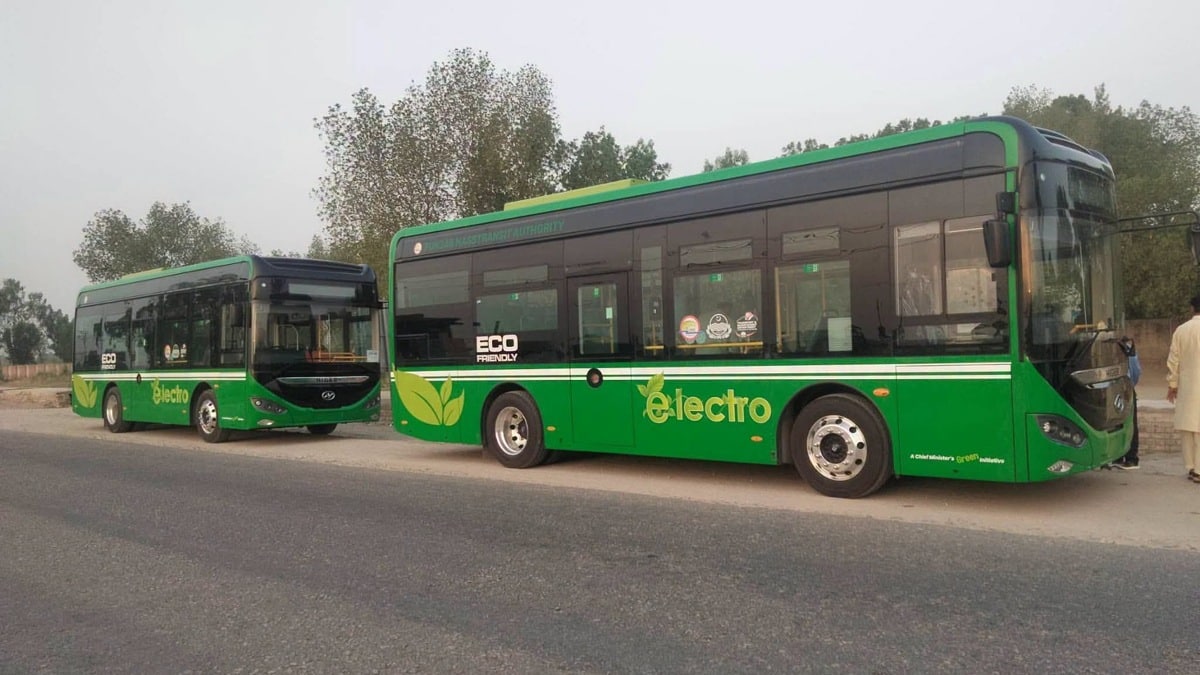
The structural transformation of Pakistan’s transport infrastructure reached a new baseline as the Punjab government expanded its Electric Bus Service into five critical districts. This calibrated move integrates Chiniot, Sialkot, Okara, Murree, and Layyah into a high-efficiency transit grid. By prioritizing sustainable energy, the administration is shifting from legacy fuel dependencies to a modern, precision-engineered public transport framework.
The Translation: Converting Tech into Public Utility
To understand this shift, one must look beyond the vehicles themselves. The expansion of the Electric Bus Service represents a transition toward “Green Mobility,” where zero-emission technology replaces internal combustion engines. This infrastructure update reduces the provincial carbon footprint while stabilizing long-term operational costs. Consequently, the government is not merely buying buses; it is building a modular ecosystem capable of supporting future energy demands.
Strategic Scaling and Fleet Targets

Chief Minister Maryam Nawaz confirmed a precise rollout schedule during the launch ceremony in Lahore. The data indicates a rapid acceleration in fleet capacity:
- Immediate Baseline: 1,100 electric buses will be operational across Punjab by August 15.
- Annual Target: 1,500 new units are scheduled for arrival within the current calendar year.
- Medium-Term Goal: The provincial fleet will scale to 3,000 buses over the next three years.
- Long-Term Vision: A strategic ceiling of 5,000 electric buses is set for completion within a five-year horizon.
Socio-Economic Impact: Precision Benefits for Citizens

The deployment of the Electric Bus Service directly impacts the daily logistics of Pakistani citizens. For students and professionals in districts like Layyah and Chiniot, this provides a predictable, low-cost transit alternative. Economically, the move mitigates the impact of global oil price volatility on local fares. Furthermore, the reduction in urban smog contributes to a quantifiable improvement in public health metrics, specifically reducing respiratory-related healthcare burdens in densely populated zones.
The Forward Path: Next Gen Analysis
This development represents a definitive Momentum Shift for the province. While many initiatives focus on maintenance, the Green Electric Bus project focuses on progress. By establishing a high-tech baseline in regional districts rather than just metropolitan hubs, Punjab is decentralizing development. To ensure long-term success, the government must now focus on the structural integrity of the charging grid and the localization of battery maintenance technology.








