
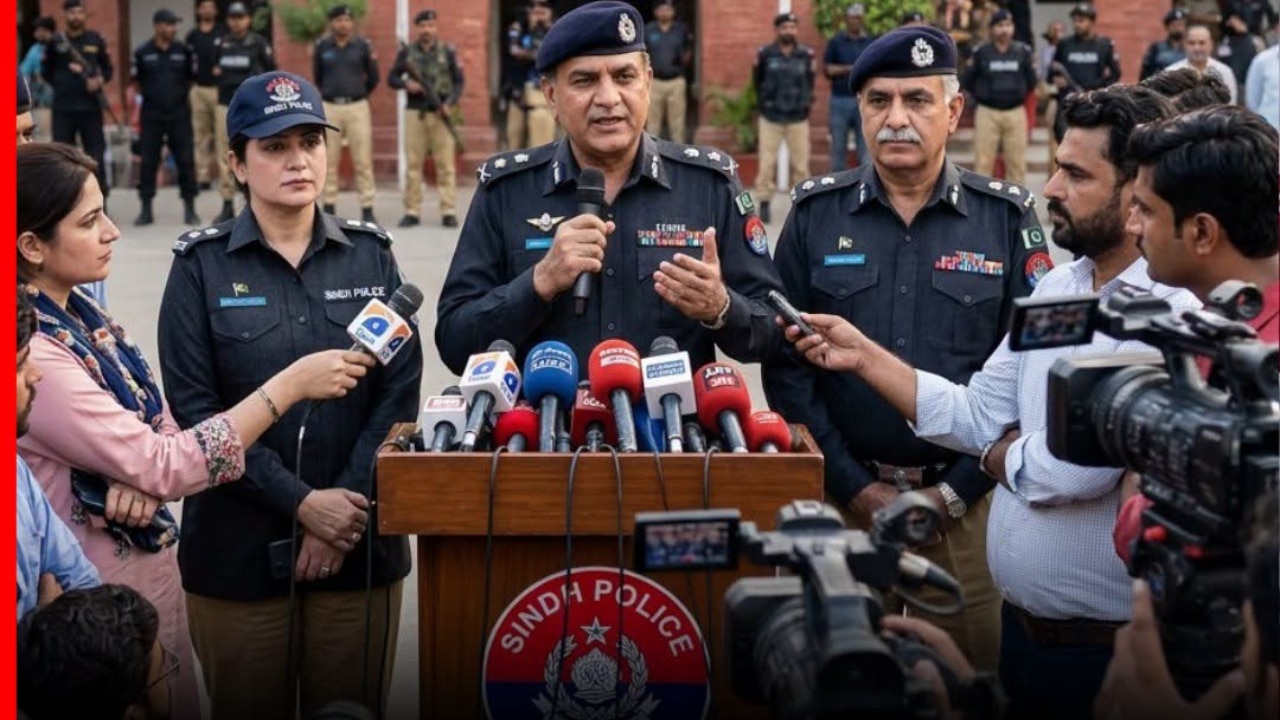
The modernization of institutional communication requires a calibrated approach to information flow. Consequently, the Sindh Police department has introduced a mandatory Sindh Police media protocol. This directive requires all officers to secure explicit approval from the Inspector General (IG) before engaging in any official media interactions. By centralizing the communication pipeline, the force aims to synchronize its public messaging and protect the structural integrity of sensitive intelligence.
Analyzing the New Sindh Police Media Directive
Under these refined regulations, officers cannot participate in media briefings, podcasts, or television interviews without prior IG authorization. Specifically, the circular restricts all commentary to an approved agenda and pre-defined talking points. This precision-based strategy ensures that the institution maintains a unified voice while minimizing the risk of unauthorized data leaks. Furthermore, supervisory officers have received instructions to enforce strict implementation across all departments.

The Translation (Clear Context)
This policy serves as a catalyst for institutional discipline rather than a simple gag order. Previously, individual officers could offer divergent viewpoints on complex cases, which often resulted in public confusion. By requiring IG permission, the Sindh Police is implementing a “Single Point of Truth” model. This systemic adjustment ensures that all shared data undergoes legal and operational scrutiny before reaching the public domain.
The Socio-Economic Impact
The new communication baseline directly impacts the daily life of Pakistani citizens by altering how they receive security updates. While residents may receive more verified and consistent information during emergencies, the barrier to local-level transparency has increased. Students and journalists might find it more difficult to obtain granular, neighborhood-specific crime data, as the flow of information is now strictly top-down. However, this centralization may improve the force’s credibility during critical national operations.
The Forward Path (Opinion)
This development represents a Stabilization Move. While centralizing authority protects institutional reputation, the Sindh Police must ensure this protocol does not stifle legitimate public inquiry. To maintain progress, the department should eventually integrate digital dashboards that provide real-time, objective data to the public. Ultimately, a balance between operational secrecy and civic transparency remains the most effective catalyst for building community trust.








