
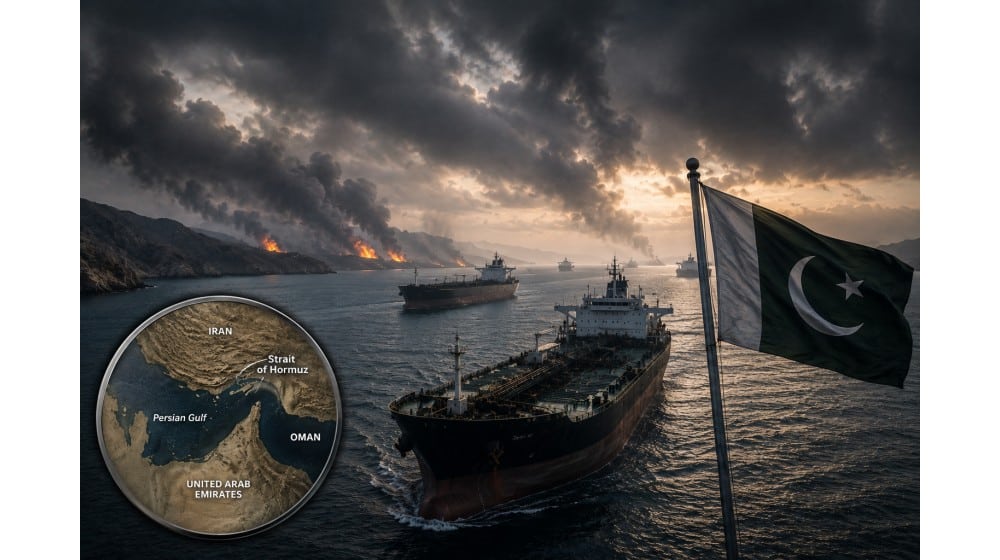
The global energy grid faces a calibrated recalibration as Iranian oil tankers Rani and Amil signal Karachi as their new destination. This structural shift follows the United States’ decision to reimpose a naval blockade on Iranian shipping. Consequently, these vessels, carrying approximately 1 million barrels of crude, are navigating toward Pakistani waters to secure a strategic waypoint. While the signals have changed, industry precision suggests the cargo will likely remain onboard to avoid triggering international sanctions against Pakistan.
The Tactical Diversion of Iranian Oil Tankers
Ship tracking data confirms that both vessels altered their course on Tuesday after exiting the Persian Gulf. Historically, such maneuvers allow sanctioned fleets to monitor naval developments from relatively secure locations. Moreover, analysts like Xavier Tang of Vortexa suggest that Karachi serves as a critical waypoint for vessels avoiding active US naval patrols. Consequently, the presence of these tankers in Pakistani waters represents a calculated move to maintain cargo integrity under regional pressure.
Furthermore, Pakistan has maintained a baseline of zero official Iranian oil imports for over a decade. Energy intelligence firms, including Kpler, emphasize that unloading this crude would expose Pakistan’s financial systems to severe structural risks. Therefore, experts believe the Iranian oil tankers are likely awaiting ship-to-ship transfers or a stabilization in maritime enforcement protocols.
The Translation: Deciphering the “Dark Fleet”
In technical terms, the Rani and Amil belong to the “dark fleet,” a network of vessels that utilize deceptive signaling to bypass trade restrictions. When these vessels “change destination signals,” they are essentially recalibrating their public-facing data to find safe harbor. Consequently, this move does not imply a commercial trade agreement between Tehran and Islamabad. Instead, it reflects a tactical search for a maritime “blind spot” where the vessels can remain stationary without immediate intervention.
The Socio-Economic Impact: Risk and Maritime Integrity
For the average Pakistani citizen, this development carries high-stakes economic implications. If the state were to facilitate these Iranian oil tankers beyond basic maritime passage, the threat of secondary US sanctions could disrupt international banking and fuel prices. However, the use of Karachi as a waypoint reinforces Pakistan’s strategic position in the Indian Ocean. For professionals in the maritime sector, this activity demands heightened precision in monitoring territorial waters to ensure national safety remains uncompromised.
The Forward Path: A Stabilization Move
This development represents a Stabilization Move. Pakistan is currently prioritizing maintenance of its international diplomatic baseline over the potential gains of illicit energy trade. While the proximity of these tankers suggests a momentum shift in regional naval activity, the operational reality remains one of cautious observation. Moving forward, Pakistan must maintain this disciplined neutrality to protect its structural economic interests while navigating the complexities of the US-Iran energy conflict.








