
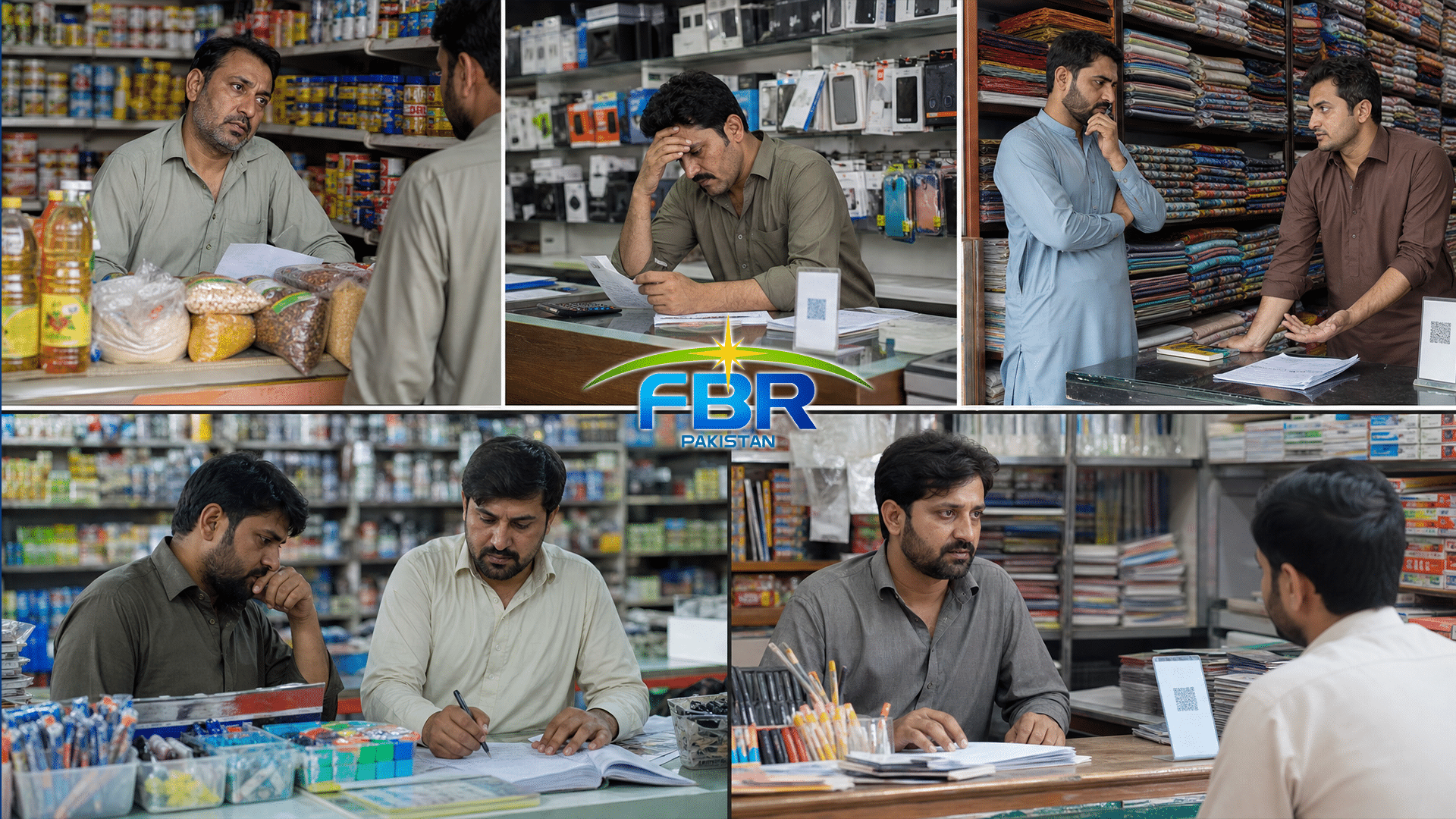
The Federal Board of Revenue (FBR) has unveiled a calibrated Simplified Tax Procedure to integrate millions of retail entities into Pakistan’s formal economy. This strategic framework specifically targets individual retailers with an annual turnover not exceeding Rs. 200 million for the 2026 tax year. By leveraging digital precision, the FBR aims to optimize revenue collection while minimizing the administrative burden on small-scale entrepreneurs.
Operational Dynamics of the Simplified Tax Procedure
Under this architectural shift, eligible shopkeepers will utilize the IRIS web portal or a dedicated mobile application to declare their financial baseline. This includes reporting sales, expenses, and net profits through a streamlined interface. Furthermore, the FBR has localized the process by offering forms in Urdu and various regional languages to ensure maximum accessibility across diverse demographics.
The financial obligation for participants is precisely defined. Retailers will pay an income tax equivalent to 1 percent of their gross turnover. However, the system maintains a stabilization floor; participants must contribute a minimum tax of Rs. 25,000 or the tax payable after adjustments, whichever is higher. Consequently, this provides a predictable fiscal roadmap for burgeoning businesses.
The “Green Plate” Protection Mechanism
A cornerstone of this reform is the introduction of the FBR “Green Plate.” Registered shopkeepers will display this official marker, which features a unique QR code linked to the owner’s National Tax Number (NTN) and shop credentials. Specifically, the FBR has mandated that no tax official may enter a premises displaying this plate for routine tax matters. This protocol creates a secure perimeter for compliant businesses, effectively eliminating unauthorized harassment.
- Eligibility: Individual retailers with turnover under Rs. 200 million.
- Exclusions: Tier 1 retailers, jewelry sellers, and professional service providers (doctors, lawyers).
- Compliance: Exemption from mandatory Point of Sale (POS) and digital invoicing infrastructure.
The Situation Room Analysis
The Translation (Clear Context)
This initiative represents a pivot from aggressive enforcement to systemic incentives. By replacing complex documentation with a flat 1% turnover tax, the FBR is acknowledging the informal nature of Pakistan’s retail sector. The “Green Plate” acts as a structural guarantee of immunity from physical audits, provided the retailer remains transparent within the digital portal. Essentially, the state is trading high-friction audits for high-volume, low-rate compliance.
The Socio-Economic Impact
For the average Pakistani citizen, this policy acts as a catalyst for price stabilization in the long run. As three million retailers enter the formal net, the tax burden shifts from a narrow base of salaried individuals to a broader economic spectrum. Students and young professionals looking to start small businesses now have a clear, low-barrier entry point into the formal market without fearing predatory tax practices. This structural inclusion is vital for urban and rural economic equilibrium.
The Forward Path (Opinion)
We categorize this development as a Momentum Shift. While the FBR anticipates generating over Rs. 50 billion in annual revenue, the true value lies in the data acquisition. By formalizing the retail layer, the government creates a baseline for future precision-targeted economic policies. However, the success of this Simplified Tax Procedure depends entirely on maintaining the sanctity of the “Green Plate” promise; any breach of this trust by field officers will stall the progress of national economic integration.








