
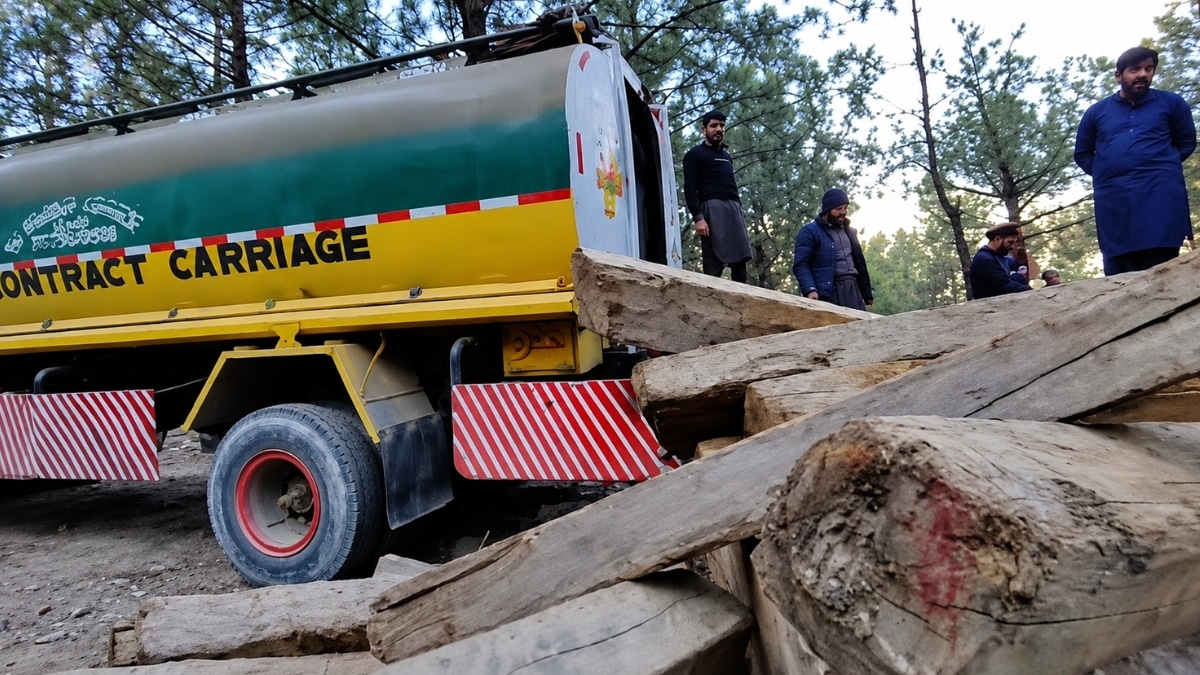
The Senate Sub-Committee on Kashmir Affairs recently halted the issuance of timber transit licenses in Gilgit-Baltistan. Chaired by Senator Faisal Saleem Rehman, the panel demanded immediate physical verification of all logging operations to ensure ecological stability. This strategic pause aims to calibrate the Diamer Forest Working Plan 2021-2050 with modern conservation standards.
During a high-level meeting at Parliament House, lawmakers reviewed the systemic management of regional forests. Consequently, the panel instructed the forest department to ensure complete transparency before resuming any transportation activities. Authorities will maintain this suspension until multidisciplinary teams verify harvesting targets and establish adequate oversight mechanisms. These measures seek to restore public confidence in state-led environmental initiatives.
Why Suspending Timber Transit Licenses Secures Our Ecosystem
The Diamer Forest Working Plan currently covers 122,863 acres across six distinct forest ranges. To eliminate human bias, validation teams are now utilizing GIS mapping and GPS tracking for precise forest assessments. Specifically, tree harvesting remains strictly limited to dead, dying, or diseased timber. Although officials approved 72 compartments for operations, they declared 53 others unsuitable for any extraction activities.
The Translation: Technical Oversight and Structural Reform
The Senate is essentially shifting the forest management paradigm from manual reporting to digital verification. By utilizing GIS mapping, the government creates a verifiable baseline for every tree in the 343 compartments. This transition effectively replaces the revenue-centric models of the 1990s with a data-driven conservation framework. In contrast to previous years, the current focus resides on the physical integrity of the forest rather than mere profit margins.
The Socio-Economic Impact: Protecting Local Assets
This development directly impacts the households of Gilgit-Baltistan by securing their natural heritage against illegal logging. While local communities technically own these private forests, scientific management ensures the long-term sustainability of their resources. Furthermore, the panel has directed the forest department to scrutinize the service records of 1,200 employees. This accountability move protects the economic interests of honest citizens by purging systemic corruption from the timber supply chain.
The Forward Path: A Momentum Shift for Pakistan
We classify this development as a Momentum Shift for national progress. The decision to prioritize conservation over short-term revenue represents a sophisticated pivot toward sustainable development. By demanding records dating back to 2003, the subcommittee is building a foundation of transparency that has been missing for 26 years. This calibrated approach serves as a catalyst for a more disciplined and efficient environmental policy in Pakistan.








