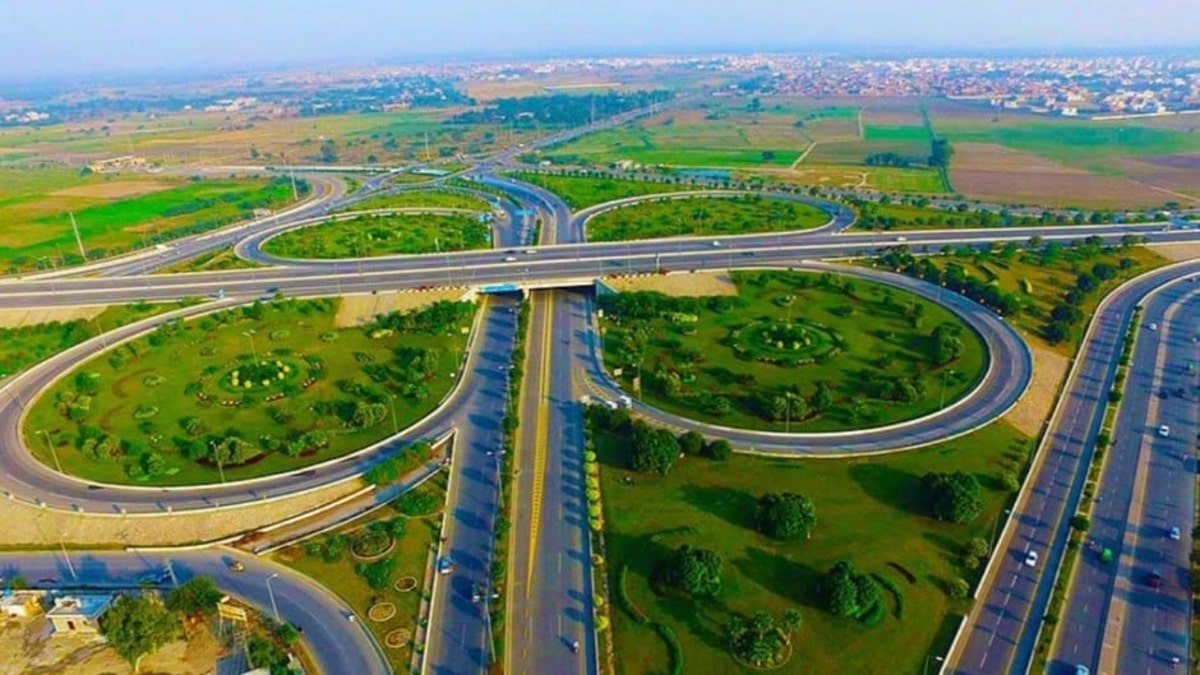
The Rawalpindi Ring Road project has achieved a critical 98% completion milestone, signaling a structural shift in the region’s logistical framework. This 38.3 km corridor now stands as a calibrated solution to decades of urban congestion, with only the toll plaza installation remaining before full operational activation. Consequently, the Punjab Ring Road Authority is preparing to implement a precision-managed traffic system to ensure seamless transit across this strategic artery.
Calibrating the Rawalpindi Ring Road for Maximum Efficiency
The technical baseline of the project is now firmly established. Engineers have finalized the main carriageway, flyovers, and interchanges, ensuring that all civil infrastructure meets rigorous safety standards. Furthermore, authorities have completed the installation of road barriers, digital signboards, and high-efficiency streetlights. The Punjab government has demonstrated fiscal discipline by releasing over Rs. 29 billion to date, with the final funding tranches expected within the next 14 days.
- Total Length: 38.3 Kilometers of high-capacity pavement.
- Infrastructure: Completed subways, bridges, and interchanges.
- Environmental Integration: Ongoing landscaping and tree plantation initiatives.
- Traffic Control: Dedicated policing and toll management systems.
The Translation: Decoding Urban Logistics
Beyond the asphalt and concrete, the Rawalpindi Ring Road represents a strategic decoupling of heavy commercial logistics from municipal commuter traffic. By creating a dedicated bypass, the system effectively filters long-haul freight away from the city core. This architectural intervention reduces the mechanical load on inner-city roads and optimizes the operational velocity of regional trade routes.
The Socio-Economic Impact: Citizen Efficiency
How does this change daily life in Pakistan? The impact is measurable and immediate. Residents will experience a significant reduction in travel time on congested routes like GT Road and Murree Road. Lower idling times translate directly into reduced fuel consumption and improved air quality for urban households. For the professional, this infrastructure represents reclaimed time; for the economy, it represents a catalyst for lower logistical overheads.
The Forward Path: A Momentum Shift
This development represents a clear Momentum Shift for the Twin Cities. It moves Rawalpindi beyond reactive maintenance into the realm of proactive urban engineering. While the Thalian Interchange remains a future objective, the current completion rate secures a new baseline for regional progress. We view this as a successful structural evolution that will define the city’s economic trajectory for decades.