
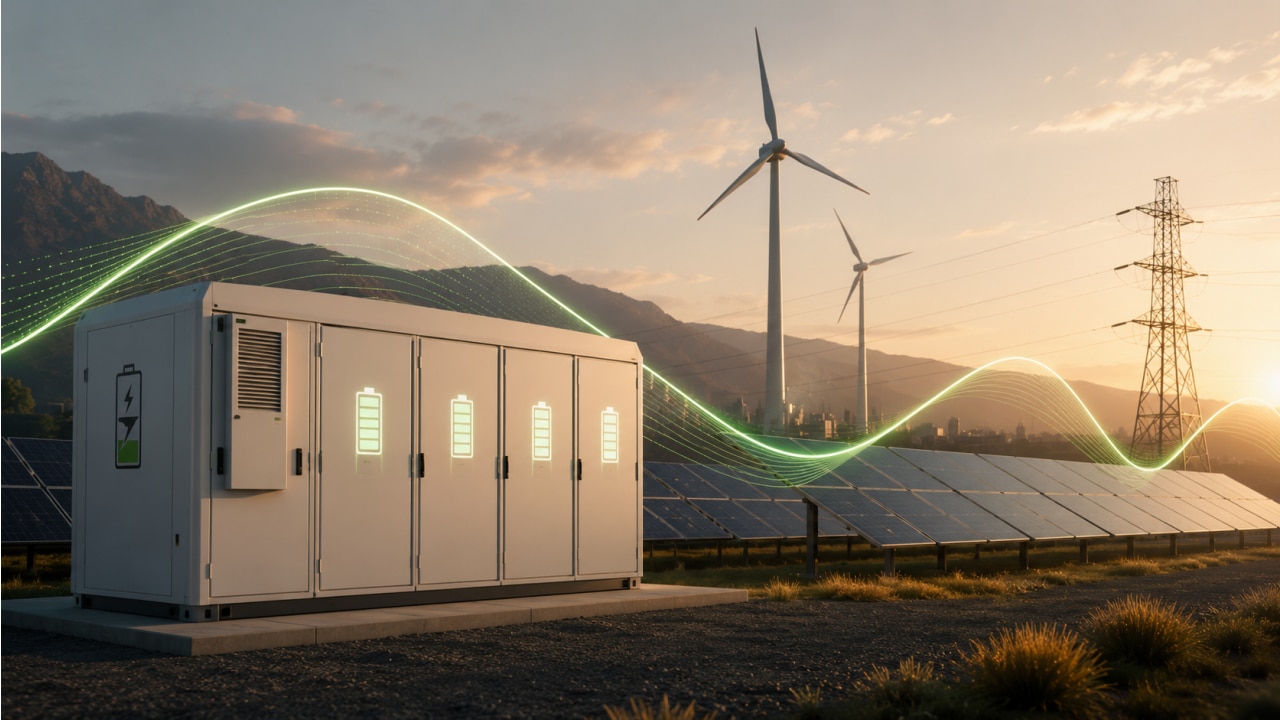
Achieving a resilient energy architecture requires more than just raw generation; it demands structural precision in load management through Battery Energy Storage systems. The federal government has officially mandated these systems for all participants in the upcoming 800 MW renewable energy auction. This strategic directive aims to stabilize the national grid against the inherent volatility of solar and wind power expansion. Consequently, developers must now integrate storage capacity equivalent to at least 10 percent of their project’s firm generation to ensure a calibrated energy flow.
The Strategic Pivot Toward Battery Energy Storage
The Independent System and Market Operator (ISMO) designed this requirement to mitigate grid congestion and minimize energy curtailment. By implementing Battery Energy Storage, the government addresses the “duck curve” phenomenon, where grid demand plunges during daylight solar peaks and surges after sunset. Furthermore, financial modeling indicates that these storage systems enhance long-term project returns by providing baseline flexibility. While the 10 percent threshold serves as a mandatory baseline, developers may scale their storage capacity to optimize specific project economics.

Global Benchmarks and Regulatory Flexibility
Pakistan now joins a cohort of developing nations, including China and India, that have adopted mandatory storage to safeguard their energy transitions. To support this transition, ISMO proposed extending auction submission deadlines to accommodate complex technical proposals. Additionally, a new Grievance Redressal Committee will provide independent oversight for bidder complaints, ensuring a transparent and competitive market environment. These changes currently await final approval from the National Electric Power Regulatory Authority (NEPRA).

The Translation
In technical terms, the grid acts like a reservoir that cannot overflow or run dry without causing damage. Solar and wind power act like sudden rainstorms—they provide massive energy, but not always when the population needs it most. By mandating Battery Energy Storage, the government is essentially building “buffer tanks.” These tanks capture excess power during the sunniest parts of the day and release it when the sun goes down, preventing the system from collapsing under the weight of uneven supply.
The Socio-Economic Impact
For the average Pakistani citizen, this policy acts as a catalyst for long-term grid reliability. Currently, rapid solar adoption by private households often destabilizes the central grid, leading to localized blackouts or “tripping.” Mandating storage at the utility scale ensures that the national infrastructure can handle the green transition without compromising the steady supply of electricity to schools, hospitals, and industries. It effectively stabilizes the cost of energy by reducing the need for expensive, oil-based “peaker” plants that usually fill the gap after sunset.
The Forward Path
This development represents a significant Momentum Shift in Pakistan’s energy policy. We are moving away from the era of “generation at any cost” and toward an era of “intelligent distribution.” While the 10 percent requirement is a modest baseline, it establishes the necessary technical precedent for a modernized, decentralized energy market. The successful implementation of this auction will serve as the structural blueprint for Pakistan’s energy independence.









