
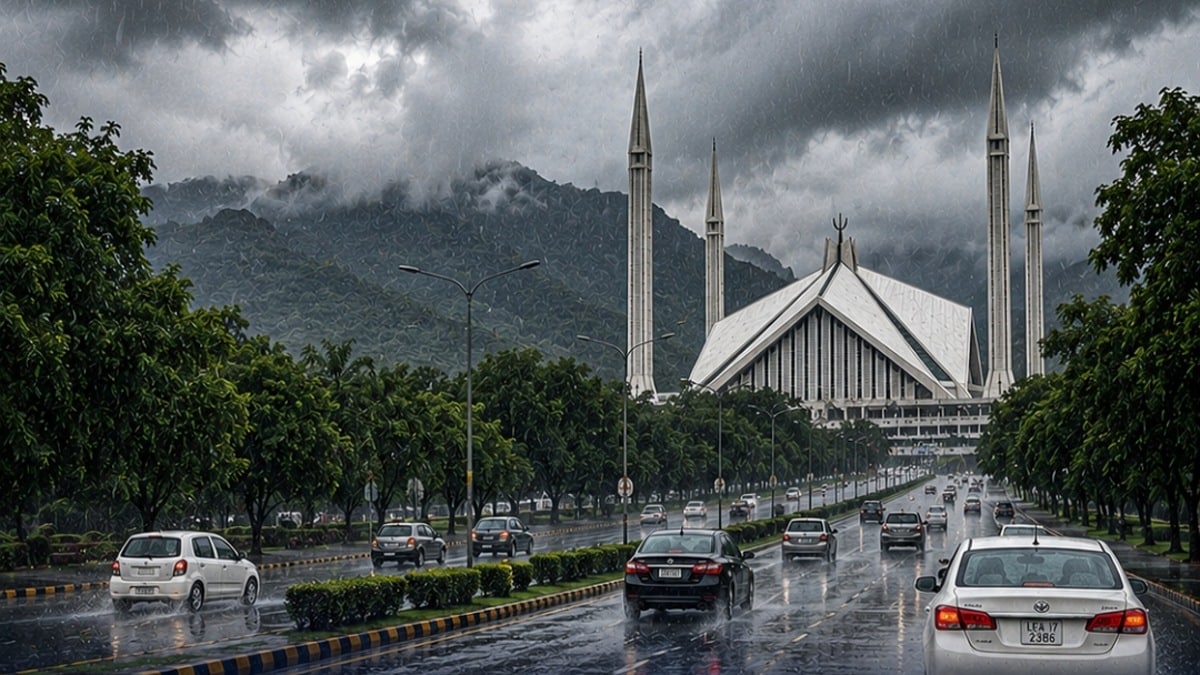
Precision in meteorological data acts as the baseline for national climate resilience. The Pakistan Meteorological Department (PMD) issued a new PMD rain forecast indicating structural atmospheric shifts across Kashmir, Khyber Pakhtunkhwa, and northeast Punjab starting Monday evening through Tuesday. While localized thundershowers may provide brief thermal relief, the core weather system maintains a hot and humid baseline across most administrative zones.
Current Meteorological Trajectory and Risks
The PMD rain forecast signals significant precipitation in Kashmir and Gilgit Baltistan. Consequently, authorities have identified a calibrated risk of landslides in vulnerable mountainous corridors. Heavy rainfall may trigger sudden flash flooding in local streams and nullahs. Furthermore, the system is expected to impact eastern Sindh, introducing wind-driven rain to the region. Data from the previous 24 hours confirms this momentum, with rainfall already recorded in parts of upper Punjab and Balochistan.
Statistical Breakdown of Precipitation
- Okara: 29 mm recorded.
- Narowal: 23 mm recorded.
- Sahiwal: 19 mm recorded.
- Urban Centers: Lahore, Gujranwala, and Faisalabad also reported active precipitation.

The Situation Room Analysis
The Translation (Clear Context)
The incoming weather system is a result of moisture-laden currents interacting with high-pressure zones over the northern territories. In contrast to a full-scale monsoon surge, this is a calibrated weather event characterized by high-intensity, short-duration thundershowers. The “hot and humid” forecast for the rest of the country indicates that this system lacks the structural strength to break the prevailing summer heat dome entirely.
The Socio-Economic Impact
This development directly impacts the daily safety of citizens in Northern Pakistan. For students and professionals in Kashmir and KP, the risk of landslides requires strategic travel planning to avoid blocked transit routes. In contrast, for urban households in Punjab, the rain offers a temporary catalyst for lower electricity demand by reducing the reliance on cooling systems. However, stagnant water in urban centers like Lahore may pose a secondary challenge for municipal efficiency.
The Forward Path (Opinion)
This event represents a Stabilization Move. While the rainfall provides necessary moisture for regional ecology, the persistence of humid conditions indicates that the national climate has not yet reached a seasonal turning point. We must view these forecasts as opportunities to test our disaster management precision before the peak monsoon phase. Infrastructure resilience in the north remains the critical priority for the next 48 hours.








