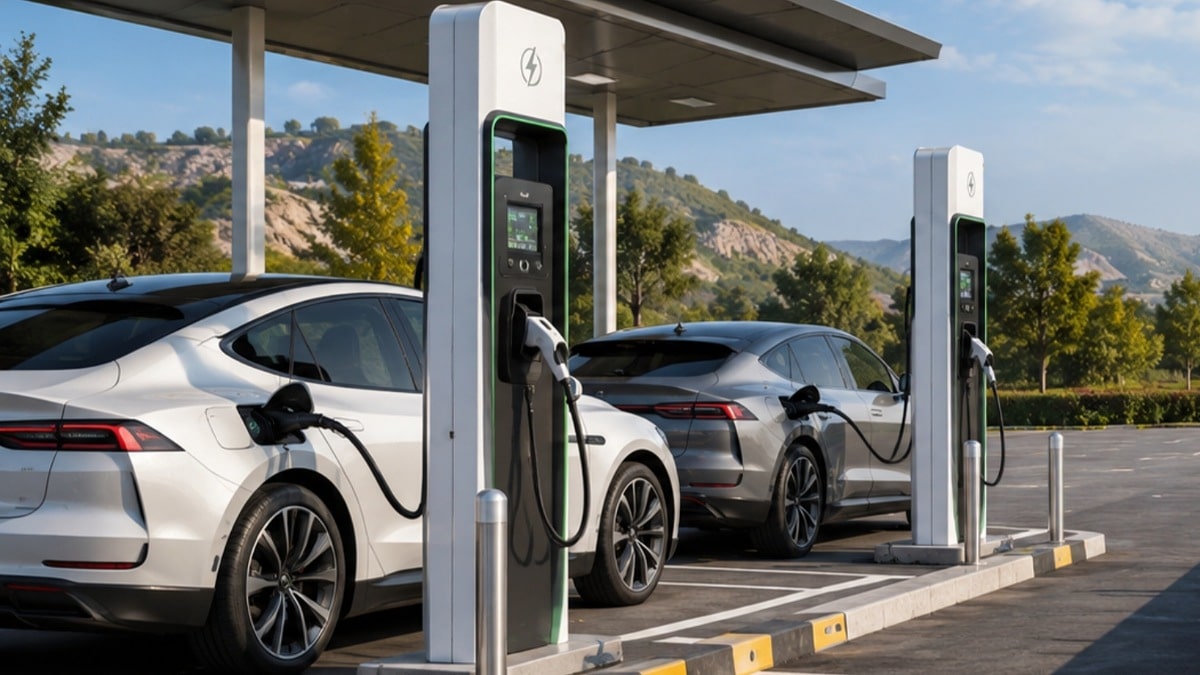
The structural transformation of Pakistan’s transport arteries marks a significant milestone in national systemic efficiency. Travelers on the M-2 Motorway can now access ultrafast EV charging stations at strategic service areas, effectively removing the logistical barriers to intercity electric mobility. This calibrated rollout ensures that the transition to cleaner transportation is supported by robust, high-performance infrastructure.
Strategic Locations for Ultrafast EV Charging
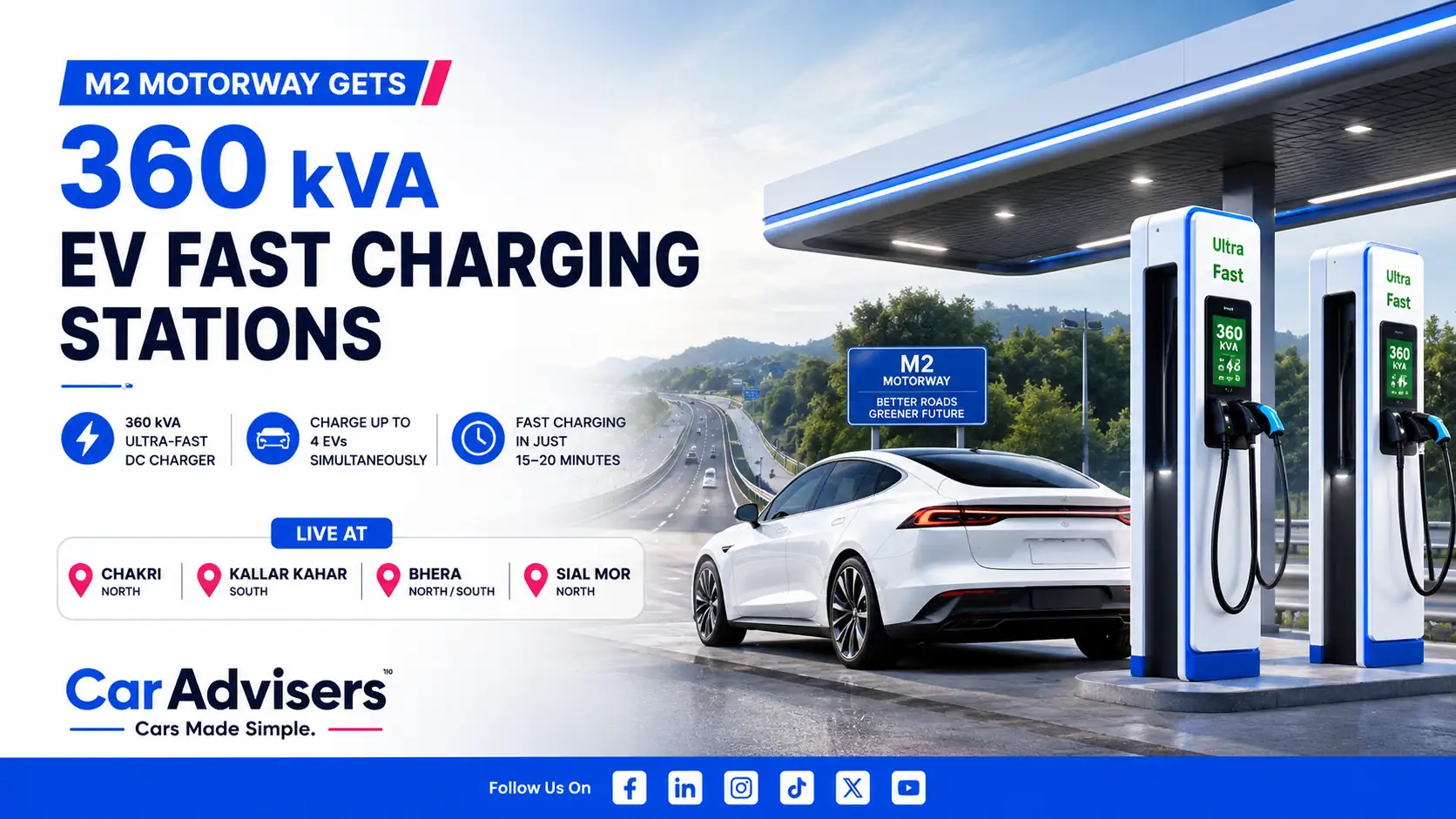
Authorities have confirmed that these high-capacity chargers are now operational at multiple nodes along the M-2. Specifically, travelers can find these facilities at Chakri (North), Kallar Kahar (South), Bhera (North and South), and Sial Mor (North) service areas. Consequently, these placements provide a reliable energy corridor for EVs traversing the busiest route in the country.

Technical Calibration: The 360 KVA Advantage
Precision engineering defines the new hardware. Each station integrates a 360 KVA fast charger, a unit capable of servicing up to four vehicles simultaneously. Most modern electric vehicles can reach a significant charge within 15 to 20 minutes. Therefore, this technology drastically reduces the baseline wait time for long-distance commuters, aligning electric travel with the pace of conventional internal combustion engines.
The Situation Room Analysis
The Translation (Clear Context)
In technical terms, the shift from standard chargers to 360 KVA units represents a massive jump in electrical throughput. While older charging points functioned like a slow trickle, these new stations provide a high-pressure flow of energy. This architectural upgrade means that the “fueling” experience now mirrors the duration of a standard rest-stop break, making the ultrafast EV charging network a true catalyst for adoption.
The Socio-Economic Impact
This development directly impacts the daily lives of Pakistani professionals and families. By eliminating “range anxiety,” the government and private partners are incentivizing the shift to EVs, which carry lower operational costs than petrol vehicles. For the urban household, this translates to cheaper intercity travel and reduced dependency on imported fuel. Furthermore, the expansion of such infrastructure stimulates the local STEM sector through the maintenance and management of smart power grids.
The Forward Path (Opinion)
We categorize this development as a Momentum Shift. This is not merely a maintenance update; it is a structural pivot toward a modern, electrified economy. To sustain this progress, the next phase must involve integrating renewable energy sources directly into these charging nodes to ensure that the “clean” transition is carbon-neutral from source to socket.