
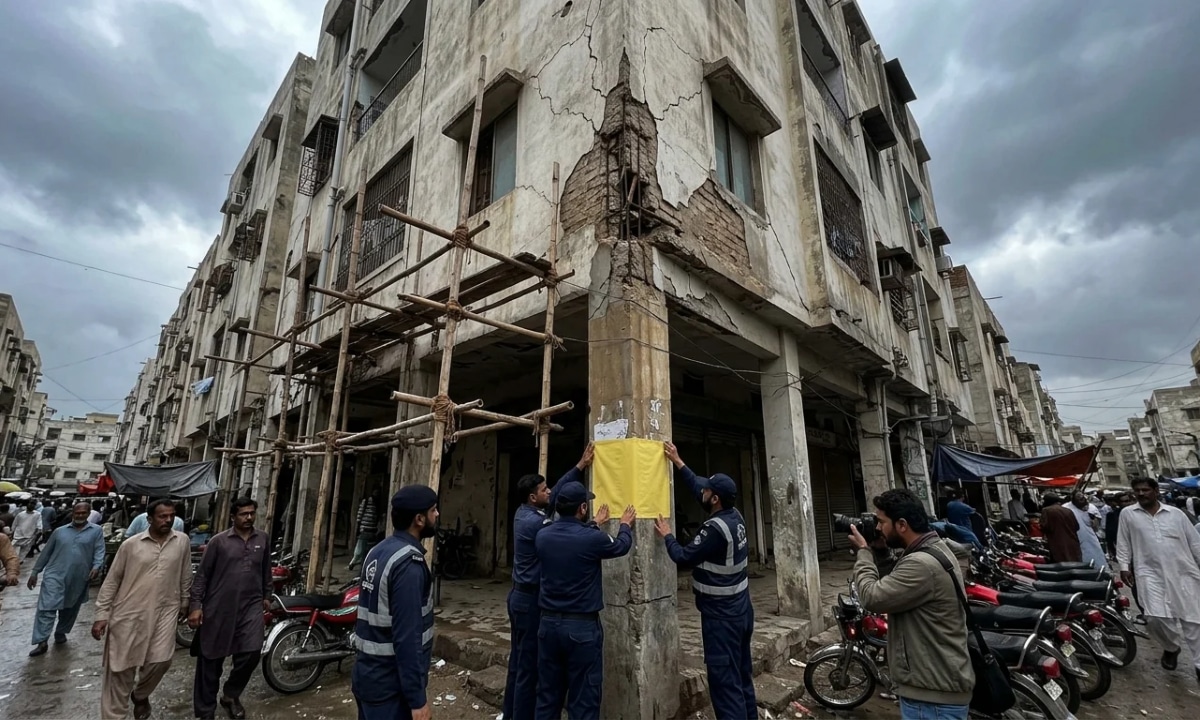
Ensuring urban structural integrity is a fundamental catalyst for national stability and resident safety. Consequently, the Karachi administration has launched a strategic Karachi building evacuation for 584 structures identified as “highly dangerous” ahead of the imminent monsoon season. This calibrated intervention, led by Commissioner Hassan Naqvi following a Sindh Building Control Authority (SBCA) briefing, prioritizes human life over static infrastructure.
Calibrating Urban Safety: The SBCA Structural Audit
The SBCA structural audit identified a total of 584 unsafe structures across the metropolitan landscape. Within this dataset, 59 buildings—including 29 critical heritage sites—require immediate intervention due to their high risk of collapse. Specifically, District South remains the most vulnerable geographic zone, housing 442 of these compromised structures. Furthermore, District Central (73), Keamari (28), Korangi (18), and District East (16) also face significant structural challenges.
The Translation: Deciphering the Regulatory Directives
While the technical data points to “structural failure,” the logic behind this mandate is clear: prevention is more efficient than post-disaster recovery. The administration has authorized the SBCA to issue immediate notices and display public warnings. To ensure compliance, the government will disconnect essential utilities—gas, electricity, and water—if residents refuse to vacate. This precision-based approach ensures that dangerous buildings are cleared before heavy rains trigger structural fatigue.
The Socio-Economic Impact: Protecting the Urban Baseline
How does this Karachi building evacuation change the daily life of a citizen? For residents in District South, it represents a high-stakes transition from immediate physical danger to temporary displacement. While the short-term logistical hurdle is significant, the move protects the economic baseline of families by preventing total loss of life and belongings. For the broader city, this crackdown reduces the strain on emergency response systems during monsoon surges, allowing for more efficient resource allocation across urban and rural zones.
The Forward Path: A Shift Toward Structural Resilience
In my expert assessment, this development represents a Momentum Shift toward proactive urban management. Historically, Karachi has reacted to collapses after the fact; however, this pre-emptive evacuation demonstrates a shift toward data-driven disaster prevention. To achieve true stability, the next phase must involve a precision-based rehabilitation plan for the 29 heritage sites, ensuring our architectural history survives alongside our citizens.
- Total Identified Buildings: 584 structures.
- Immediate Evacuation Priority: 59 highly dangerous sites.
- District South Vulnerability: 442 unsafe buildings.
- Enforcement Mechanism: Utility disconnection for non-compliance.








