
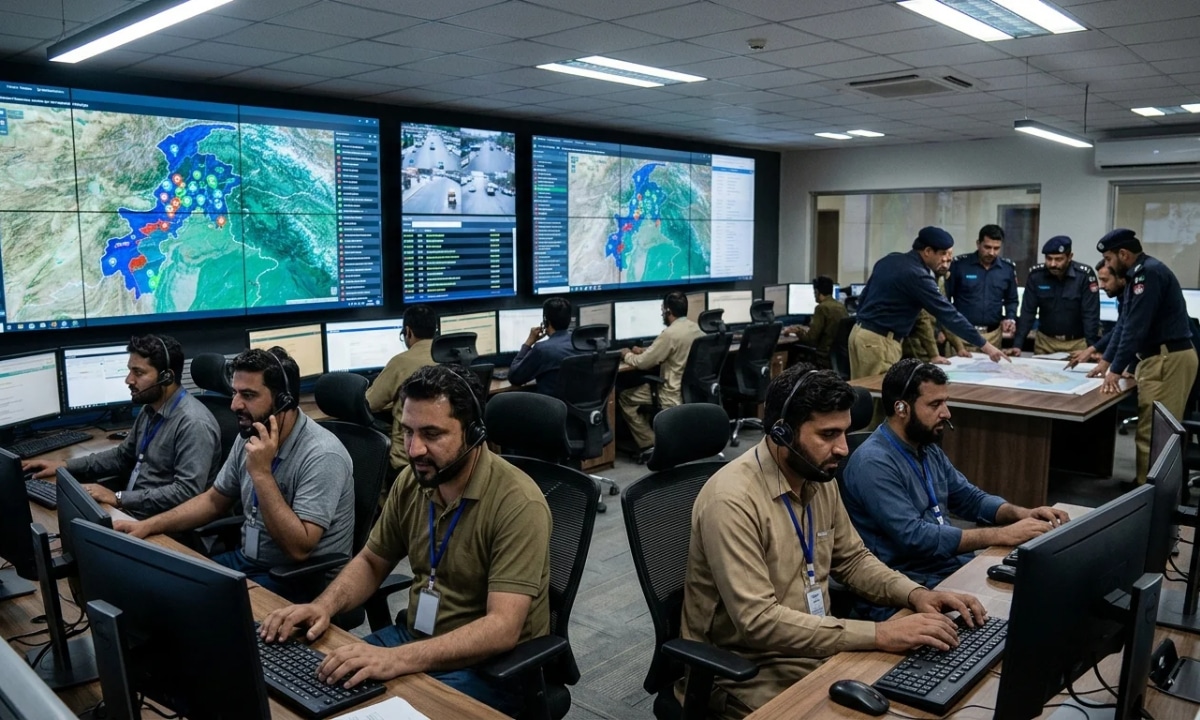
Building a resilient nation requires a calibrated response to crisis, and Khyber Pakhtunkhwa has achieved a vital architectural milestone with the launch of the KP 911 emergency helpline. This platform represents Pakistan’s first province-wide integrated emergency hub, consolidating multiple response services into a single, high-efficiency access point for all citizens.
Structural Integration: How the 911 Emergency Helpline Works
The Pakhtunkhwa Emergency Helpline (PHEL) 911 operates as a unified catalyst for public safety. Previously, citizens managed fragmented contact numbers for different emergencies. Now, the system strategically connects callers to several essential departments through one baseline interface:
- Police Services: Immediate law enforcement dispatch.
- Rescue 1122: Rapid medical and fire response.
- Domestic Violence Support: Dedicated assistance for vulnerable individuals.
- Tourist Assistance: Specialized support for travelers in the region.
- Natural Hazard Response: Coordination during environmental disasters.
Precision Metrics: Trial Phase Data and System Capacity
The KP 911 emergency helpline underwent rigorous trial operations starting in March 2026. Data reveals that the system processed 4.7 million calls by mid-June. However, Project Director Rifaqat Khan highlighted a critical precision issue: a high volume of these interactions were non-emergency or prank calls. Officials urge the public to exercise responsibility to ensure the system maintains maximum efficiency for those in genuine distress.
The Situation Room: Strategic Analysis
The Translation (Clear Context)
Essentially, KP has replaced a “siloed” emergency model with a “central nervous system” approach. By integrating an SOS module and coordinating first responders through a single digital node, the government is reducing the latency between a crisis event and a professional response. This modernization aligns Pakistan’s infrastructure with international safety standards.
The Socio-Economic Impact
For the average Pakistani citizen, this reduces cognitive load during high-stress situations. You no longer need to remember five different numbers; you only need one. Strategically, this improves the safety ROI for the province, protecting human capital and reducing the economic damage caused by delayed emergency responses in both urban centers and rural districts.
The Forward Path (Opinion)
This development represents a significant Momentum Shift. While the current integration of five services is a baseline, the planned expansion to include more agencies suggests a scalable framework. To achieve peak system efficiency, the government must now focus on public education to minimize prank calls, which currently act as a “distributed denial of service” (DDoS) on human life-saving resources.








