
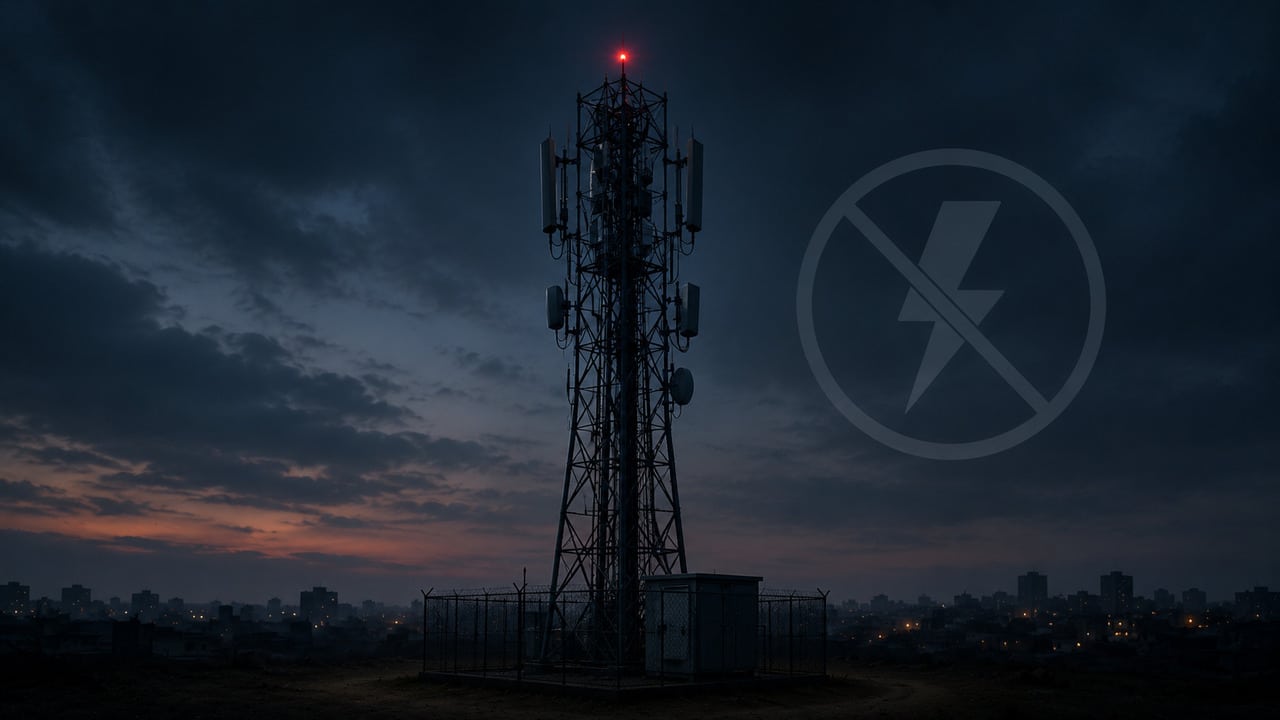
Pakistan’s digital infrastructure requires a resilient energy baseline to ensure the country’s economic machinery functions without disruption. Consequently, the federal government has initiated a strategic Telecom Tower Exemption from electricity load shedding to address critical service disruptions. This calibrated response follows growing concerns that prolonged power outages are compromising national mobile and internet stability.
Establishing the Telecom Tower Exemption Framework
The Ministry of Information Technology and Telecommunication has formed a high-level committee to engineer a solution for infrastructure energy security. Led by the IT Secretary, this group includes the PTA Chairman, NEPRA officials, and key industry representatives. Their mandate is to develop precise mechanisms that isolate telecom hardware from the standard load shedding schedule.

Current data shows that several districts face up to 14 hours of daily load shedding. Although telecom operators maintain a 100% payment record, the lack of a dedicated power supply forces reliance on limited battery backups. Most towers only sustain operations for three to four hours before services fail. Therefore, the Telecom Tower Exemption serves as a vital structural correction to maintain essential communication lines.
Calibrating Infrastructure Sustainability
The committee is currently evaluating “smart solutions” to ensure an uninterrupted electricity supply. One primary proposal involves providing towers with a separate power supply when local feeders are deactivated. Additionally, officials are considering granting telecom infrastructure an industrial electricity tariff to improve long-term operational sustainability.

Furthermore, the Ministry proposed a mandatory transition to solar power systems at tower sites. This move would decrease reliance on the traditional grid and improve environmental baseline metrics. The committee will submit its final strategic recommendations to the federal government within three months.
The Situation Room Analysis
The Translation: Redefining Digital Utility
The government is shifting its perspective on digital access, moving it from a luxury service to a critical utility. By establishing a committee for Telecom Tower Exemption, they are essentially treating cell towers like hospitals or emergency services. The logic is simple: digital connectivity is the oxygen of the modern economy, and it cannot be switched off during routine load management.
The Socio-Economic Impact: Protecting the Digital Citizen
For the average Pakistani citizen, this move acts as a catalyst for daily stability. It ensures that students in remote areas can access online education and professionals can maintain their global freelance operations without the threat of a “digital blackout.” In rural Pakistan, where mobile banking is a lifeline, consistent connectivity ensures that financial inclusion remains a reality rather than a privilege.
The Forward Path: A Momentum Shift
This development represents a significant Momentum Shift in Pakistan’s infrastructure management. It moves beyond reactive troubleshooting into proactive, system-level architectural planning. However, the success of this initiative depends on solving the secondary challenge of law and order in sensitive regions, which remains a localized threat to service integrity.








