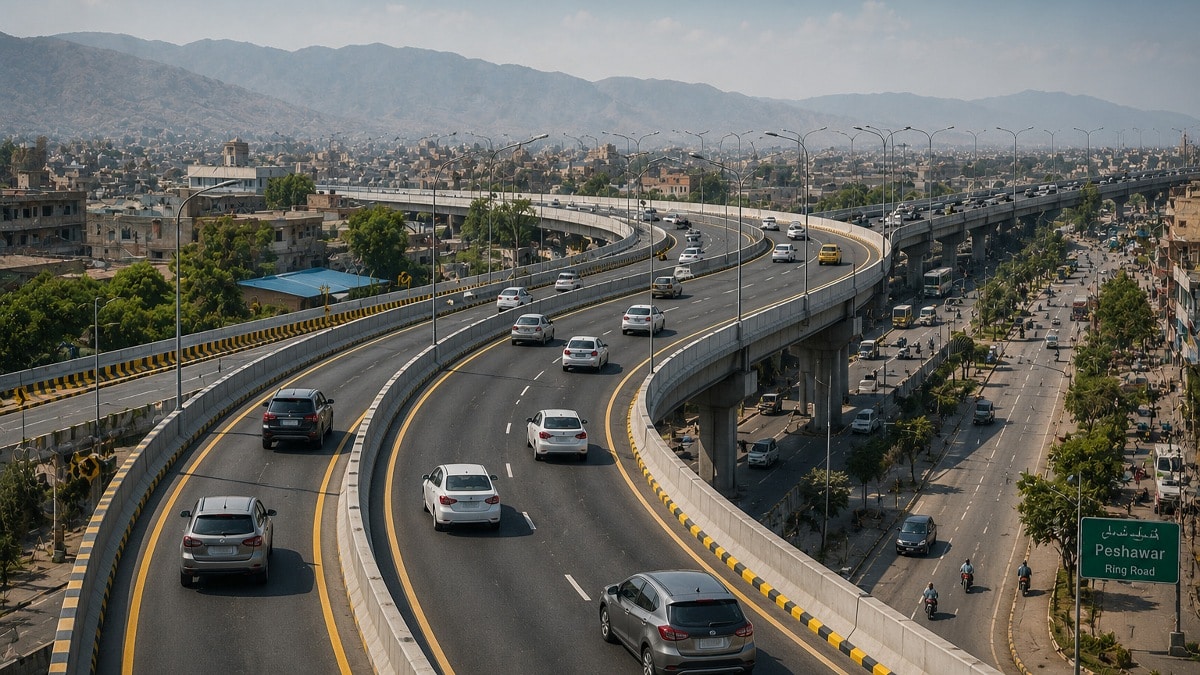
Structural efficiency serves as the baseline for national progress. Consequently, the Khyber Pakhtunkhwa administration has officially initiated the Peshawar Flyover Projects, a strategic catalyst within the broader Rs. 200 billion Peshawar Revitalization Plan. This development aims to recalibrate the city’s logistical framework to meet modern metropolitan demands while significantly reducing urban bottlenecks.
Strategic Integration of Peshawar Flyover Projects
Chief Minister Muhammad Sohail Afridi performed the groundbreaking ceremony for the Warsak Road and Palosi flyover projects on Sunday. These two major developments constitute critical segments of the Ring Road Phase II. Furthermore, the provincial government views these projects as flagship initiatives designed to transform Peshawar into a high-performance administrative capital.
Warsak Road and Palosi: The Technical Baseline
Precision engineering and rapid execution define these new infrastructure assets. The government has allocated specific resources to ensure these structures meet international safety and flow standards:
- Warsak Road Flyover: Spanning 800 meters with an investment of Rs. 3.2 billion, it stands as the largest flyover in the Revitalization Plan. Engineers expect completion within a 180-day window.
- Palosi Flyover: Budgeted at Rs. 2.6 billion, this structure targets high-density traffic zones to enhance road safety and systemic flow.
The Situation Room Analysis
The Translation (Clear Context)
The Peshawar Revitalization Plan is not merely a series of road construction projects. Instead, it is a calibrated, integrated urban upgrade. By connecting the Ring Road Phase II with major arteries like Warsak Road, the government is creating a continuous loop. This reduces “stop-and-go” traffic, which is the primary cause of urban logistical failure and excessive carbon emissions.
The Socio-Economic Impact
How does this change daily life? For the professional in Peshawar, it translates to reduced commute times and lower vehicle maintenance costs. For students and households, the improved safety and accessibility mean more reliable transportation to educational and healthcare hubs. Ultimately, enhanced mobility acts as a multiplier for local economic activity by speeding up the movement of goods and services across the province.
The Forward Path (Opinion)
These developments represent a definitive Momentum Shift. Moving beyond stabilization, the KP government is now investing in long-term structural efficiency. While the 180-day timeline is ambitious, the successful delivery of these flyovers will serve as a baseline for future urban engineering projects across Pakistan. It is a necessary pivot toward a data-driven, modernized transport network.