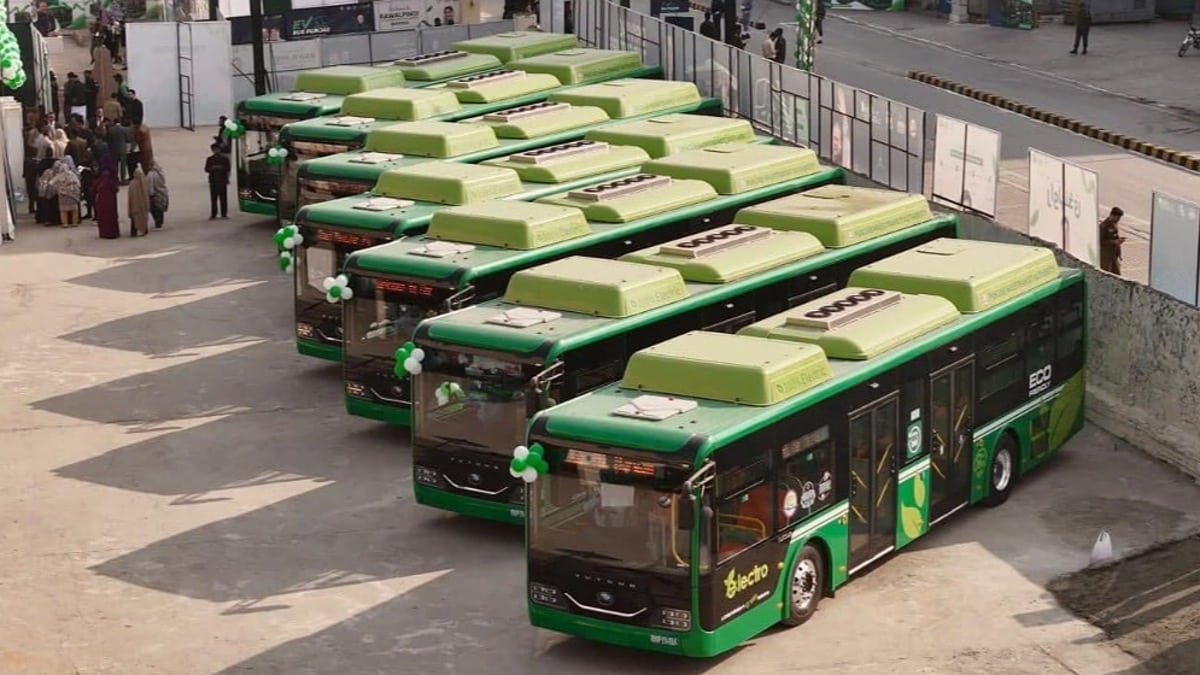
The Punjab government has calibrated a significant structural shift in regional mobility by deploying 11 green Punjab electric buses to Narowal. This initiative serves as a catalyst for sustainable urban development, offering residents a precision-engineered alternative to traditional combustion-based transport. Consequently, this move signals a transition toward a baseline of zero-emission public utility services in the province.
Optimizing the Punjab Electric Buses Network
The Regional Transport Authority (RTA) has confirmed that the service will initiate operations in July. Officials have strategically mapped six primary routes across the district to maximize coverage. These routes connect Narowal with vital surrounding hubs, including:
- Shakargarh
- Zafarwal
- Qila Ahmadabad
- Qila Kalar Wala
- Badomalhi
Furthermore, a dedicated intra-city service is currently in the planning phase to enhance local connectivity. Each unit in this fleet can traverse approximately 80 kilometers on a single charge. This operational range ensures high-frequency service while maintaining energy-efficient performance standards.
Economic Precision: The Rs. 20 Fare Model
A core component of this strategy is financial accessibility. The government has fixed the fare at a baseline of Rs. 20 per trip. This price point is specifically designed to provide relief to the working class and students. By stabilizing transport costs, the government is effectively increasing the disposable income of local households.
The Situation Room: Strategic Analysis
The Translation (Clear Context)
While this project appears to be a simple transport upgrade, the logic is actually rooted in decarbonization. By replacing aging, diesel-reliant fleets with Punjab electric buses, the state is reducing its long-term fuel import bill and lowering the carbon footprint of the provincial transport network. This is not just a bus service; it is a live test of electric vehicle (EV) infrastructure in a semi-urban setting.
The Socio-Economic Impact
For the average resident of Narowal, this development represents a drastic reduction in monthly commuting expenses. Students and daily-wage laborers will now have access to modern, air-conditioned transit for a fraction of the cost of private rickshaws or outdated wagons. Furthermore, the reduction in noise and air pollution directly contributes to better public health outcomes in high-traffic corridors.
The Forward Path (Opinion)
This development represents a Momentum Shift. Implementing EV technology in Narowal—rather than just the provincial capital—shows a disciplined commitment to equitable provincial growth. However, the long-term success of this initiative depends on the deployment of robust charging infrastructure and consistent maintenance protocols to prevent fleet degradation. If scaled correctly, this provides the blueprint for a national EV transition.