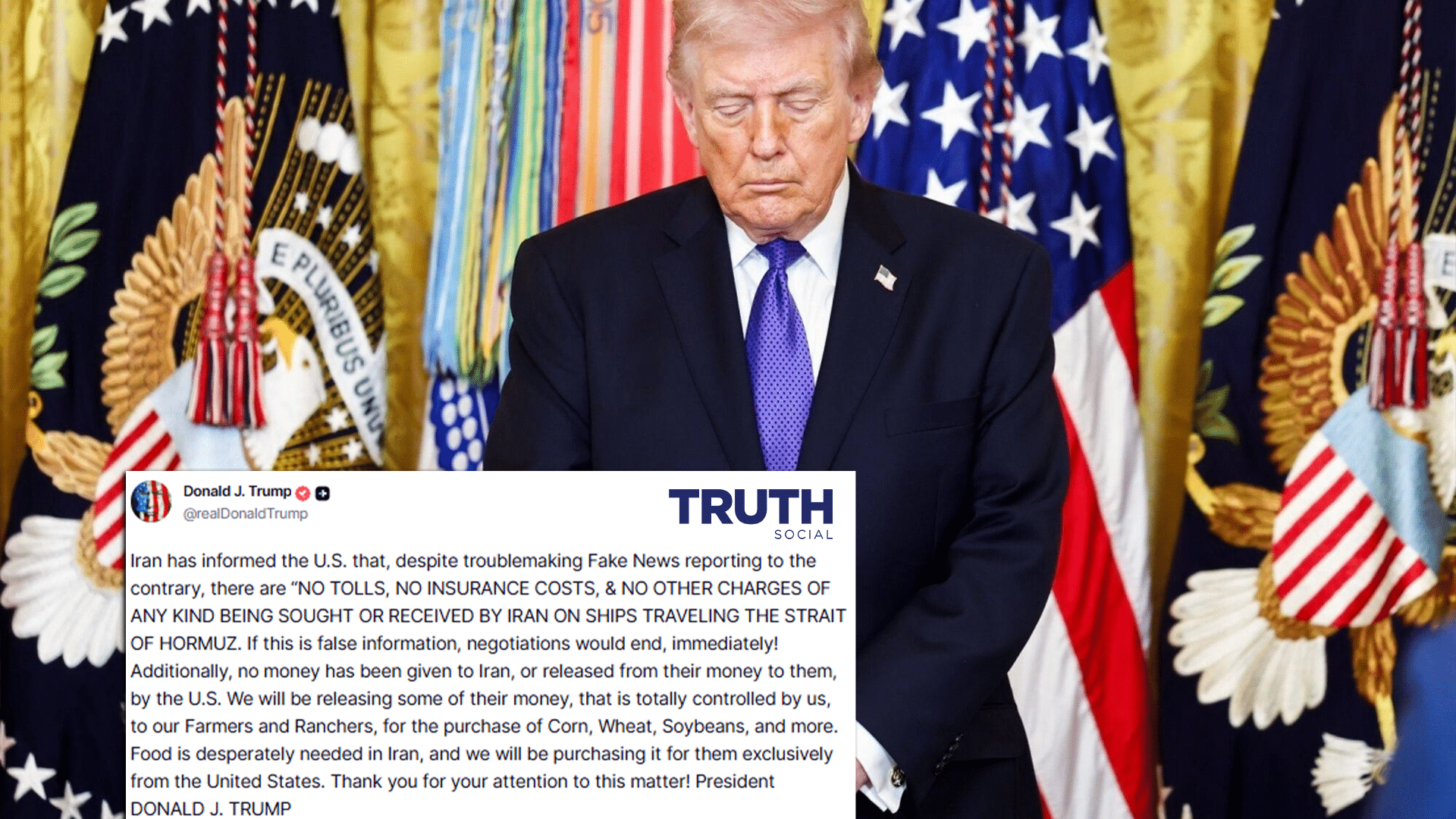
The global geopolitical framework is undergoing a strategic recalibration as the United States outlines a new protocol for Iranian unfrozen assets. President Donald Trump confirmed on Wednesday that the US will maintain control over these multi-billion dollar funds. However, instead of a direct financial release, the administration will utilize the capital to purchase agricultural commodities from American farmers for shipment to Iran.
Calibrated Reallocation of Iranian Unfrozen Assets
This structural shift ensures that no liquid capital reaches the Iranian government directly. Consequently, the US plans to procure essential food items, including corn, wheat, and soybeans, exclusively from domestic producers. Trump emphasized via Truth Social that these resources are “desperately needed” within the Iranian interior. By redirecting Iranian unfrozen assets toward American agricultural markets, the administration creates a secure humanitarian corridor that stabilizes domestic demand while addressing foreign food security.
Maritime Security and the Strait of Hormuz
In parallel with these financial maneuvers, the administration addressed critical maritime logistics. President Trump rejected allegations that Iran is imposing tolls or insurance premiums on vessels navigating the Strait of Hormuz. Iranian officials have reportedly assured Washington that this strategic shipping route remains free of additional charges. Nevertheless, the administration maintains a baseline of skepticism. Trump warned that any breach of these assurances would catalyze an immediate termination of ongoing negotiations.
The Situation Room Analysis
The Translation (Clear Context)
In technical terms, the US is converting static, frozen financial capital into a dynamic “commodity-for-debt” system. By refusing to hand over cash, the administration mitigates the risk of funds being diverted into non-humanitarian sectors. Essentially, the Iranian unfrozen assets are being converted into a “food credit” system where the value remains within the US economy until it is shipped as physical goods.
The Socio-Economic Impact
For the average Pakistani citizen and regional observer, this development impacts two critical baselines: food security and maritime inflation. Stability in the Strait of Hormuz prevents spikes in oil prices and shipping costs, which directly influences the price of imported goods in Pakistan. Furthermore, the precedent of using frozen funds for agricultural trade could serve as a blueprint for regional humanitarian aid structures in the future.
The “Forward Path” (Opinion)
This development represents a Stabilization Move. While it does not fully resolve the underlying diplomatic friction, it creates a functional equilibrium. By anchoring the Iranian unfrozen assets to American agricultural output, the administration provides a humanitarian vent without compromising its broader economic pressure campaign. It is a precision-led move designed to maintain regional order while supporting domestic industry.