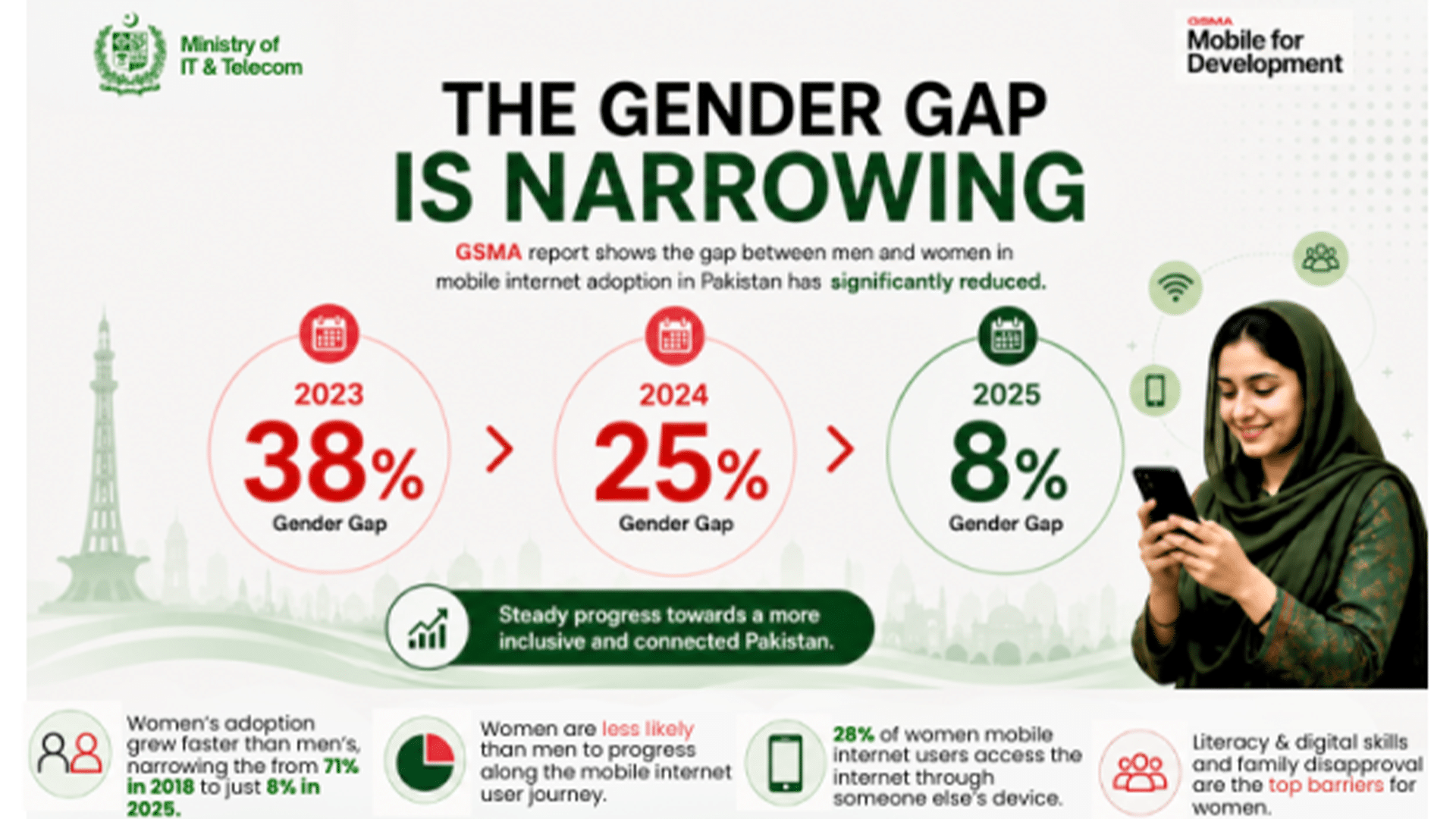
Pakistan has achieved a calibrated milestone in women’s digital inclusion, signaling a systemic shift in the nation’s connectivity landscape. According to the GSMA Consumer Survey 2026, the mobile internet gender gap plummeted from a staggering 71% in 2017 to a historic low of 8% in 2025. Consequently, this rapid contraction reflects a high-velocity adoption of digital tools by women across both urban and rural sectors.
Strategic Growth in Mobile Internet Adoption
The data reveals a precision-driven transformation in how Pakistani citizens interact with the digital ecosystem. Women’s mobile internet adoption surged from 8% in 2017 to 53% in 2025. Furthermore, women adopted mobile technology at a faster rate than men over the last twelve months. This surge acted as a catalyst for narrowing the digital divide more quickly than initial projections suggested. Total adult mobile internet penetration now stands at a baseline of 58%, up from 26% just eight years ago.
The “Situation Room” Analysis
The Translation (Clear Context)
A “gender gap” in mobile internet does not just mean fewer users; it represents a structural barrier to information. When the gap was 71%, men were nearly three times more likely to use mobile data than women. At 8%, Pakistan is approaching “digital parity,” where gender no longer dictates access to the global economy. This shift was fueled by improved network infrastructure and targeted literacy initiatives by the Ministry of IT.
The Socio-Economic Impact
This development directly impacts the daily lives of millions of Pakistani households. Closing the women’s digital inclusion gap is not merely a social goal; it is an economic powerhouse. GSMA estimates suggest that eliminating this gap could generate up to $55 billion in additional GDP over eight years. For the average citizen, this translates to increased household income through freelancing, better maternal healthcare via tele-medicine, and enhanced educational resources for children.
The “Forward Path” (Opinion)
This progress represents a definitive Momentum Shift. While the data is celebratory, the report notes that 28% of women still rely on shared devices. To maintain this trajectory, the state must move from “connectivity access” to “device ownership.” True precision in digital policy will require making smartphones as affordable as the data packages that power them. We are no longer just building a network; we are engineering a digital nation.