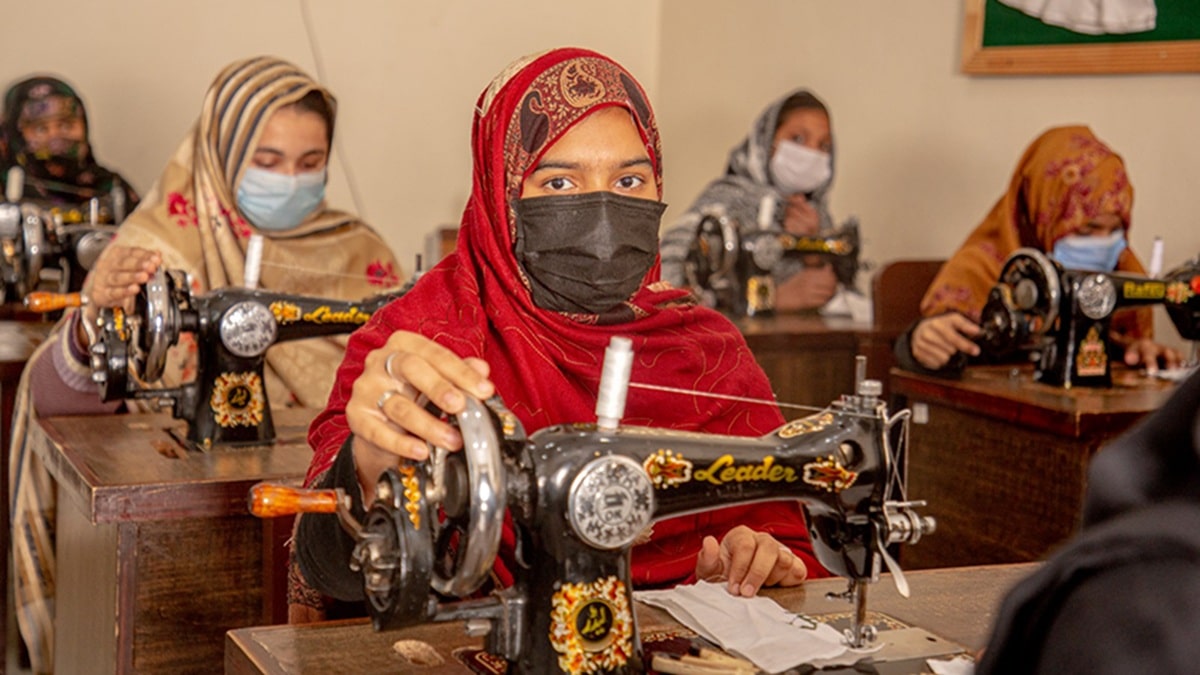
Punjab Chief Minister Maryam Nawaz Sharif has officially launched the SEHR Program Punjab, a calibrated initiative designed to decentralize vocational education. This strategic program aims to empower 5,365 women across the province by providing modern technical training directly within their homes. Consequently, this move addresses the structural barriers that often prevent female participation in the formal economy.
Engineering Financial Independence Through Skill Acquisition
The government has allocated a precise budget of over Rs. 970 million to fuel this developmental catalyst. Participants will engage in diverse fields, including digital technology, hospitality, and beautification services. Specifically, 2,065 women in four targeted districts will receive specialized beautification training through a strategic partnership with the private sector. Moreover, the SEHR Program Punjab ensures that logistics do not hinder progress; students will receive laptops, internet devices, and monthly stipends to maintain their learning baseline.
The Translation: Breaking Down the “Home Reach” Model
In technical terms, the SEHR (Skill Enhancement Through Home Reach) model utilizes a “distributed classroom” logic. Instead of requiring physical presence at centralized hubs, the government is delivering the infrastructure—hardware and connectivity—to the user. This removes transportation costs and cultural mobility constraints, effectively converting thousands of households into mini-incubators for economic productivity. This is not just a training course; it is a structural redesign of how the state delivers human capital development.
The Socio-Economic Impact: Precision Growth for Families
For the average Pakistani household, this development represents a significant shift in income potential. By equipping women with high-demand digital and technical skills, the SEHR Program Punjab creates a secondary income stream for families without disrupting domestic stability. In urban centers like Lahore and rural districts alike, this workforce injection will likely increase local spending power and reduce the poverty gap. When a woman gains financial autonomy, the data shows a direct correlation with improved health and education outcomes for the next generation.
The Forward Path: A Momentum Shift
At Next Generation Pakistan, we categorize the SEHR Program Punjab as a Momentum Shift. While previous administrations have offered vocational training, the integration of digital hardware (laptops and data packages) indicates a forward-thinking transition toward the gig economy. This is a calibrated move to ensure that Punjab’s female workforce is not just employed, but is “future-proofed” against the automation of traditional labor. Success now depends on the precision of the training modules and the seamless integration of these graduates into the global digital marketplace.