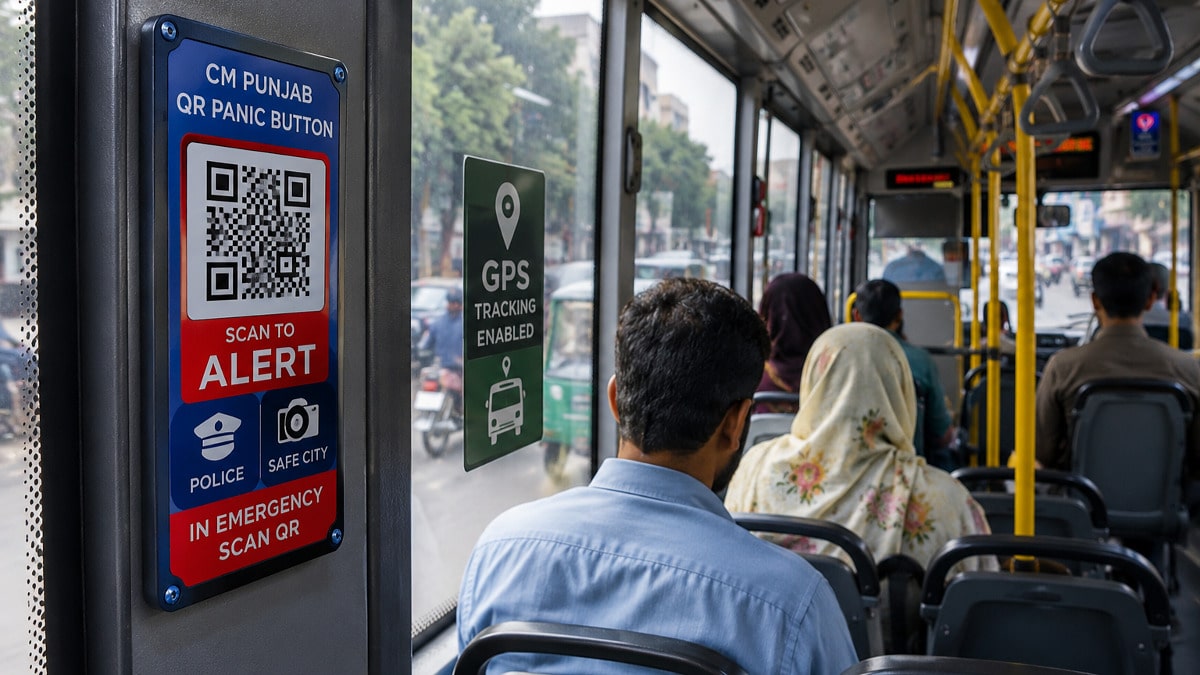
The strategic integration of QR panic buttons across Lahore’s transit network marks a baseline shift in metropolitan safety protocols. Consequently, the Lahore Traffic Police recently initiated a decisive crackdown against public transport vehicles, including rickshaws and online cabs, that fail to implement these mandatory security features. This calibrated move aims to synchronize urban mobility with global security standards, ensuring that every journey is monitored and protected.
Enforcing Urban Security: The Strategic Rollout
Chief Traffic Officer (CTO) Lahore has deployed specialized teams across every traffic sector to oversee the installation of these safety modules. Specifically, 12 dedicated teams are focusing on the rickshaw sector to ensure comprehensive compliance. Furthermore, the department has established four new licensing centers at the request of rickshaw unions. These centers act as a catalyst for legal alignment, making it easier for drivers to meet the new security benchmarks while maintaining their livelihoods.
The Translation: Digital Safety Decoded
In technical terms, the QR panic buttons are not merely physical triggers; they represent a node in a larger smart traffic management ecosystem. By scanning or activating these buttons, a passenger creates an immediate link to emergency response centers. This system eliminates the ambiguity of traditional emergency reporting by providing real-time location data and driver identification. Transitioning from manual oversight to technology-based monitoring allows for a precision-driven approach to crime prevention and traffic discipline.
Socio-Economic Impact: Securing the Daily Commute
This development directly impacts the daily lives of millions of Pakistanis, particularly students, female commuters, and late-shift professionals. By institutionalizing QR panic buttons, the state provides a structural safety net that encourages greater participation in the workforce and education. When public transport becomes measurably safer, the economic mobility of the household increases, as citizens can navigate the city with reduced risk and higher confidence in the system’s responsiveness.
The Forward Path: A Momentum Shift in Transit Safety
At Next Generation Pakistan, we view this initiative as a significant Momentum Shift. Moving beyond reactive policing, Lahore is adopting a proactive security architecture. While the current crackdown is a stabilization move to ensure compliance, the underlying infrastructure of tracking and modern security features sets the stage for a fully digitized urban grid. This is a critical step toward a more disciplined, safe, and efficient Pakistan.