
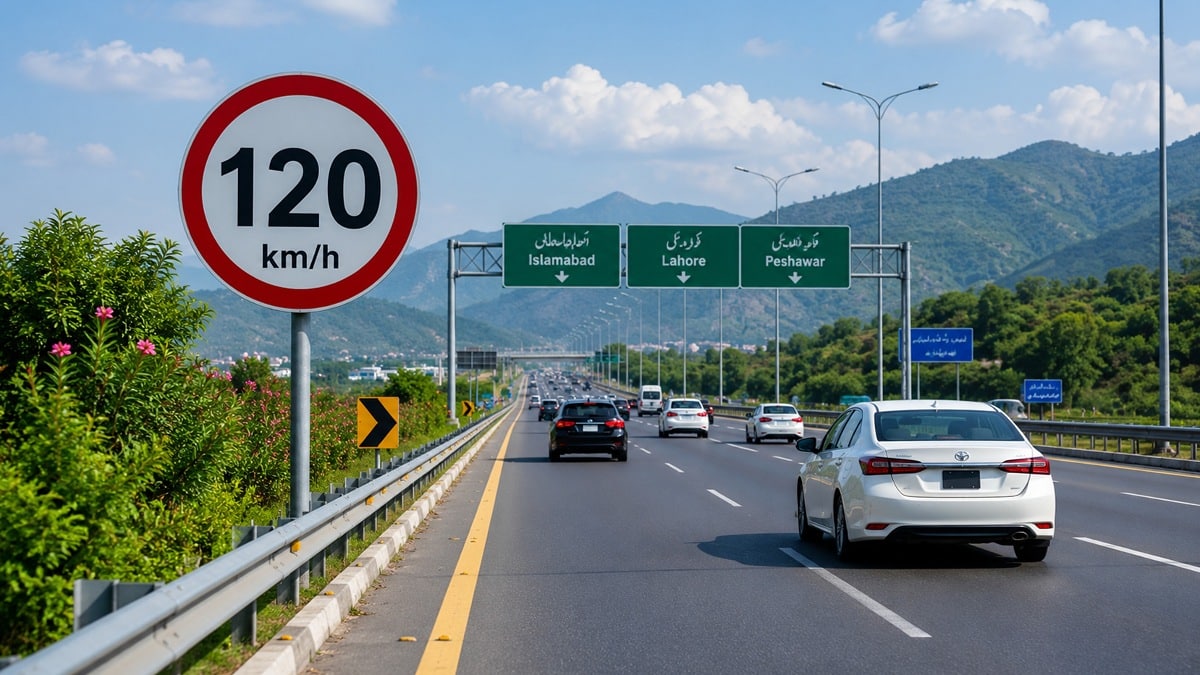
The structural integrity of national transit systems depends on precise regulation. Recent speculation regarding the restoration of previous motorway speed limits in Pakistan has prompted a formal clarification from the National Highways and Motorway Police (NHMP). Despite circulating rumors, the 100 km/h baseline remains the active standard for light transport vehicles (LTVs).
Analyzing Motorway Speed Limits: The Official Stance
NHMP officials confirmed that the reports suggesting a return to the 120 km/h threshold are entirely inaccurate. Consequently, the restrictive measures implemented in March 2026 remain fully operational. The government originally calibrated these limits to mitigate the impact of elevated global oil prices. By reducing the maximum velocity, the state successfully lowered the national fuel consumption baseline.
Current regulations mandate a 100 km/h limit for cars, while passenger and heavy transport vehicles (HTVs) must not exceed 90 km/h. In contrast to the previous 120 km/h and 110 km/h standards, these benchmarks prioritize resource preservation over transit speed. The Motorway Police spokesperson emphasized that no implementation of a limit increase has occurred.
The Translation: Breaking Down the Logic
Essentially, the government prioritizes energy security over individual transit velocity. While the 120 km/h limit served as a historical norm, the current motorway speed limits function as a strategic buffer. This policy converts kinetic energy loss into national savings. Furthermore, it ensures that the transport sector does not place undue pressure on foreign exchange reserves during economic volatility.
The Socio-Economic Impact: Life on the Road
For the average Pakistani citizen, this policy creates a mandatory shift in driving behavior. While commutes may take slightly longer, the fuel savings at 100 km/h versus 120 km/h are mathematically significant for household budgets. Consequently, these motorway speed limits act as an indirect subsidy for families, reducing the monthly spend on imported fuel. In rural areas, the slower pace of heavy transport also contributes to reduced road wear and tear, extending the lifecycle of our infrastructure.
The Forward Path: Strategic Assessment
This development represents a Stabilization Move. While some view the maintenance of lower speeds as a setback, it indicates a disciplined approach to national resource management. However, for Pakistan to achieve a true momentum shift, we must look beyond speed dials. The next phase of progress should involve the integration of EV infrastructure and smart traffic management systems to reclaim transit efficiency without sacrificing energy security.








