
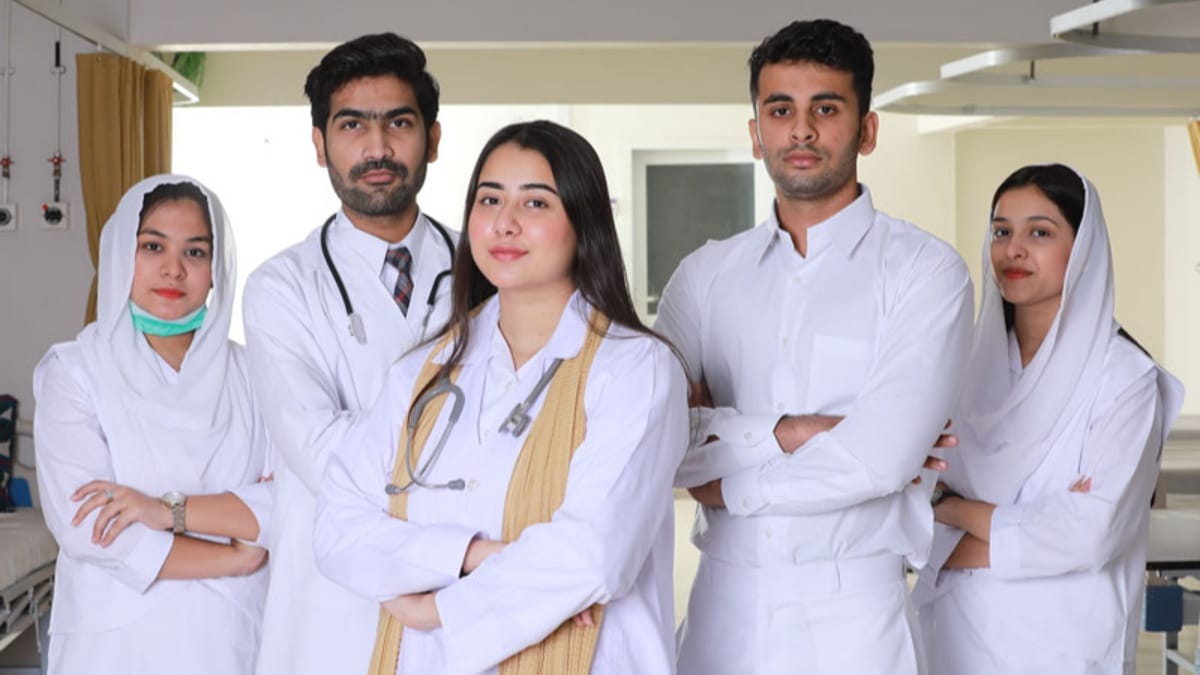
Strategic human capital development serves as the baseline for any resilient healthcare system. Consequently, Punjab Health Minister Khawaja Salman Rafique recently announced the establishment of Punjab nursing universities in Lahore, Rawalpindi, and Multan. This move signals a calibrated effort to enhance the structural efficiency of the province’s medical infrastructure and professional output.
The Strategic Importance of Punjab Nursing Universities
The Punjab government has already doubled nursing admissions from 3,000 to 6,000, ensuring a steady catalyst for workforce expansion. Furthermore, authorities have upgraded existing colleges and equipped laboratories with modern technology to meet international benchmarks. These systemic improvements aim to refine the professional skills of Pakistani nurses, who already maintain a high global reputation for dedication.

The Translation: Modernizing Medical Frameworks
In “Next Gen” clarity, this initiative transitions nursing from a vocational certificate model to a rigorous university-led academic discipline. By establishing dedicated Punjab nursing universities, the government creates a specialized ecosystem for research and advanced clinical practice. This shift ensures that local healthcare professionals possess the precision required to operate in a modern, data-driven medical environment.
The Socio-Economic Impact: Empowering the Workforce
This development directly impacts the daily lives of Pakistani citizens by increasing the availability of qualified healthcare providers. Specifically, the addition of 450 medical seats and specialized district-level centers will reduce the burden on urban hospitals. For students, the doubling of admissions provides 3,000 additional families with a pathway to stable, high-demand professional careers both locally and abroad.

The Forward Path: Momentum Shift
We categorize this development as a significant Momentum Shift. The decision to integrate stroke management and international training standards into the curriculum reflects a forward-thinking approach. While the physical infrastructure of these Punjab nursing universities is vital, the true progress lies in the commitment to precision-based training. Consequently, this policy will likely serve as a catalyst for long-term provincial health stability.








