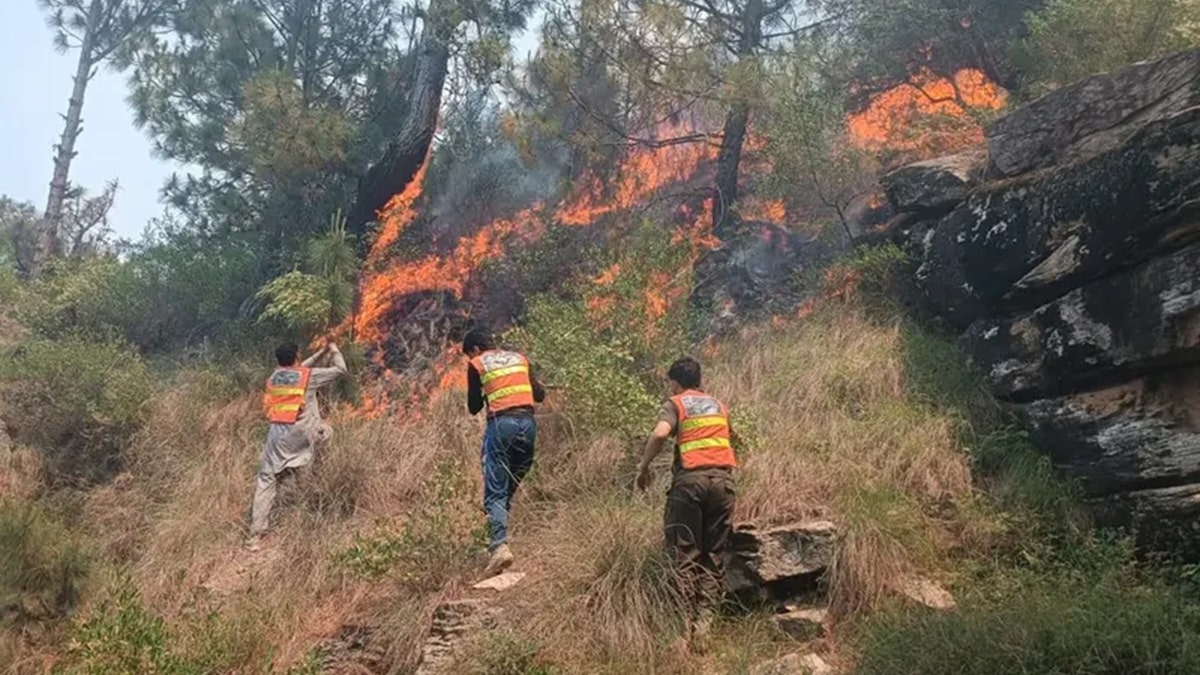
The recent Murree forest fire in the Gazara region signals a critical failure in our ecological management systems, demanding an immediate structural recalibration. As flames decimated vast tracts of indigenous timber, local communities stepped into the vacuum left by institutional negligence to protect their baseline natural resources. This event is not an isolated incident; rather, it is a catalyst for a broader discussion on environmental precision and forest department accountability.
Analytical Overview of the Murree Forest Fire
Residents within the Gazara district attempted to neutralize the blaze manually, reporting a significant lag in official emergency response times. Consequently, the fire accelerated through the dry underbrush, leading to the destruction of precious biodiversity and the displacement of local wildlife. Specifically, the recurring nature of these incidents suggests a systemic inability to deploy calibrated fire-prevention protocols during peak heat cycles.
Furthermore, satellite data provided by SUPARCO confirms a disturbing trend across Punjab’s hilly terrain. Earlier this year, approximately 3,037 hectares of forest cover in Kotli Sattian vanished due to similar thermal events. These data points indicate that the Murree forest fire is part of a larger, unmitigated pattern of environmental degradation that threatens the regional atmospheric balance.
The Translation
When we discuss “forest cover decimation” or “ecological sensitivity,” we are describing the breakdown of Pakistan’s natural infrastructure. In “Next Gen” clarity, these forests act as the lungs and air-conditioning units for the Murree region. The loss of 7,504 acres of trees means less carbon sequestration and a higher risk of flash floods. The residents’ frustration stems from a logic-based observation: without active patrolling and technological monitoring, our natural capital is being liquidated by preventable accidents.
The Socio-Economic Impact
The Murree forest fire directly compromises the daily lives of Pakistani citizens by destabilizing the local climate and economy. For urban households, this translates to reduced air quality and a decline in the tourism-driven economy that sustains Murree’s service sector. For rural inhabitants, the loss of trees and wildlife destroys the ecological baseline required for sustainable living. This environmental volatility creates a precision-risk for future generations, who will inherit a landscape stripped of its natural resilience and economic utility.
The Forward Path
This development represents a critical Momentum Shift toward a state of environmental emergency. We must move beyond reactive firefighting toward a strategic, data-driven prevention model. Specifically, the Forest Department requires a structural overhaul that integrates SUPARCO’s real-time satellite monitoring with local community rapid-response units. Precision in resource management is no longer optional; it is a baseline requirement for national survival in an era of climate acceleration.