
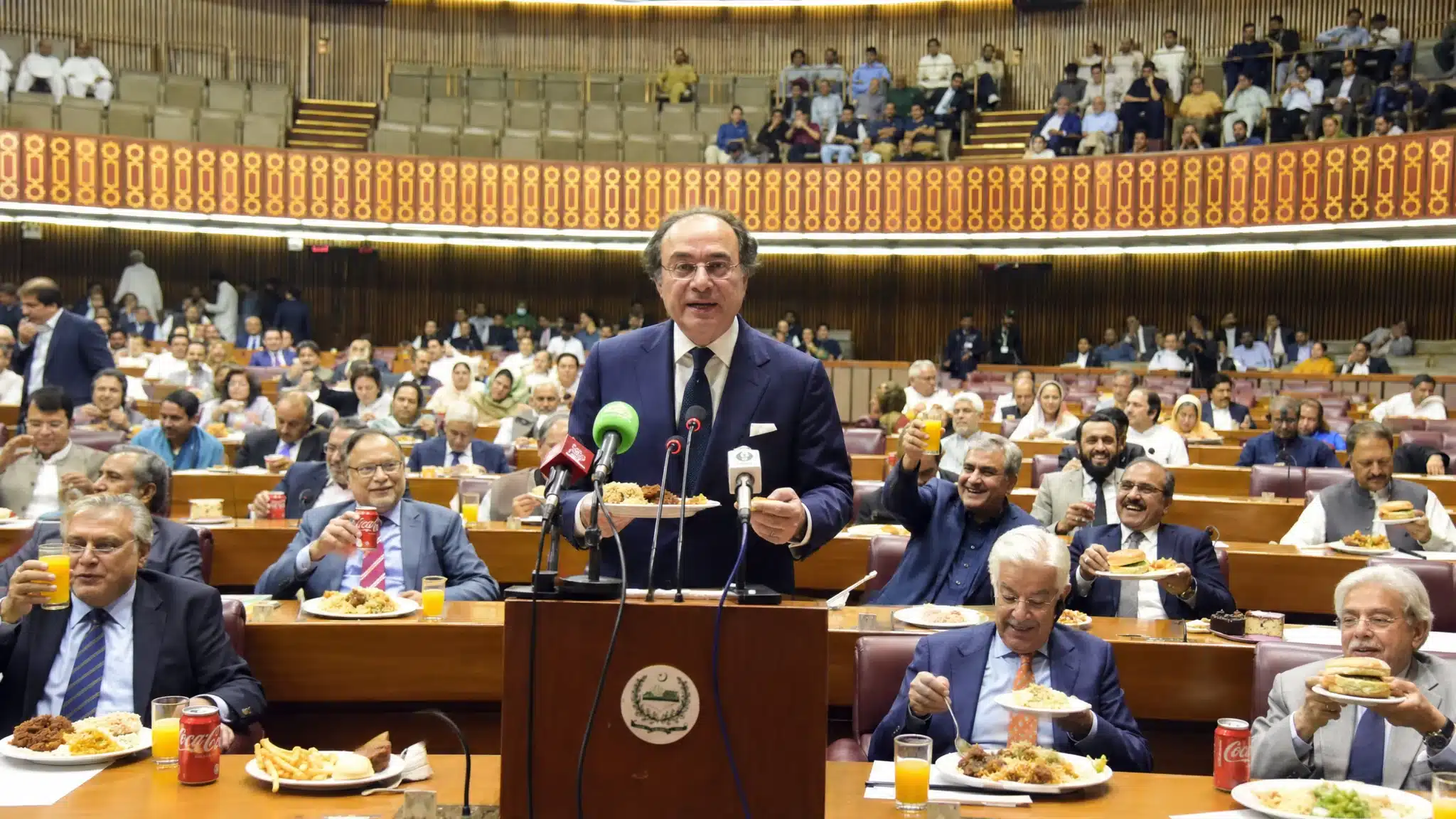
Effective governance demands precision in both policy and logistical execution. Consequently, the Economic Coordination Committee (ECC) has authorized a Technical Supplementary Grant (TSG) of Rs. 10 million to support the essential operations of the Federal Budget Session. This strategic allocation ensures that the Ministry of Parliamentary Affairs can sustain the high-intensity sittings required to finalize Pakistan’s national fiscal framework for the upcoming year.
Optimizing Resources for the Federal Budget Session
The Ministry of Parliamentary Affairs reported that the standard “Entertainment and Gifts” budget head reached its operational limit. Because the budget review involves extended hours and sittings that often stretch late into the night, providing meals and refreshments became an unavoidable expenditure. Furthermore, the ministry emphasized that the annual budget session is a mandatory constitutional process that allows no room for delay or postponement.
The Finance Division calibrated the request and endorsed the additional funding under Demand No. 81 for the fiscal year 2025-26. By approving this grant, the ECC has prioritized the continuity of parliamentary business. Consequently, the legislative body remains equipped to meet its constitutional timelines without internal budget reallocations disrupting other vital ministerial functions.
The Situation Room Analysis
The Translation (Clear Context)
In technical terms, a Technical Supplementary Grant (TSG) acts as a precision adjustment to the existing budget. The government utilized this mechanism because the original allocation for refreshments was insufficient to cover the extraordinary demands of a high-stakes Federal Budget Session. This is not a new tax, but a reallocation of resources to ensure the machinery of the state remains operational during critical legislative windows.
The Socio-Economic Impact
For the average Pakistani citizen, this development highlights the significant operational costs associated with democratic oversight. While the figure of Rs. 10 million (1 crore) may seem substantial, its primary purpose is to facilitate the passing of the Finance Bill. Efficient sessions prevent legislative gridlock, which in turn ensures that national economic policies and social safety nets are implemented on schedule, directly impacting market stability and household planning.
The Forward Path (Opinion)
This development represents a Stabilization Move. While it addresses an immediate logistical requirement, it underscores the need for more accurate baseline budgeting for parliamentary expenses. For Pakistan to achieve greater system efficiency, future fiscal planning should integrate these recurring “unavoidable” costs into the primary budget rather than relying on supplementary grants, thereby increasing financial transparency and predictability.








