
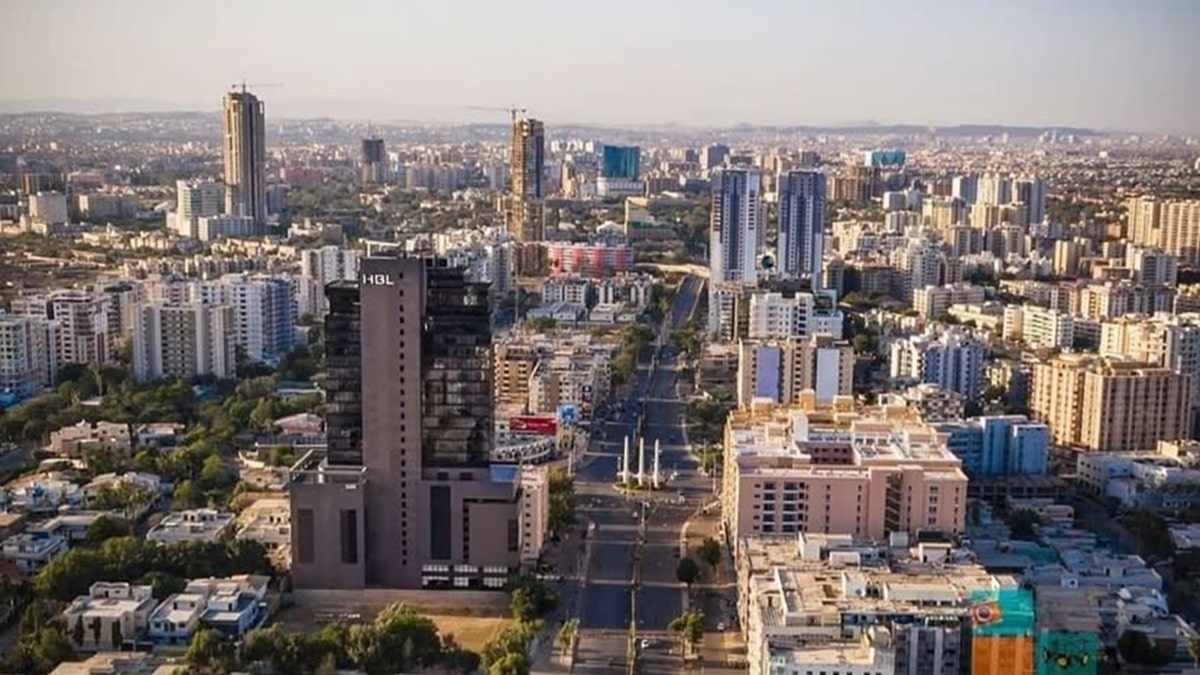
The structural evolution of Pakistan’s economic hub has reached a pivotal baseline with the announcement of a massive fiscal catalyst. The Sindh government has officially calibrated the 2026-27 budget to include a Rs. 100 billion Karachi development package. This strategic investment is designed to optimize urban mobility, healthcare access, and resource management across 167 major projects. Consequently, the provincial administration aims to resolve long-standing systemic inefficiencies through targeted architectural upgrades.
Accelerating Karachi’s Urban Transformation
Chief Minister Syed Murad Ali Shah presented a budget that prioritizes precision over-reporting. Currently, Karachi houses 816 ongoing development schemes with a cumulative valuation of Rs. 644.3 billion. For the upcoming fiscal cycle, the government has allocated over Rs. 100.19 billion. This includes 110 mega projects, each exceeding a Rs. 1 billion investment threshold. These initiatives serve as a foundation for a more resilient and integrated metropolitan framework.
Connectivity and Transit Infrastructure
- Aviation Linkages: Construction of a Rs. 1.2 billion flyover from Karachi Airport Road to Star Gate to streamline terminal access.
- Traffic Optimization: A Rs. 1.5 billion right-turn underpass at Malir Halt will alleviate congestion on Sharae Faisal.
- Public Transport Expansion: The deployment of 25 double-decker buses and 100 additional electric buses to serve approximately 35,000 daily commuters.
- BRT Corridors: Allocation of Rs. 13.2 billion for the Red Line and Rs. 3.5 billion for the Yellow Line corridor to digitize and expand transit reach.
Water Security and Sanitation Systems
Strategic resource management remains a core focus of the Karachi development package. The Greater Karachi Sewerage Plan (S-III) continues its momentum with a dedicated allocation of Rs. 1 billion, supplementing the Rs. 32 billion already deployed. Furthermore, the government has set aside Rs. 575.2 million to expand water distribution networks linked to the K-IV project. To mitigate flood risks, Rs. 1.1 billion is earmarked for the restoration of Gujjar Nala and its critical service roads.
The Translation (Clear Context)
In technical terms, this budget represents a shift from maintenance-based spending to capital-intensive growth. When the government refers to “mega projects,” it implies a financial commitment that triggers high-scale employment and industrial demand. By automating fare collection across the Green and Orange Lines, the state is moving toward a calibrated digital ecosystem. This reduces manual leakage and ensures that the public transport system becomes a self-sustaining financial unit over time.
The Socio-Economic Impact
This development package directly influences the daily efficiency of the average Karachiite. For professionals, the reduction in travel time—exemplified by the Shahrah-e-Bhutto Expressway’s 25-minute transit window—translates to increased productivity and lower fuel costs. For families, the expansion of the Sindh Infectious Diseases Hospital and new pediatric units at NICVD provides a vital safety net. Additionally, the construction of modern garbage transfer stations will mitigate urban health hazards, particularly in high-density districts.
The Forward Path (Opinion)
The 2026-27 allocation represents a definitive Momentum Shift. While previous budgets often focused on stabilization, the current emphasis on electric transit and automated infrastructure indicates a forward-thinking posture. However, the ultimate success of this package depends on the precision of its execution. If these projects meet their delivery timelines, Karachi will finally possess the structural baseline required to support its role as a regional economic powerhouse.








